Maximizing Your Residential Solar ROI: 5 Key Strategies for 2026
The sun is an inexhaustible source of energy, and harnessing it for your home is not just an environmental statement; it’s a savvy financial investment. As we approach 2026, the landscape of residential solar energy is evolving rapidly, presenting both opportunities and challenges for homeowners looking to get the most out of their solar installations. The key to long-term success and significant savings lies in understanding how to effectively maximize your residential solar ROI. This comprehensive guide will delve into five crucial strategies that will not only enhance your energy independence but also ensure a robust return on your solar investment by 2026 and beyond.
For many homeowners, the decision to go solar is driven by a desire to reduce electricity bills, decrease their carbon footprint, and increase property value. However, the true measure of a successful solar installation is its Return on Investment (ROI). A high residential solar ROI means that the financial benefits, such as energy savings, incentives, and increased home value, outweigh the initial costs and ongoing maintenance. In today’s dynamic energy market, achieving an optimal ROI requires more than just installing panels; it demands strategic planning, informed decision-making, and proactive management.
The solar industry has seen remarkable advancements in technology, efficiency, and financing options. What was considered cutting-edge a few years ago is now standard, and new innovations are constantly emerging. This rapid pace of change means that staying informed and adapting your approach is essential for maximizing your residential solar ROI. Whether you’re considering your first solar installation or looking to optimize an existing one, the strategies outlined here will provide a roadmap to financial success and sustainable living.
1. Smart Financing and Incentive Utilization
One of the most critical factors influencing your residential solar ROI is how you finance your system and how effectively you leverage available incentives. The initial cost of a solar panel system can be substantial, but various financing options and government programs are designed to make solar energy more accessible and affordable. Choosing the right path can significantly reduce your upfront expenses and accelerate your payback period.
Understanding Solar Financing Options
- Cash Purchase: Paying for your solar system upfront offers the highest long-term residential solar ROI. You own the system outright, benefiting from all tax credits, incentives, and energy savings from day one. While it requires a significant initial investment, it eliminates interest payments and maximizes your overall savings.
- Solar Loans: Many homeowners opt for solar loans, which function similarly to home improvement loans. These can be secured (against your home) or unsecured. Interest rates vary, but a well-structured loan can allow you to own your system while spreading the cost over several years. The key is to find a loan with favorable terms and low interest rates to ensure a positive residential solar ROI.
- Power Purchase Agreements (PPAs) and Solar Leases: These options allow you to install solar panels with little to no upfront cost. With a PPA, you pay a fixed rate per kilowatt-hour for the electricity generated by the panels on your roof. With a solar lease, you pay a fixed monthly fee for the use of the panels. While these options offer immediate savings on your electricity bill, the solar company typically owns the system, meaning they claim the tax credits and other incentives. While still beneficial, the long-term residential solar ROI might be lower compared to owning the system outright.
Leveraging Government and Local Incentives
The availability and scope of solar incentives can dramatically impact your residential solar ROI. These incentives are constantly evolving, so it’s crucial to stay updated on what’s available in your region.
- Federal Solar Tax Credit (ITC): The Investment Tax Credit (ITC) is arguably the most significant incentive for homeowners. It allows you to deduct a percentage of the cost of your solar system from your federal taxes. As of 2023, the ITC was restored to 30% for systems installed through 2032, making it an incredibly powerful tool for boosting your residential solar ROI.
- State and Local Incentives: Beyond the federal credit, many states, cities, and even utility companies offer their own incentives. These can include:
- State Tax Credits: Similar to the federal ITC, some states offer their own tax credits.
- Rebates: Direct payments from state governments or utilities for installing solar.
- Property Tax Exemptions: Solar installations can increase your home’s value without increasing your property taxes.
- Sales Tax Exemptions: Eliminating sales tax on solar equipment.
- Renewable Energy Credits (RECs) or Solar Renewable Energy Credits (SRECs): In some markets, you can earn credits for the solar electricity your system generates, which can then be sold for additional income. This is a significant booster for your residential solar ROI in participating states.
Thorough research into all available incentives before installation is paramount. A knowledgeable solar installer can help you navigate these complex programs and ensure you claim every eligible benefit, thereby maximizing your residential solar ROI.
2. System Sizing and Optimization for Maximum Efficiency
The performance of your solar system is directly linked to its sizing and optimization. An undersized system won’t meet your energy needs, while an oversized one might generate excess power you can’t fully utilize, especially if net metering policies are unfavorable. Achieving the perfect balance is key to a superior residential solar ROI.
Accurate Energy Consumption Assessment
Before designing your system, a precise understanding of your household’s energy consumption is essential. Reviewing past electricity bills (ideally 12-24 months) will provide an average daily and monthly usage pattern. Consider future changes, such as purchasing an electric vehicle, installing a hot tub, or expanding your home, as these will impact your energy needs and, consequently, your optimal system size. A professional solar installer will conduct a detailed energy audit to recommend a system that aligns with your current and projected consumption, ensuring you get the most out of your investment and maximize your residential solar ROI.
Optimizing Panel Placement and Orientation
The efficiency of your solar panels is heavily influenced by their placement and orientation. In the Northern Hemisphere, panels facing true south (or slightly southwest for evening peak demand) with an optimal tilt angle (often matching your latitude) will capture the most sunlight throughout the day and year. Shading from trees, chimneys, or neighboring buildings can drastically reduce output. Advanced solar design software can model these factors to determine the best possible layout for your roof, minimizing shading and maximizing energy production, which directly contributes to a higher residential solar ROI.
Choosing High-Efficiency Equipment
While often more expensive upfront, investing in higher-efficiency solar panels and inverters can significantly improve your residential solar ROI over the long term. More efficient panels generate more electricity per square foot, which is particularly beneficial for homes with limited roof space. Modern inverters, especially microinverters or string inverters with optimizers, can enhance system performance by mitigating the impact of shading on individual panels and providing detailed monitoring capabilities. The slight increase in initial cost is often offset by greater energy production and faster payback periods.
3. Integrating Energy Storage Solutions (Batteries)
The rise of affordable and efficient battery storage solutions is revolutionizing the residential solar ROI equation. While traditionally solar systems relied heavily on net metering to store excess energy on the grid, batteries offer true energy independence and new avenues for savings, especially as net metering policies change.
Benefits of Battery Storage
- Increased Self-Consumption: Batteries allow you to store excess electricity generated during the day and use it at night or during peak demand periods when electricity rates are highest. This significantly reduces your reliance on grid electricity and maximizes the value of every kilowatt-hour your panels produce, boosting your residential solar ROI.
- Time-of-Use (TOU) Rate Optimization: Many utility companies employ TOU rates, where electricity prices fluctuate throughout the day. With a battery, you can discharge stored solar energy during expensive peak hours and recharge during cheaper off-peak hours, leading to substantial savings. This strategy is a powerful driver for your residential solar ROI.
- Backup Power: Beyond financial savings, batteries provide critical backup power during grid outages, ensuring your essential appliances remain operational. This peace of mind adds significant value to your solar investment.
- Grid Services and Virtual Power Plants (VPPs): In some regions, homeowners with batteries can participate in grid service programs, where their stored energy can be dispatched to support the grid during times of high demand. This participation can earn additional revenue, further enhancing your residential solar ROI.
Choosing the Right Battery System
When considering battery storage, factors such as capacity, power output, cycle life, and warranty are crucial. Lithium-ion batteries are currently the most popular choice due to their high energy density and efficiency. Evaluate your energy needs during an outage and your typical daily consumption patterns to select a battery system that provides adequate storage without being unnecessarily oversized. The cost of batteries is decreasing, making them an increasingly attractive addition for maximizing your residential solar ROI.
4. Proactive Monitoring and Maintenance
Even the most advanced solar system requires regular monitoring and occasional maintenance to perform optimally and deliver the expected residential solar ROI. Neglecting these aspects can lead to reduced energy production and potentially costly repairs down the line.
Regular Performance Monitoring
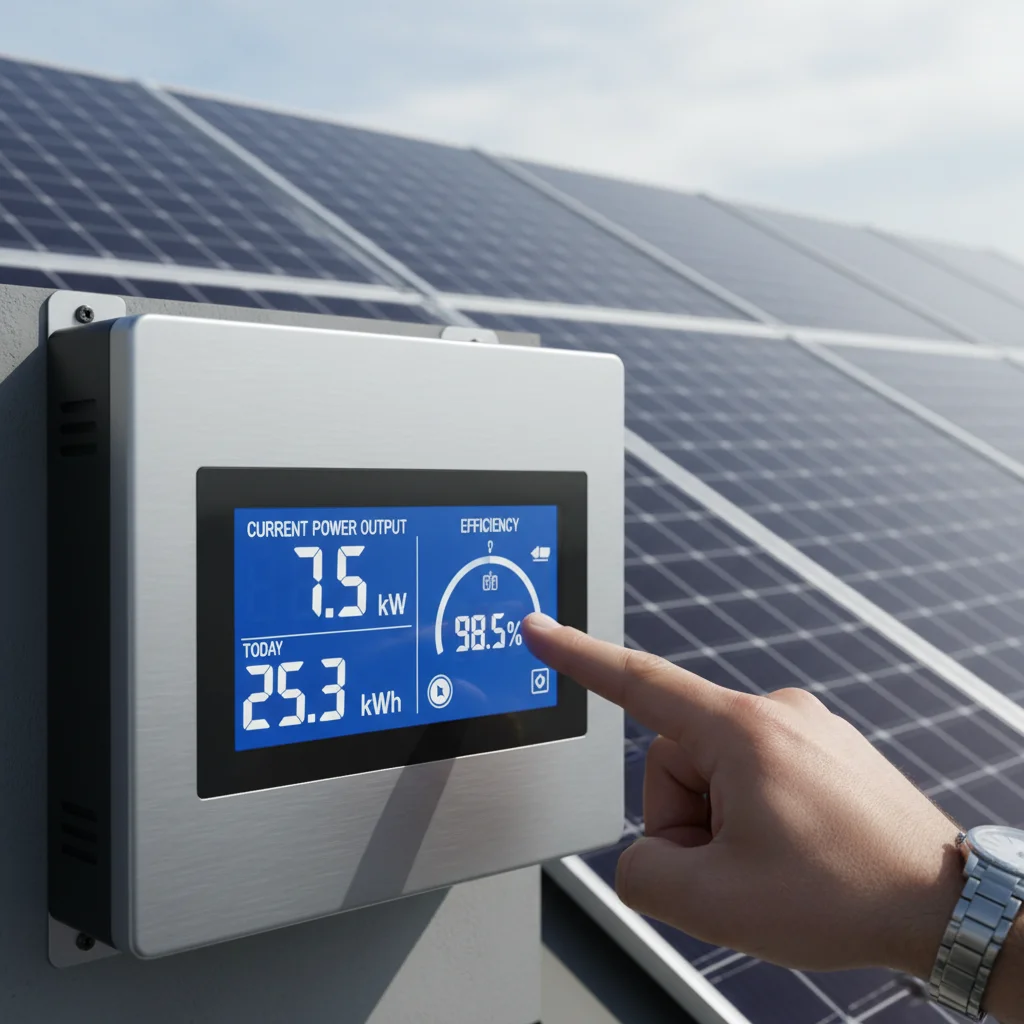
Modern solar systems come equipped with monitoring platforms that allow you to track your energy production in real-time, often via a smartphone app or web portal. Regularly checking this data can help you identify any anomalies, such as a sudden drop in output from a specific panel, which could indicate a problem. Early detection of issues ensures minimal downtime and sustained energy generation, safeguarding your residential solar ROI.
Routine Cleaning and Inspections
While solar panels are generally low-maintenance, they can accumulate dirt, dust, pollen, and even bird droppings, which can reduce their efficiency. In most climates, natural rainfall is sufficient to keep panels clean. However, in dry or dusty regions, or if you notice a visible layer of grime, a gentle cleaning with water and a soft brush can be beneficial. Avoid harsh chemicals or abrasive materials. Annual professional inspections are also recommended to check for loose wiring, inverter issues, or any physical damage to the panels or mounting system. These preventative measures are crucial for maintaining peak performance and ensuring a robust residential solar ROI.
Understanding Warranties and Guarantees
Familiarize yourself with the warranties provided by your solar panel manufacturer, inverter manufacturer, and installer. Panels typically come with a performance warranty (guaranteeing a certain percentage of original output over 20-25 years) and a product warranty (covering manufacturing defects). Inverters also have their own warranties, usually 10-12 years. Your installer should provide a workmanship warranty covering the installation itself. Understanding these guarantees ensures that any issues that arise are covered, protecting your investment and maximizing your residential solar ROI.
5. Integrating Smart Home Energy Management
The future of maximizing your residential solar ROI lies in intelligent energy management. By integrating your solar system with smart home technologies, you can optimize energy consumption, reduce waste, and further enhance your savings.
Smart Thermostats and Appliances
Smart thermostats can learn your preferences and adjust heating and cooling based on occupancy, weather forecasts, and even electricity prices. Similarly, smart appliances (e.g., washing machines, dishwashers) can be programmed to run during periods of peak solar production or when electricity rates are lowest. By shifting your energy usage to align with your solar generation, you maximize self-consumption and reduce dependence on the grid, directly improving your residential solar ROI.
Home Energy Management Systems (HEMS)
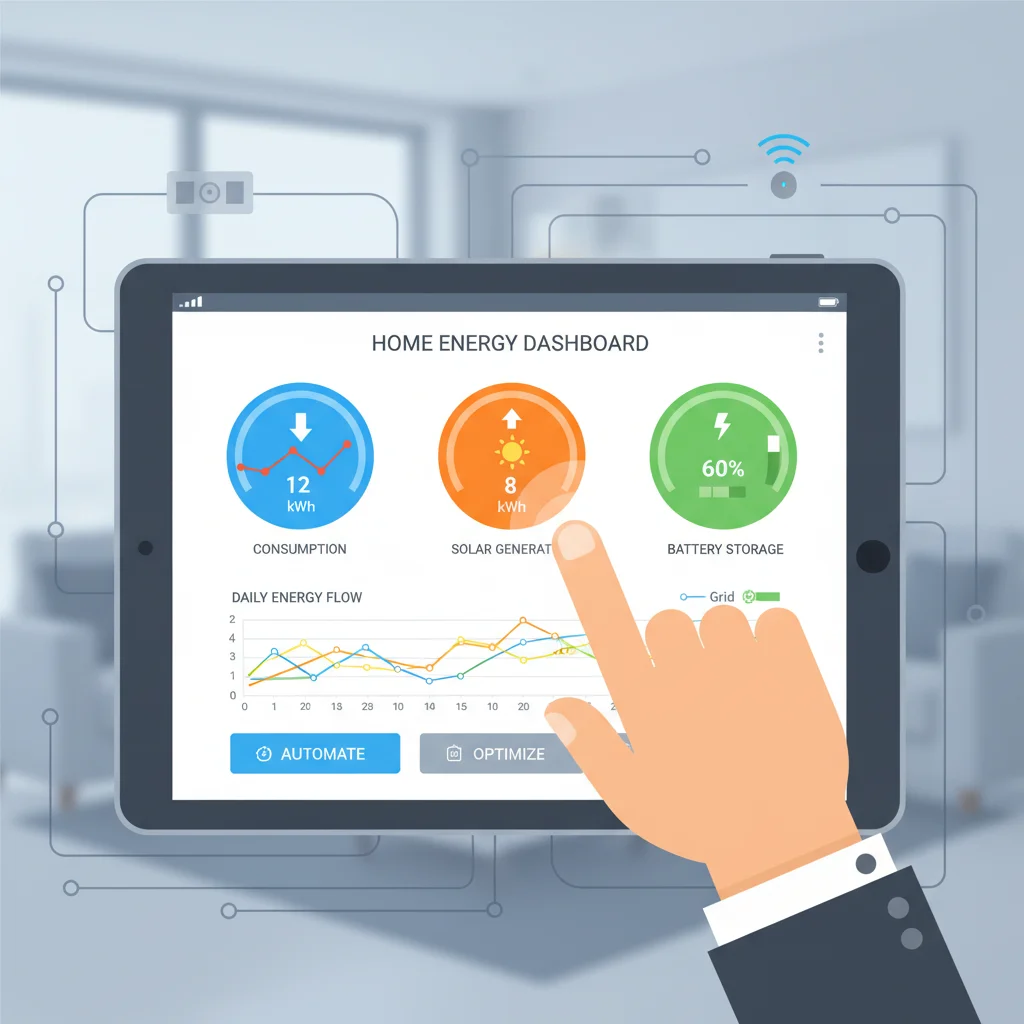
Advanced HEMS platforms offer a centralized control system for your home’s energy. These systems can monitor solar production, battery levels, and household consumption in real-time. They can then automate decisions, such as when to charge your electric vehicle, when to run certain appliances, or when to draw power from your battery versus the grid, all based on pre-set preferences and energy price signals. This level of granular control is instrumental in fine-tuning your energy consumption to align with your solar generation, thus elevating your residential solar ROI significantly.
Electric Vehicle (EV) Charging Integration
If you own an EV, integrating its charging with your solar system is a powerful way to enhance your residential solar ROI. Smart EV chargers can be programmed to charge your vehicle directly from excess solar production, minimizing the amount of grid electricity you purchase for transportation. This effectively turns your home into a personal, zero-emission fueling station, adding another layer of savings and environmental benefit to your solar investment.
Conclusion: A Bright Future for Residential Solar ROI
Maximizing your residential solar ROI by 2026 is an achievable goal, but it requires a proactive and informed approach. From securing the best financing and leveraging every available incentive to meticulously sizing your system, integrating battery storage, ensuring diligent maintenance, and embracing smart home energy management, each strategy plays a vital role in optimizing your solar investment.
The benefits extend beyond financial returns. A well-optimized solar system contributes to a more sustainable planet, increases your energy independence, and adds significant value to your property. As technology continues to advance and policies evolve, staying informed and adapting your strategies will be key to unlocking the full potential of your solar panels for decades to come.
By implementing these five key strategies, homeowners can confidently navigate the evolving solar landscape, ensuring their investment not only pays for itself but also generates substantial savings and environmental benefits for years to come. The future of residential solar is bright, and with the right approach, your home can be at the forefront of this energy revolution, reaping the maximum possible residential solar ROI.