Solar for Beginners: Your First Steps to a Brighter, Greener Home
That monthly electricity bill arrives like clockwork, often bringing a familiar sense of dread. For many homeowners, it feels like a subscription service with prices that only go up. What if you could fundamentally change that relationship, transforming a constant expense into a long-term asset? The idea of generating your own power from the sun has moved from a futuristic dream to a practical reality for millions, offering a clear path toward energy independence and a smaller environmental footprint.
The shift to residential solar is more than just a trend; it’s a response to rising energy costs and a growing desire for sustainable living. Thanks to significant advancements in technology and favorable financial incentives, installing solar panels is no longer a luxury reserved for the wealthy or the eco-fringe. It has become a mainstream home improvement project with a tangible return on investment, much like finishing a basement or remodeling a kitchen, but with the added benefit of saving you money every single month.
But where do you even begin? The process can seem daunting, filled with technical jargon and financial complexities. This guide is designed to cut through the noise. We’ll walk you through the entire journey, starting with the basics of how solar technology works and helping you determine if your home is a good candidate. From there, we’ll demystify the financial incentives, compare financing options, and lay out the step-by-step installation process so you know exactly what to expect. By the end, you’ll have a clear, actionable roadmap for your first steps toward a brighter, greener home.
Understanding the Basics: How Residential Solar Works
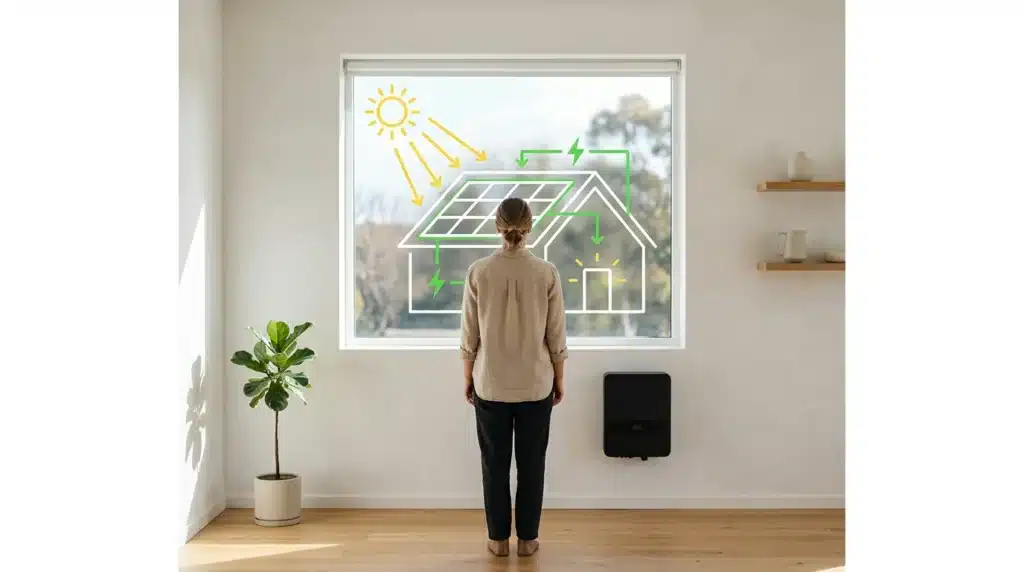
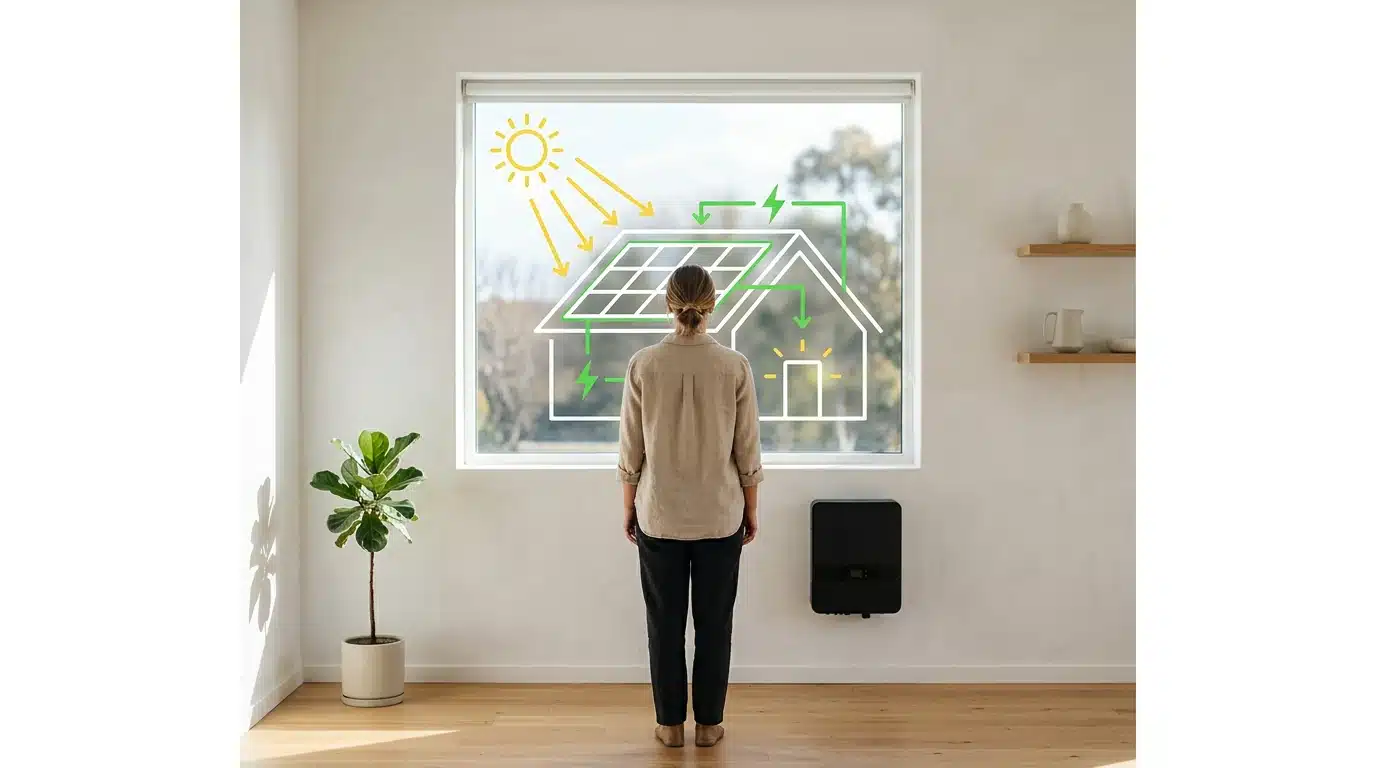
Stepping into solar energy can feel like learning a new language, but the core concept is surprisingly simple. Think of your home’s solar setup as a miniature power plant. It has three main parts working together: the solar panels that capture sunlight, an inverter that converts the energy, and a meter that tracks it all. This system is designed for solar-powered living by generating electricity right where you use it.
The process begins with the solar panels on your roof. These panels contain photovoltaic cells, which are typically made from silicon. When sunlight hits these cells, it creates an electric current—a phenomenon known as the photovoltaic effect. The efficiency of these cells is constantly improving; in fact, the National Renewable Energy Laboratory (NREL) reports that common residential cell efficiency has increased by over 22% in the last decade alone, aligning with broader energy efficiency trends.
That direct current (DC) electricity isn’t what your home’s appliances use. That’s where the inverter comes in. This device, often installed in a garage or on an exterior wall, converts the DC electricity from the panels into alternating current (AC) electricity, which is the standard for household power.
Finally, the electricity flows to your home’s electrical panel and a special bi-directional meter. This meter tracks how much power your panels produce versus how much your home consumes. When you generate more electricity than you use, the excess is often sent back to the grid, and you may receive a credit from your utility company through a process called net metering. It’s a key step in creating a sustainable lifestyle with solar power. This smart tracking is what unlocks the financial and environmental benefits of going solar.
Is Solar Right for Your Home? Key Considerations
Jumping into solar power feels exciting, but not every home is an ideal candidate. Before you start getting quotes, a quick self-assessment can save you significant time and money. It’s less about having a perfect property and more about understanding your specific situation—from the shingles over your head to the electricity you use each month.
Think of it like checking the foundation before building an extension. You need to know if the underlying structure can support your goals. This simple evaluation will clarify whether solar is a practical investment for you right now.
Assessing Your Roof: Angle, Shading, and Condition
Your roof is the most critical piece of real estate for a solar installation. Its characteristics directly determine how much energy your system can generate. Surprisingly, a brand-new roof isn’t a requirement, but one with at least 10-15 years of life left is highly recommended. You don’t want to pay to remove and reinstall panels just a few years down the line.
Here are the primary factors to check:
- Direction and Angle: In the Northern Hemisphere, a south-facing roof is the gold standard for maximizing sun exposure. East- or west-facing roofs can also work well, especially for homes that use more energy in the mornings or afternoons. Roofs with a pitch between 30 and 45 degrees generally perform best.
- Shading: Consistent shade is the enemy of solar production. Take a look at your roof throughout the day. Are there large trees, chimneys, or neighboring buildings casting long shadows? What most people miss is that even partial shading on a single panel can significantly reduce the output of the entire string of panels.
- Condition and Material: Your roof needs to be in solid structural shape. Materials like composite shingles, standing-seam metal, and tile are all compatible with solar installations. Slate or wood shake roofs can be more complicated—and expensive—to work with.
Understanding Your Energy Needs and Consumption
A solar system is designed to offset your electricity usage, so how much do you actually use? Grab your last 12 months of utility bills and look for your monthly kilowatt-hour (kWh) consumption. This data reveals your energy appetite and helps determine the right system size for achieving a solar-powered living arrangement.
According to the U.S. Energy Information Administration (EIA), the average American home uses about 893 kWh per month. Are you above or below that figure? Knowing your baseline is required. It also presents an opportunity to improve efficiency before investing in panels. After all, the cheapest kilowatt-hour is the one you don’t use in the first place.
Consider your future plans as well. Are you thinking about buying an electric vehicle or installing a hot tub? These additions will increase your electricity demand, and planning for them now helps with future-proofing your home against rising energy costs. Understanding these patterns is the first step toward a smarter energy strategy.
What many people misunderstand is that you must have sufficient tax liability to claim the full credit. It’s not a cash refund you get automatically.
— Sarah Jenkins, Certified Financial Planner
| Factor | Key Consideration | Why It Matters |
|---|---|---|
| Roof Assessment | Check for south-facing orientation, minimal shade, and at least 10-15 years of remaining life. | Your roof’s condition and sun exposure directly determine the system’s energy production and long-term viability. |
| Energy Consumption | Analyze your last 12 months of utility bills to find your average kilowatt-hour (kWh) usage. | This data is essential for sizing your solar system correctly to meet your specific needs and maximize your return on investment. |
| Financial Incentives | Research the Federal ITC, plus any state tax credits, local rebates, or SRECs available in your area. | Incentives can reduce the net cost of a solar installation by 30% or more, dramatically shortening the payback period. |
| Installer Choice | Verify NABCEP certification, check customer reviews, and compare equipment warranties from multiple quotes. | A reputable installer ensures a high-quality installation, proper permitting, and reliable support for the 25+ year lifespan of the system. |
Navigating Financial Incentives and Savings
Once you’ve determined your home is a good candidate for solar, the next question is almost always about cost. The initial price tag can seem high, but a surprising number of financial programs exist to drastically lower the barrier to entry. Thinking about solar without considering these incentives is like planning a road trip without looking at the map—you’re missing the most efficient route.
These financial tools are designed to make clean energy more accessible. They work.
The Federal Solar Investment Tax Credit (ITC)
The most significant financial benefit for most homeowners is the federal Solar Investment Tax Credit (ITC). This isn’t a simple deduction; it’s a dollar-for-dollar credit that reduces your federal income tax liability. Currently, the credit stands at 30% of the total cost of your solar system installation, with no cap on its value. For a system costing $21,500, that translates to a direct $6,450 reduction in the taxes you owe.
What many people misunderstand is that you must have sufficient tax liability to claim the full credit. It’s not a cash refund you get automatically. if you don’t use the entire credit in one year, the remainder can often be rolled over to the next, giving you flexibility.
State and Local Solar Incentives: What to Look For
Beyond the federal ITC, a patchwork of state, local, and utility-specific incentives can further sweeten the deal. These programs vary widely by location, so research is key. Some common benefits include state-level tax credits that stack on top of the federal one, direct cash rebates calculated per watt of installed capacity, and property tax exemptions for the value your solar panels add to your home.
In certain states, you might also benefit from Solar Renewable Energy Credits (SRECs). With SRECs, you earn one credit for every megawatt-hour (MWh) of electricity your system produces, which you can then sell on an open market to utilities needing to meet renewable energy mandates. A report from the National Renewable Energy Laboratory (NREL) suggests that layering these state and local benefits can cut the net system cost by an additional 15-28%, depending on the state.
Financing Your Solar System: Loans vs. Leases
Even with incentives, many homeowners choose to finance their system rather than pay cash upfront. The two main paths are solar loans and solar leases, each with distinct advantages. A solar loan works much like a car loan; you borrow money to purchase the equipment, make monthly payments, and you own the system outright. This ownership is critical because it means you are the one who gets to claim the valuable tax credits and rebates.
A solar lease, conversely, means you don’t own the panels on your roof. A third-party company installs and maintains them, and you pay a fixed monthly “rent” to use the electricity they generate. The upfront cost is often zero, making it very accessible. The tradeoff? The leasing company claims all the tax credits, not you. This choice often comes down to your personal financial goals and whether ownership is a priority for your journey toward solar-powered living.
Understanding Power Purchase Agreements (PPAs)
A Power Purchase Agreement (PPA) is a close cousin to a solar lease but with one key difference. Instead of paying a flat monthly rent for the equipment, you agree to buy the power your system generates at a set price per kilowatt-hour (kWh). This rate is typically locked in at a lower price than what your utility charges, creating immediate savings.
Like a lease, the PPA provider owns and maintains the system, so you have no maintenance headaches (a definite plus!). it’s vital to read the fine print for an “escalator clause,” which may increase your PPA rate by a small amount, like 2.5%, each year. The right financial structure is a key part of solar integration for a sustainable lifestyle, ensuring the numbers work for you long-term.
Ultimately, calculating your return on investment (ROI) involves more than just subtracting incentives from the sticker price. The real value emerges over the 25-plus-year lifespan of the panels as you save money on electricity bills every single month. Data from platforms like EnergySage shows most U.S. homeowners break even on their investment in 7 to 9 years, with potential lifetime savings exceeding $32,000. This long-term financial upside transforms a home improvement project into a powerful wealth-building asset.
The Solar Installation Process: What to Expect
Once you’ve navigated the financial side of going solar, the next phase involves turning the plan into a reality. The installation process itself is a well-defined sequence of events, much like a carefully planned kitchen remodel. It involves several key players, from engineers to electricians, all working to get your system up and running. Knowing the steps helps you manage the project with confidence.
Choosing the Right Solar Installer
Your first major decision is selecting a contractor. This choice impacts everything from system performance to warranty support. Look for installers with a strong track record and proper credentials, specifically certification from the North American Board of Certified Energy Practitioners (NABCEP). According to the Solar Energy Industries Association, NABCEP-certified professionals are involved in over 90% of all residential solar installations in some states, a testament to their expertise. Don’t just go with the cheapest quote; compare equipment warranties, customer reviews, and the company’s years in business.
Ask potential installers detailed questions about their process and how they handle potential issues like roof damage or weather delays. A reputable installer will provide a clear, itemized proposal. Getting this part right is foundational to a successful solar integration for a sustainable lifestyle.
The journey from signing a contract to flipping the switch typically follows these steps:
- Initial Consultation and Site Assessment: A solar professional visits your home to evaluate your roof’s condition, orientation, and shading. They’ll also inspect your electrical panel to ensure it can handle the new load. This is where the theoretical plan meets the physical reality of your property.
- System Design and Proposal: Using data from the site assessment, engineers design a custom solar array for your specific energy needs and home layout. You will receive a final proposal detailing the system size, estimated production, and total cost. Pay close attention to the brand of panels and inverters they specify.
-
Permitting and Grid Connection
Before any work begins, your installer must secure permits from your local municipality. This is often the longest part of the process, sometimes taking several weeks. The paperwork can be extensive—it’s one of those necessary but tedious hurdles. Simultaneously, they will submit an interconnection application to your utility company, which grants you permission to connect your system to the grid.
- Installation: This is the most visible step. A crew will arrive to mount the racking, attach the solar panels, and run the wiring to an inverter and your electrical panel. The on-site work for a typical residential system is surprisingly fast, often completed in just one to three days.
- Inspection and Commissioning: After installation, a representative from your city or county must inspect the system to ensure it complies with building and electrical codes. Once it passes inspection, the utility company gives the final “Permission to Operate” (PTO). Only then can you turn your system on and start generating your own clean power, a key step in creating a solar-powered and greener home.
With the system active, your focus shifts from installation to monitoring, ensuring your new power source delivers the expected benefits for years to come.
Beyond Panels: Embracing a Sustainable Lifestyle
Generating your own clean power is an incredible achievement, but the journey doesn’t stop once the panels are on the roof. Solar installation is a powerful catalyst, often inspiring homeowners to look at their entire consumption footprint. The real magic happens when you pair solar production with mindful energy reduction, effectively integrating solar for a sustainable lifestyle that maximizes every electron you generate.
What most people miss is that solar power makes energy efficiency even more rewarding. Reducing your home’s overall energy demand means your solar array can cover a larger percentage of your needs, potentially pushing more excess power back to the grid for credit. It’s like getting a raise and then finding ways to lower your monthly bills at the same time.
Energy Efficiency Upgrades for Your Solar Home
Before you even think about high-tech gadgets, focus on the physical structure of your home. Your house is a system, and sealing its envelope is the most underlying upgrade. The U.S. Department of Energy suggests that addressing air leaks around windows, doors, and ductwork can cut annual energy costs by 15% or more. This is low-hanging fruit.
Next, evaluate your insulation. Proper attic and wall insulation acts like a thermal blanket, keeping your home warmer in the winter and cooler in the summer, drastically reducing the workload on your HVAC system—which is often the single largest energy consumer in a home. Upgrading to high-performance windows with Low-E coatings is another significant step. While the upfront cost is higher, these improvements are part of future-proofing your home against rising energy costs and work in concert with your solar system for decades.
Smart Home Technology for Optimized Energy Use
Once your home’s physical shell is efficient, you can use technology to fine-tune your consumption. A smart thermostat is the perfect entry point. Devices from companies like Ecobee and Google Nest learn your living patterns and automatically adjust the temperature, ensuring you’re not wasting energy heating or cooling an empty house. But why stop there?
Smart plugs and power strips empower you to defeat “vampire loads” — the sneaky power drawn by electronics in standby mode. You can set schedules to completely cut power to your entertainment center overnight or to your home office setup on weekends. This level of control turns passive energy waste into active savings. Think of it as putting your home’s energy diet on autopilot, constantly making small, beneficial adjustments that add up to significant savings and a more holistic approach to solar-powered living.
Water Conservation and Waste Reduction Strategies
A sustainable mindset extends beyond just kilowatt-hours. Water and energy are deeply connected; treating and pumping water to your home requires a massive amount of electricity on a municipal level. By reducing your water usage, you’re indirectly lowering the grid’s energy demand. Installing low-flow fixtures for showers and toilets is a simple, one-time fix with lasting impact.
Dr. Marcus Thorne, an environmental scientist at the University of Colorado Boulder, notes, “The psychological shift after installing solar is fascinating. People start asking, ‘What else can I do?’ This often leads them to tackle food waste and consumption habits, which have their own substantial carbon footprints.” Reducing waste is a critical component of this expanded awareness. After all, every item you buy required energy to produce and transport.
Composting and Recycling Best Practices
Recycling is a great start, but are you doing it correctly? A common issue is “wish-cycling,” where people toss non-recyclable items into the bin, hoping they’ll be sorted out. This contaminates the entire batch, often condemning it to a landfill. Always check your local municipality’s guidelines for what is and isn’t accepted (that greasy pizza box is almost always a no).
Composting takes this a step further. It diverts food scraps and yard waste from landfills, where they would otherwise produce methane, a potent greenhouse gas. Instead, you create nutrient-rich soil for your garden. It’s a closed-loop system in your own backyard. This practice is a cornerstone of any detailed guide to sustainable living with solar energy, turning what was once trash into a valuable resource for your property.
Maintaining Your Solar System for Long-Term Performance
One of the best features of modern residential solar is how little maintenance it requires. For the most part, your system will quietly generate power without needing much attention. Your panels are durable and built to withstand the elements for decades, often just needing a seasonal rinse with a hose to clear away dust and pollen. This simple step is surprisingly effective; a National Renewable Energy Laboratory (NREL) study found that dirty panels can lose up to 25% of their output.
Most of the time, your system just works.
While panels are straightforward, the inverter—the component that converts DC power to the AC power your home uses—is the part that might need a professional check-up every few years. It’s the brain of the operation, working hard every single day. Think of it like your car’s engine; you don’t service it yourself, but periodic professional inspections ensure everything runs smoothly for the long haul. Keeping an eye on your monitoring app for any alerts is your best first line of defense.
Ultimately, this minimal upkeep is a small task that protects a significant investment, ensuring your system supports your goal of solar-powered living for a greener home. Consistent performance isn’t just about saving money; it’s a core part of crafting a sustainable lifestyle with solar power that you can rely on for years to come.
Your New Role as an Energy Manager
Installing solar panels does more than just lower your electricity bill; it fundamentally changes your relationship with energy. The moment your system is activated, you gain access to a monitoring app that shows your home’s real-time energy production and consumption. This simple dashboard transforms you from a passive consumer into an active energy manager. You’ll find yourself checking production on a sunny day with the same satisfaction as checking a stock portfolio that’s performing well.
This newfound awareness is the most underrated benefit of going solar. It gamifies efficiency, encouraging you to shift laundry loads to midday or identify energy-hungry appliances you never noticed before. The question then becomes not just ‘How much energy can I produce?’ but ‘How wisely can I use the energy I create?’ This shift in perspective is the true, lasting impact of embracing solar power, paving the way for a smarter and more sustainable lifestyle long after the installation is complete.
Frequently Asked Questions
How much does it cost to install solar panels on a typical home?
The cost of a residential solar system varies widely based on size, equipment quality, and location, but most homeowners spend between $15,000 and $25,000 before incentives. The federal solar tax credit and local rebates can significantly reduce this upfront cost, making the investment more accessible.
How long do residential solar panels last?
Modern solar panels are incredibly durable, with a typical lifespan of 25 to 30 years. Most manufacturers provide a performance warranty guaranteeing that the panels will still produce at least 80-90% of their original output after 25 years, ensuring a long-term energy solution.
Can I go completely off-grid with residential solar?
While it is technically possible to go off-grid, most residential solar systems are grid-tied. Going completely off-grid requires a significant investment in battery storage to power your home at night and on cloudy days. A grid-tied system is more practical and cost-effective for the average homeowner.
What happens to my solar panels during a power outage?
For safety reasons, standard grid-tied solar systems automatically shut down during a power outage to prevent sending electricity back to the grid and endangering utility workers. To have backup power during an outage, you would need to install a solar battery storage system along with your panels.
Are there any hidden costs associated with residential solar installation?
A reputable solar installer’s quote should be all-inclusive, but potential extra costs can arise. These might include necessary roof repairs, upgrading an outdated electrical panel, or tree removal to reduce shading. A thorough site assessment should identify these needs upfront to avoid surprises.