Residential Solar Inverter Technologies 2026: An In-Depth Comparison
Residential Solar Inverter Technologies 2026: An In-Depth Comparison
The landscape of residential solar energy is constantly evolving, with innovations pushing the boundaries of efficiency, reliability, and affordability. At the heart of every solar power system lies the inverter, a crucial component responsible for converting the direct current (DC) electricity generated by solar panels into alternating current (AC) electricity usable by your home appliances and the grid. As we look towards 2026, understanding the nuances of different solar inverter technologies becomes paramount for homeowners considering or upgrading their solar installations. This comprehensive guide will delve into the leading residential solar inverter technologies, offering a detailed comparison to help you make an informed decision.
The choice of inverter technology significantly impacts a solar system’s overall performance, safety, cost, and future scalability. With advancements in power electronics, software integration, and battery storage solutions, the options available to homeowners are more sophisticated than ever. From traditional string inverters to advanced microinverters and versatile hybrid systems, each technology presents a unique set of advantages and considerations. Our goal is to demystify these options, providing clarity on what to expect from residential solar inverter technologies in 2026.
Understanding the Core Function of a Solar Inverter
Before diving into specific technologies, it’s essential to grasp the fundamental role of a solar inverter. Solar panels produce DC electricity, which is not directly compatible with most household appliances or the electrical grid. The inverter acts as the bridge, converting this DC power into AC power. Beyond this primary function, modern inverters also perform critical tasks such as maximum power point tracking (MPPT) to optimize energy harvest, grid synchronization, system monitoring, and safety shutdown mechanisms. The efficiency and reliability of your inverter directly translate to the amount of usable electricity your solar system generates and its overall lifespan.
String Inverters: The Traditional Workhorse
String inverters have historically been the most common type of inverter used in residential solar installations. In this setup, multiple solar panels are wired together in a ‘string,’ and the entire string connects to a single central inverter. This design is straightforward and generally more cost-effective upfront, making it an attractive option for many homeowners.
How String Inverters Work
In a string inverter system, panels are connected in series. The DC power from the entire string is then fed into a single inverter, which converts it to AC power. Modern string inverters often feature multiple MPPT trackers, allowing them to manage different strings of panels independently, which can help mitigate some shading issues if panels are on different roof orientations.
Advantages of String Inverters for 2026
- Cost-Effectiveness: String inverters typically have a lower upfront cost compared to microinverters or hybrid systems, making them budget-friendly for many homeowners.
- Simplicity: Their design is relatively simple, often resulting in easier installation and maintenance.
- Proven Technology: String inverters have a long track record of reliability and performance in the solar industry.
- High Efficiency: Modern string inverters boast very high peak efficiencies, often exceeding 98%.
Disadvantages and Considerations
- Shading Impact: One of the most significant drawbacks is the ‘Christmas light effect.’ If even one panel in a string is shaded or underperforms, the output of the entire string can be reduced to the level of the weakest panel. While multiple MPPT inputs help, they don’t completely eliminate this issue.
- Monitoring Limitations: Traditional string inverters offer system-level monitoring, meaning you see the total output, but not the performance of individual panels.
- Design Flexibility: They offer less design flexibility for complex rooflines with multiple orientations or varying shade patterns.
- Scalability: Expanding a string inverter system can sometimes be more challenging or require additional inverters.
For homeowners with unshaded, south-facing roofs and a tight budget, string inverters continue to be a viable and efficient solution among the residential solar inverter technologies available in 2026.
Microinverters: Panel-Level Optimization
Microinverters represent a significant departure from the centralized approach of string inverters. Instead of one inverter for multiple panels, each solar panel is equipped with its own dedicated microinverter. This design revolutionized solar energy production, particularly for residential applications.
How Microinverters Work
Each microinverter is attached directly to the back of an individual solar panel. It converts the DC power from that single panel into AC power right at the source. This AC power is then fed into the home’s electrical system and the grid. This ‘distributed’ approach means each panel operates independently.
Advantages of Microinverters for 2026
- Maximized Energy Harvest: The most significant benefit is panel-level optimization. Shading or soiling on one panel does not affect the output of other panels, leading to higher overall energy production, especially on roofs with partial shading.
- Individual Panel Monitoring: Microinverters provide granular data, allowing homeowners to monitor the performance of each individual solar panel, making it easy to identify and troubleshoot issues.
- Enhanced Safety: Since DC power is converted to AC at the panel level, there are no high-voltage DC circuits running through the roof or attic, significantly reducing fire hazards.
- Greater Design Flexibility: Ideal for complex roof configurations, multiple orientations, and varying tilt angles, as each panel can operate optimally regardless of its neighbors.
- Scalability: Expanding a microinverter system is simple; just add more panels with their respective microinverters.
- Longer Warranties: Microinverters typically come with longer warranties (often 20-25 years) compared to string inverters (5-12 years), reflecting their distributed nature and potentially easier replacement.
Disadvantages and Considerations
- Higher Upfront Cost: Microinverters are generally more expensive per watt than string inverters due to the increased number of components.
- Installation Complexity: While conceptually simple, installing multiple microinverters on the roof can be slightly more labor-intensive.
- Roof Access for Maintenance: If a microinverter fails, it requires someone to go onto the roof to replace it, which can be a minor inconvenience.
Microinverters are an excellent choice for homeowners prioritizing maximum energy harvest, detailed monitoring, enhanced safety, and design flexibility, even if it means a higher initial investment. Their benefits make them a leading contender among residential solar inverter technologies.
Power Optimizers: Bridging the Gap
Power optimizers can be seen as a hybrid solution, combining some advantages of microinverters with the cost structure of string inverters. They are DC-to-DC converters installed at the panel level, working in conjunction with a central string inverter.
How Power Optimizers Work
Each solar panel is fitted with a power optimizer. These devices perform MPPT at the panel level, conditioning the DC output from each panel before sending it to a central string inverter. The string inverter then converts the optimized DC power into AC power for the home. This means shading on one panel won’t pull down the entire string’s performance, as the optimizer ensures each panel contributes its maximum potential.
Advantages of Power Optimizers for 2026
- Panel-Level Optimization: Similar to microinverters, optimizers mitigate the effects of shading and panel mismatch, leading to higher energy production.
- Individual Panel Monitoring: Most optimizer systems offer panel-level monitoring, providing detailed insights into system performance.
- Cost-Effective: Generally less expensive than a full microinverter system, offering a middle-ground price point.
- Safety Features: Many power optimizer systems include rapid shutdown capabilities at the panel level, enhancing safety for first responders.
- Longer Warranties: Optimizers often come with warranties similar to microinverters, typically 20-25 years.
Disadvantages and Considerations
- Two Components: You still have a central inverter in addition to the optimizers on each panel, meaning two potential points of failure (though optimizers are highly reliable).
- Installation: While simpler than full microinverter wiring, it still involves installing a component on each panel.
- Central Inverter Lifespan: The central string inverter will likely need replacement before the optimizers, adding a potential future cost.
Power optimizers offer a compelling balance between cost and performance, making them a popular choice for homeowners who want panel-level optimization without the full cost of microinverters. They are a strong contender in the evolving landscape of residential solar inverter technologies.
Hybrid Inverters: The Future of Energy Independence
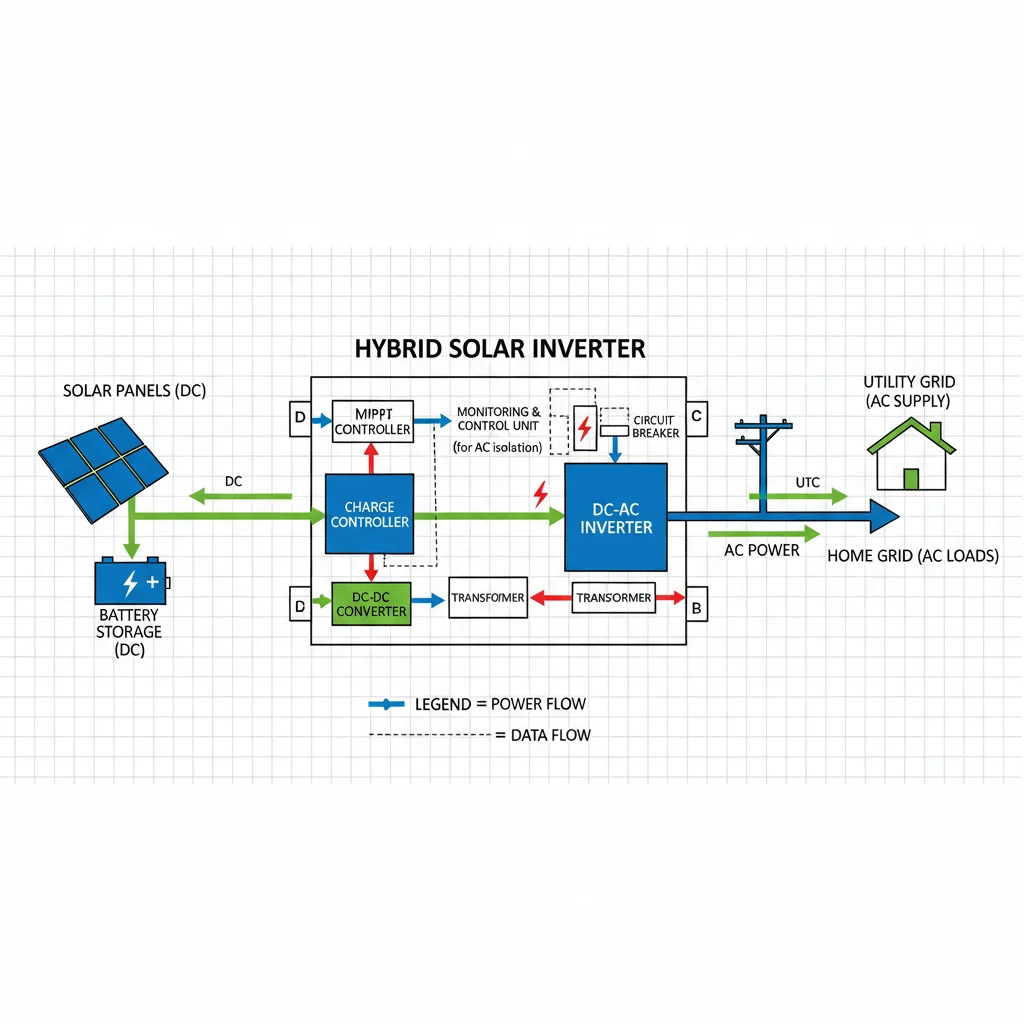
Hybrid inverters represent the cutting edge of residential solar inverter technologies, integrating solar power generation, battery storage management, and grid interaction into a single unit. These inverters are designed for homes that wish to maximize self-consumption, provide backup power during outages, and potentially participate in grid services.
How Hybrid Inverters Work
A hybrid inverter acts as a central hub for your solar panels, battery bank, home loads, and the utility grid. It can direct solar energy to power your home, charge your batteries, or export excess to the grid. During grid outages, it can seamlessly switch to battery power, providing essential backup. Many hybrid inverters also allow for ‘smart’ energy management, optimizing when to charge/discharge batteries based on electricity prices or weather forecasts.
Advantages of Hybrid Inverters for 2026
- Battery Integration: Designed from the ground up to work with battery storage, simplifying installation and management of home energy storage systems.
- Backup Power: Provides critical backup power during grid outages, offering energy independence and peace of mind.
- Optimized Self-Consumption: Allows homeowners to store excess solar energy for use when the sun isn’t shining, reducing reliance on the grid and potentially lowering electricity bills.
- Grid Services: Some hybrid systems can participate in demand response programs or virtual power plants (VPPs), earning homeowners credits or payments.
- Future-Proofing: As energy storage becomes more central to home energy management, hybrid inverters are poised to be the standard.
- Advanced Monitoring: Comprehensive monitoring of solar production, battery state of charge, and home consumption.
Disadvantages and Considerations
- Higher Upfront Cost: Hybrid inverters are the most expensive option among the solar inverter technologies, especially when paired with batteries.
- Complexity: More complex systems may require specialized installers and potentially more intricate setup.
- Battery Cost: The overall cost is significantly influenced by the price of the compatible battery storage system.
- Size and Weight: Hybrid inverters can be larger and heavier than traditional string inverters.
For homeowners aspiring to energy independence, backup power, and smart energy management, hybrid inverters are the definitive choice for 2026. Their ability to seamlessly integrate solar, storage, and grid interaction makes them a pivotal technology for the future of residential solar.
Factors to Consider When Choosing Solar Inverter Technologies for 2026
Selecting the right inverter technology for your home requires careful consideration of several key factors:
1. Roof Characteristics and Shading
Is your roof perfectly unshaded and south-facing? Or do you have multiple orientations, chimneys, or trees that cause partial shading throughout the day? If shading is a significant factor, microinverters or power optimizers will generally yield higher energy production than a string inverter.
2. Budget and ROI
Your upfront budget plays a crucial role. String inverters offer the lowest initial cost, while hybrid systems with batteries represent the highest investment. Consider the long-term return on investment (ROI), factoring in potential energy savings, incentives, and the enhanced lifespan/performance of advanced systems.
3. Desire for Energy Storage and Backup Power
If you’re interested in adding battery storage now or in the future, or if backup power during outages is a priority, a hybrid inverter is the most logical choice. While some string inverters can be ‘battery-ready’ or compatible with AC-coupled battery systems, a dedicated hybrid inverter offers a more integrated and often more efficient solution.
4. Monitoring and Control Preferences
Do you want to see the performance of each individual panel, or is overall system monitoring sufficient? Microinverters and power optimizers offer granular, panel-level monitoring, which can be very insightful for diagnosing issues and optimizing performance. Hybrid systems offer comprehensive energy flow monitoring.
5. System Scalability
Do you anticipate expanding your solar system in the future? Microinverters and power optimizers offer excellent modularity, allowing you to add panels easily. String inverter systems can be expanded, but it might require adding another string or even another inverter.
6. Safety Concerns
For homes with specific safety concerns or those in areas with stringent fire codes, microinverters and power optimizers, with their rapid shutdown capabilities and lower DC voltage on the roof, offer an enhanced safety profile.
7. Warranty and Reliability
Compare the warranty periods and reliability track records of different manufacturers. Microinverters and power optimizers often come with longer warranties (20-25 years) than string inverters (5-12 years), reflecting their expected lifespan and replacement logistics.
Emerging Trends and Innovations in Solar Inverter Technologies for 2026
The innovation in solar inverter technologies is relentless. Here are some key trends to watch for in 2026 and beyond:
- Increased Grid Interaction and Smart Grid Capabilities: Inverters are becoming smarter, capable of communicating with the grid to provide services like voltage support, frequency regulation, and demand response. This will be crucial for integrating higher levels of renewable energy into the grid.
- Enhanced Cybersecurity: As inverters become more connected, cybersecurity measures are being strengthened to protect against potential vulnerabilities.
- Integrated EV Charging: Some hybrid inverters are starting to integrate directly with electric vehicle (EV) charging infrastructure, allowing homeowners to power their EVs directly from solar or battery storage.
- Modular and Scalable Designs: Manufacturers are focusing on creating modular inverter solutions that can easily adapt to changing energy needs and system expansions.
- Advanced Diagnostics and Predictive Maintenance: AI and machine learning are being applied to inverter data to predict potential failures, enabling proactive maintenance and minimizing downtime.
- Higher Power Densities: Inverters are becoming more compact and lighter while maintaining or increasing their power output.
- Wider Operating Temperature Ranges: Improved thermal management allows inverters to perform reliably in more extreme climates.
These advancements underscore the dynamic nature of the solar industry, promising even more efficient, reliable, and intelligent energy solutions for residential users. The focus is increasingly on holistic home energy management, where the inverter acts as the brain of a sophisticated energy ecosystem.
The Role of Software and Monitoring Platforms
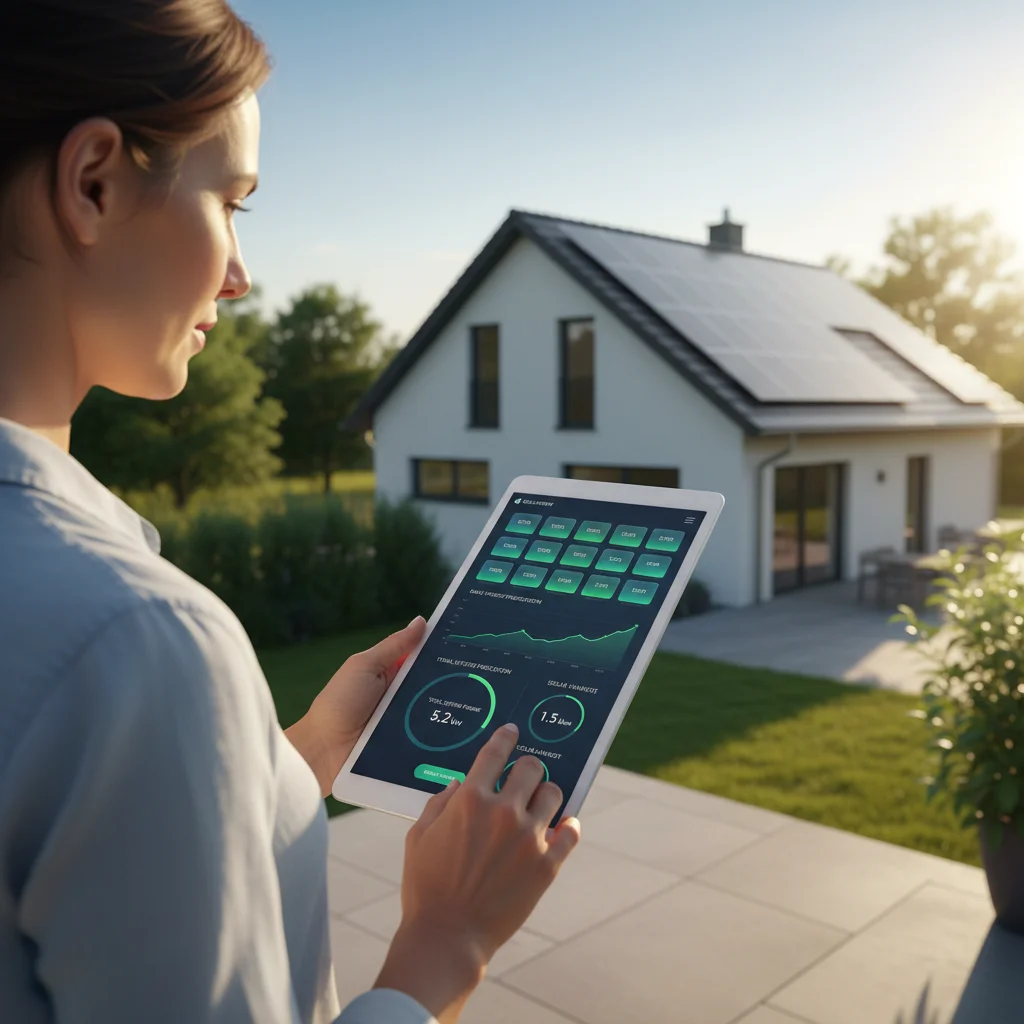
Beyond the hardware, the software and monitoring platforms associated with various solar inverter technologies are becoming increasingly sophisticated. These platforms provide homeowners with invaluable insights into their system’s performance, energy consumption patterns, and battery status. Features often include:
- Real-time and historical energy production data.
- Individual panel performance tracking (for microinverters and optimizers).
- Battery state of charge and charge/discharge cycles.
- Home energy consumption monitoring.
- Alerts and notifications for system issues.
- Remote diagnostics and troubleshooting capabilities for installers.
Choosing an inverter also means choosing a monitoring ecosystem. Consider the user-friendliness of the interface, the depth of data provided, and its compatibility with other smart home devices or energy management systems. A robust monitoring platform empowers homeowners to understand and optimize their energy usage, maximizing the benefits of their solar investment.
Installation and Maintenance Considerations
The choice of inverter technology also has implications for installation and long-term maintenance. String inverters, being centralized, are typically installed near the main electrical panel, making them easily accessible for maintenance or replacement. Microinverters and power optimizers are installed on the roof, underneath each panel. While highly reliable, a failure would require roof access for replacement. Hybrid inverters, often larger, need a suitable indoor or sheltered outdoor location with good ventilation.
It’s crucial to work with a reputable and certified solar installer who has experience with the specific inverter technology you choose. Proper installation is key to ensuring the system operates safely and efficiently for its entire lifespan. Regular maintenance checks, though minimal for most modern inverters, can help identify potential issues early and ensure optimal performance.
Conclusion: Making the Right Choice for Your Home in 2026
As we navigate the exciting advancements in residential solar inverter technologies towards 2026, homeowners have an array of powerful options. The ‘best’ inverter technology isn’t a one-size-fits-all answer; it depends on your specific circumstances, priorities, and future energy goals.
- For budget-conscious homeowners with unshaded roofs, string inverters remain a cost-effective and efficient solution.
- For those with complex rooflines, shading issues, or a desire for granular monitoring and enhanced safety, microinverters or power optimizers offer superior panel-level optimization.
- For homeowners focused on energy independence, backup power, and integrating battery storage, hybrid inverters are the future-proof choice.
By carefully evaluating your roof characteristics, budget, energy storage aspirations, and monitoring preferences, you can confidently select the solar inverter technology that will power your home efficiently and reliably for years to come. Investing in the right inverter is investing in the long-term success and sustainability of your residential solar energy system.