Residential Solar Permitting 2026: The Definitive Guide to Streamlined Approval
Residential Solar Permitting 2026: Navigating the Path to a Brighter, Greener Home
The dawn of 2026 brings with it renewed enthusiasm for residential solar energy. As homeowners increasingly turn to sustainable solutions, understanding the intricate landscape of solar permitting 2026 becomes paramount. While the promise of energy independence and reduced utility bills is compelling, the path to a fully operational solar system is often paved with bureaucratic hurdles. This comprehensive guide aims to demystify the residential solar permitting process, providing you with the knowledge and strategies to navigate it successfully and efficiently.
Installing solar panels on your home is a significant investment, one that not only benefits your wallet but also contributes to a healthier planet. However, before those gleaming panels can start harnessing the sun’s power, you’ll need to secure the necessary permits. The permitting process is designed to ensure that your solar installation is safe, code-compliant, and meets local zoning regulations. Without proper permits, you risk fines, project delays, and even the forced removal of your system. This article will delve deep into what to expect from solar permitting 2026, highlighting key changes, best practices, and expert tips to streamline your journey.
The Evolving Landscape of Solar Permitting in 2026
The regulatory environment for solar energy is constantly evolving. What was standard practice a few years ago might have changed by 2026. Several factors influence these changes, including advancements in solar technology, shifts in energy policy, and the growing adoption of renewable energy across communities. Local jurisdictions, state governments, and even federal initiatives can introduce new requirements or streamline existing ones.
Key Trends and Anticipated Changes in Solar Permitting 2026:
- Increased Digitalization: Many municipalities are moving towards fully digital permitting platforms, reducing paper waste and speeding up application submissions and reviews. Expect more online portals, electronic document submission, and digital tracking of your permit status.
- Standardization Efforts: There’s a continued push for greater standardization of solar permitting requirements across different jurisdictions. Organizations like the Solar Energy Industries Association (SEIA) and the National Renewable Energy Laboratory (NREL) advocate for simplified, uniform codes to reduce soft costs and accelerate solar deployment. While full uniformity may still be a dream, expect more commonalities in application forms and technical requirements.
- Focus on Resiliency and Storage: With the increasing frequency of extreme weather events, there’s a growing emphasis on grid resiliency. This often translates to permitting requirements that consider battery storage systems alongside solar panels, including specific electrical and fire safety codes for these integrated solutions.
- Updated Electrical and Building Codes: The National Electrical Code (NEC) and International Building Code (IBC) are regularly updated. These updates often include new provisions for solar installations, particularly concerning rapid shutdown capabilities, grounding, and structural integrity. Staying abreast of the latest code cycles will be crucial for solar permitting 2026.
- Streamlined Inspections: Some regions are exploring virtual inspections or more efficient inspection protocols to reduce wait times and expedite project completion.
Understanding the Core Components of Solar Permitting
Regardless of specific local variations, the fundamental components of residential solar permitting remain consistent. Understanding these elements will empower you to prepare effectively.
1. Electrical Permit:
This is arguably the most critical permit, ensuring that your solar electrical system is installed safely and correctly. It covers aspects like wiring, inverters, disconnects, and interconnection with the utility grid. Inspectors will verify that the installation adheres to the latest NEC standards.
2. Building Permit:
The building permit addresses the structural integrity of your roof and home. It ensures that your roof can support the additional weight of the solar panels and racking system, and that the installation methods comply with local building codes. This often requires engineering calculations and drawings.
3. Zoning Permit/Review:
Some communities have specific zoning ordinances regarding solar installations, such as height restrictions, setback requirements, or aesthetic guidelines. A zoning review ensures your project complies with these local rules, which might vary significantly even between neighboring towns.
4. Interconnection Agreement:
While not strictly a ‘permit’ in the traditional sense, the interconnection agreement with your utility company is a vital step. This agreement allows your solar system to connect to the grid, enabling net metering (selling excess electricity back to the utility) and ensuring safe operation. This process often runs concurrently with the local permitting.
The Step-by-Step Residential Solar Permitting Process in 2026
While the exact sequence and requirements can differ, the general steps for obtaining solar permitting 2026 are as follows:
Step 1: Initial Consultation and System Design
Your solar installer will conduct a site assessment, evaluate your energy needs, and design a custom solar system for your home. This design phase is crucial as it generates the detailed plans and specifications required for permitting. Ensure your installer is reputable and experienced in your local area, as their expertise in navigating local codes is invaluable.
Step 2: Documentation Gathering and Application Preparation
This is where the bulk of the paperwork comes in. Your installer will typically prepare most of the necessary documents, which often include:
- Detailed electrical schematics and wiring diagrams.
- Structural analysis and engineering drawings for roof mounting.
- Site plans showing the location of panels, inverters, and other equipment.
- Product specifications for all major components (panels, inverters, racking).
- Completed application forms for electrical, building, and zoning permits.
- Proof of homeowners’ insurance and contractor licensing.
It’s important to verify that all documents are accurate, complete, and up-to-date with 2026 codes. Incomplete applications are a primary cause of delays.

Step 3: Permit Submission
Once all documentation is ready, the application package is submitted to the relevant local authorities (e.g., city planning department, county building department). As mentioned, many jurisdictions now prefer or require online submissions. Your installer will usually handle this on your behalf. Fees for permits will also be due at this stage.
Step 4: Plan Review and Revisions
After submission, the local permitting office will review your plans for compliance with building, electrical, and zoning codes. This review process can take anywhere from a few days to several weeks, depending on the municipality’s workload and efficiency. It’s common for reviewers to request revisions or additional information. Promptly addressing these requests is key to avoiding further delays. Your installer should be proactive in communicating with the permitting office and making any necessary adjustments to the plans.
Step 5: Permit Issuance
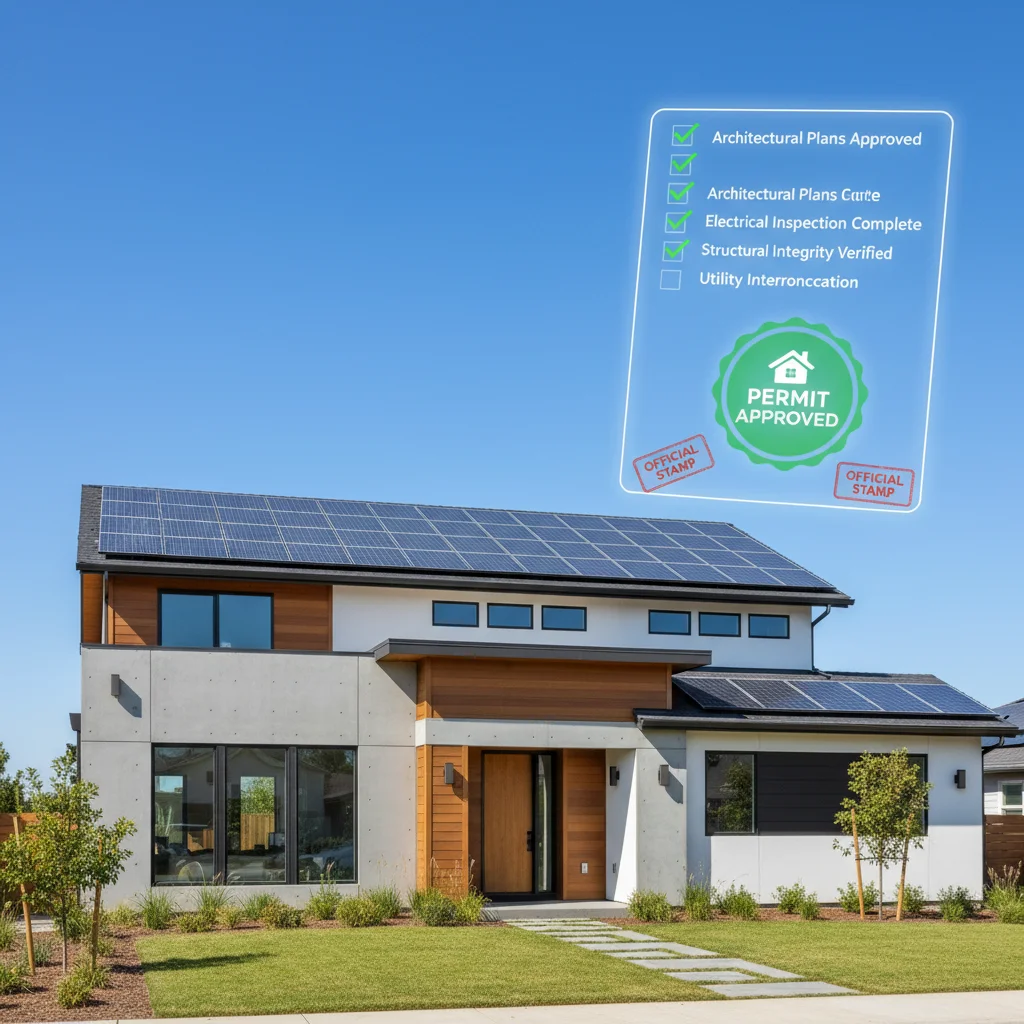
Once your plans have been approved and all requirements met, the permits will be issued. This is a significant milestone, as it allows construction to officially begin. Ensure you keep copies of all approved permits on site during the installation.
Step 6: Solar System Installation
With permits in hand, your solar installation team can proceed with mounting the panels, wiring the electrical components, and setting up the inverter and other equipment. This phase typically involves careful coordination and adherence to the approved plans.
Step 7: Inspections
After installation is complete, but before the system is energized, several inspections will be required. These usually include:
- Rough-in Electrical Inspection: Before walls are closed up, to check wiring.
- Final Electrical Inspection: To verify all electrical components are correctly installed and safe.
- Building/Structural Inspection: To confirm the structural integrity of the mounting system.
- Zoning Compliance Inspection: If applicable, to ensure adherence to any specific zoning requirements.
The inspector will verify that the installation matches the approved plans and complies with all applicable codes. Any deficiencies noted must be corrected before final approval.
Step 8: Utility Interconnection and Permission to Operate (PTO)
Once all local inspections are passed, the local authority will notify your utility company. The utility will then conduct its own final check to ensure the system is safe to connect to the grid and that the meter is configured for net metering. After their approval, they will issue a Permission to Operate (PTO), allowing you to switch on your system and start generating electricity. This is the final, triumphant step in the solar permitting 2026 journey!
Strategies for Streamlining Solar Permitting in 2026
While the permitting process can seem daunting, there are several strategies you can employ to make it smoother and faster.
1. Choose an Experienced and Reputable Solar Installer:
This is perhaps the most critical decision. A seasoned installer will have a deep understanding of local permitting requirements, established relationships with local authorities, and a track record of successful permit acquisitions. They will handle the bulk of the paperwork and communication, saving you time and stress. Ask prospective installers about their experience with solar permitting 2026 in your specific municipality.
2. Ensure Complete and Accurate Documentation:
Incomplete or incorrect applications are the leading cause of delays. Double-check all forms, plans, and specifications for accuracy before submission. Work closely with your installer to ensure every detail is covered according to 2026 standards.
3. Be Proactive and Responsive:
Stay in regular communication with your installer and, if necessary, the permitting office. Respond promptly to any requests for additional information or revisions. A quick turnaround on these items can significantly reduce overall processing time.
4. Understand Local Requirements:
While your installer will handle the specifics, having a basic understanding of your local municipality’s solar permitting requirements can be beneficial. Check your city or county website for specific ordinances or permit checklists. Some jurisdictions offer online resources specifically for solar projects.
5. Consider Expedited Permitting Programs:
Some progressive municipalities offer expedited permitting for simple, standardized solar installations. Inquire if such programs are available in your area for solar permitting 2026. These programs often rely on pre-approved designs or simplified checklists, significantly cutting down review times.
6. Leverage Technology:
As digitalization increases, familiarize yourself with any online permitting portals your local jurisdiction uses. These platforms often provide real-time updates on your application status, allowing for greater transparency and easier communication.
Common Challenges and How to Overcome Them
Despite best efforts, you might encounter some common challenges during the solar permitting 2026 process. Knowing what to expect can help you prepare.
Challenge 1: Inconsistent Local Regulations
Even within the same state, permitting requirements can vary wildly from one town to the next. This inconsistency can be frustrating and lead to confusion. Solution: Rely heavily on your experienced local installer. They will be familiar with the specific nuances of your municipality. If you’re tackling it yourself, thoroughly research your local building department’s website or contact them directly for their specific solar permit checklist.
Challenge 2: Long Review Times
Especially in busy areas or during peak solar seasons, permit review times can be lengthy. Solution: Plan ahead. Start the permitting process as early as possible. Maintain polite but persistent communication with the permitting office through your installer. Some offices may offer a way to check the status online, which can help manage expectations.
Challenge 3: Technical Revisions Requested
It’s not uncommon for plan reviewers to request modifications to your system design or documentation. This could be due to minor discrepancies, updated codes, or specific interpretations. Solution: Ensure your installer has a quick turnaround process for revisions. Promptly address any issues raised by the permitting office to avoid prolonged delays. Sometimes, a quick call or clarification can resolve an issue faster than a full resubmission.
Challenge 4: Aesthetic or HOA Restrictions
Some communities, particularly those with Homeowners Associations (HOAs), may have strict rules regarding the appearance or placement of solar panels. Solution: Address HOA approvals early in the process. Many states have ‘solar access laws’ that protect a homeowner’s right to install solar, but these often come with reasonable aesthetic guidelines. Your installer can help navigate these discussions and ensure your design meets both technical and aesthetic requirements. Understanding these rules is a critical part of solar permitting 2026 for many homeowners.
The Benefits of a Smooth Permitting Process
While the permitting process requires effort, a smooth and efficient journey offers numerous benefits:
- Faster Installation: Expedited permits mean your solar system can be installed and operational sooner, allowing you to start saving money and generating clean energy without unnecessary delays.
- Reduced Project Costs: Delays can lead to increased labor costs or even storage fees for equipment. A streamlined process helps keep your project on budget.
- Peace of Mind: Knowing that your system is fully compliant with all local codes and safety regulations provides immense peace of mind, protecting your investment and your home.
- Ensured Safety: The permitting and inspection processes are fundamentally about safety. They ensure that your electrical work is sound, your roof can handle the load, and your system won’t pose a fire hazard.
- Eligibility for Incentives: Many solar incentives, rebates, and tax credits require proof of a properly permitted and inspected system. A smooth permitting process ensures you can claim all eligible financial benefits.
Future Outlook for Solar Permitting Beyond 2026
The trend towards simplifying and standardizing solar permitting is likely to continue beyond 2026. As solar energy becomes even more mainstream, expect greater adoption of ‘SolarAPP+’ (Solar Automated Permit Processing) or similar automated online permitting platforms, which can approve residential solar permits in minutes. Federal and state incentives often include provisions for local governments to streamline their permitting processes, further encouraging efficiency.
The increasing integration of battery storage and electric vehicle charging infrastructure with residential solar systems will also likely influence future permitting requirements. As these technologies become more common, codes will adapt to ensure their safe and efficient integration into homes and the grid.
Conclusion: Your Guide to Successful Solar Permitting in 2026
Navigating solar permitting 2026 is an essential step on your journey to energy independence. While it can appear complex, approaching it with a clear understanding of the process, a commitment to thorough documentation, and the support of an experienced solar installer will significantly enhance your chances of a smooth and swift approval. By staying informed about evolving regulations and proactively addressing any challenges, you can ensure your residential solar project moves from concept to completion efficiently, allowing you to enjoy the many benefits of clean, renewable energy for years to come. Embrace the future of energy for your home with confidence, knowing you’ve mastered the permitting path.