Commercial Solar Permitting 2026: Navigating 1 MW+ Projects

Commercial Solar Permitting in 2026: Streamlining Approvals for Projects Over 1 MW
The renewable energy sector continues its meteoric rise, with solar power at the forefront of this global transformation. As we look towards 2026, the landscape for commercial solar permitting, particularly for projects exceeding 1 MW, is undergoing significant evolution. This article aims to provide a comprehensive guide to navigating the complexities, understanding the latest trends, and adopting best practices to streamline approvals for these large-scale solar installations. The imperative to accelerate the transition to clean energy is driving innovation not just in technology, but also in the regulatory frameworks that govern its deployment.
For developers, investors, and stakeholders involved in commercial solar projects, understanding the nuances of permitting is paramount to success. Delays in the permitting process can lead to substantial cost overruns, missed deadlines, and ultimately, a reduced return on investment. In 2026, with ambitious climate goals and increasing demand for sustainable energy, the efficiency of commercial solar permitting processes will be a critical determinant of project viability and the pace of renewable energy adoption.
The Evolving Regulatory Environment for Commercial Solar Permitting
The regulatory environment for commercial solar permitting in 2026 is a dynamic tapestry woven from federal, state, and local mandates. Each layer introduces its own set of requirements, challenges, and opportunities for streamlining. Projects over 1 MW, due to their scale and potential impact, often face heightened scrutiny and a more extensive set of compliance obligations compared to smaller installations.
Federal Initiatives and Their Impact
At the federal level, policies continue to encourage renewable energy development. Incentives such as the Investment Tax Credit (ITC) remain crucial, though their specific terms and conditions may evolve. Beyond financial incentives, federal agencies are increasingly focused on standardizing permitting processes and promoting inter-agency cooperation. The goal is to reduce bureaucratic hurdles without compromising environmental or safety standards. For large-scale commercial solar projects, understanding the interplay between federal environmental reviews, land use regulations (especially on federal lands), and grid interconnection standards is vital.
State and Local Reforms
Many states are taking proactive steps to streamline commercial solar permitting. This includes the development of statewide permitting guides, standardized application forms, and the establishment of dedicated solar ombudsmen or task forces. Local jurisdictions, however, often present the most significant variations. Zoning ordinances, building codes, fire safety regulations, and aesthetic considerations can differ dramatically from one municipality to another. In 2026, we anticipate a continued push for greater consistency at the local level, driven by state-level mandates and the sharing of best practices among communities. Developers of 1 MW+ projects must be prepared to engage early and often with local planning and zoning departments.
The Role of Digitalization in Permitting
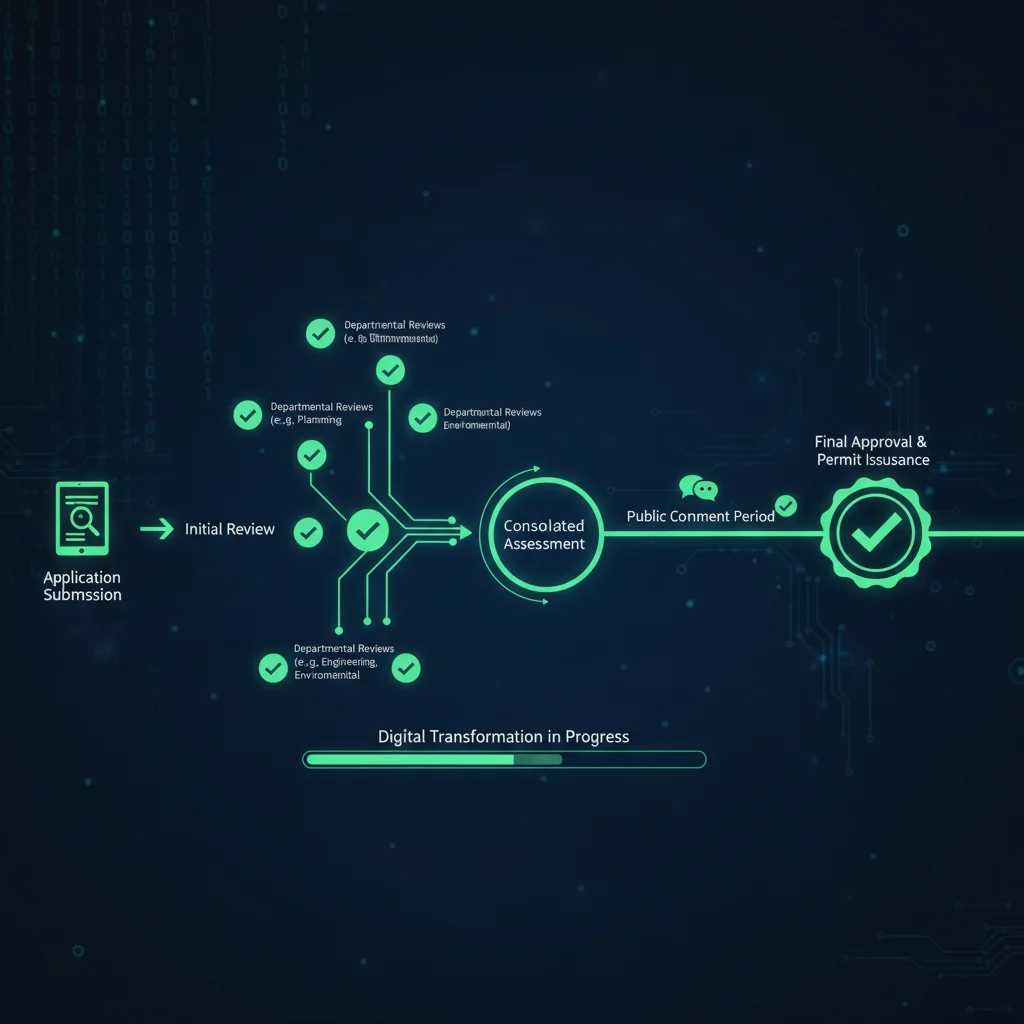
One of the most significant trends transforming commercial solar permitting is digitalization. Electronic permitting platforms are becoming more sophisticated, allowing for online application submission, real-time status tracking, and digital document management. This not only speeds up the process but also enhances transparency and reduces administrative burdens. By 2026, widespread adoption of these digital tools is expected, making it imperative for developers to be proficient in their use and to ensure their submissions are digitally compliant.
Key Challenges in Permitting 1 MW+ Commercial Solar Projects
While the push for renewable energy is strong, large-scale commercial solar projects still encounter several significant hurdles in the permitting process. Addressing these challenges proactively is key to successful project delivery.
Grid Interconnection Complexities
For projects over 1 MW, grid interconnection is often the most complex and time-consuming aspect of permitting. The existing electrical grid infrastructure may require significant upgrades to accommodate large influxes of solar power. This involves detailed technical studies, lengthy utility review processes, and substantial interconnection costs. In 2026, utilities are under increasing pressure to modernize their grids and streamline interconnection procedures, but developers must still anticipate potential delays and budget accordingly for these upgrades.
Environmental and Land Use Considerations
Large commercial solar installations require significant land area, which can lead to environmental and land-use conflicts. Permitting bodies often require detailed environmental impact assessments to evaluate potential effects on ecosystems, wildlife habitats, and water resources. Furthermore, land zoning regulations may need to be amended or special use permits obtained, especially for projects located outside traditional industrial zones. Navigating these environmental and land use requirements necessitates thorough pre-planning and often involves engagement with environmental consultants and community stakeholders.
Community Engagement and Public Perception
Public perception and community acceptance play an increasingly critical role in the approval of large solar projects. Concerns about visual impact, property values, and the perceived industrialization of rural areas can lead to local opposition. Effective community engagement strategies, including transparent communication, public forums, and addressing local concerns, are essential to building support and preventing permitting roadblocks. Developers must understand that early and continuous dialogue with the community can significantly smooth the path to approval.
Navigating Multiple Jurisdictions and Agencies
A single 1 MW+ commercial solar project can fall under the purview of numerous federal, state, and local agencies, each with its own permitting requirements. Coordinating submissions, responding to inquiries, and managing approvals across this multitude of entities can be a daunting task. The lack of a single, unified permitting authority often leads to duplicative efforts and extended timelines. Developers need robust project management systems and a deep understanding of the jurisdictional landscape to effectively manage this complexity.
Strategies for Streamlining Commercial Solar Permitting in 2026
To overcome the inherent challenges and expedite the approval process for 1 MW+ commercial solar projects, developers must adopt strategic approaches that prioritize efficiency, collaboration, and proactive engagement.
Early and Thorough Project Planning
The foundation of a successful permitting process is comprehensive early-stage planning. This includes:
- Site Selection: Choose sites that minimize environmental impact, align with existing zoning, and have favorable grid interconnection potential.
- Feasibility Studies: Conduct detailed studies covering technical, financial, environmental, and regulatory aspects to identify potential issues early on.
- Pre-application Meetings: Engage with all relevant permitting authorities (local, state, federal, and utility) as early as possible. These meetings can clarify requirements, identify potential red flags, and establish lines of communication.
By investing time and resources upfront, developers can significantly reduce the likelihood of costly delays down the line.
Leveraging Technology and Digital Tools
The digital transformation of permitting offers immense opportunities for efficiency. Developers should:
- Utilize e-Permitting Platforms: Become proficient with online portals for application submission, status tracking, and communication.
- Standardize Documentation: Prepare all necessary documentation in a standardized, digital format that meets the requirements of various agencies.
- Employ Project Management Software: Use specialized software to track deadlines, manage tasks, and coordinate communications across different permitting stages and stakeholders.
These tools not only streamline submissions but also provide a transparent audit trail of the permitting process.

Building Strong Relationships with Stakeholders
Collaboration and communication are vital. Developers should focus on:
- Engaging Local Communities: Proactively address community concerns through open houses, public meetings, and clear communication about project benefits and mitigation measures.
- Working with Utilities: Establish a collaborative relationship with the utility company early in the process, especially regarding interconnection studies and upgrades.
- Consulting with Agencies: Maintain open lines of communication with permitting agencies, seeking clarification on requirements and addressing any concerns promptly.
A proactive and cooperative approach can transform potential adversaries into project allies.
Expertise in Regulatory Compliance
Given the complexity of commercial solar permitting, access to specialized expertise is invaluable. This may involve:
- Hiring Experienced Permitting Consultants: Consultants with a deep understanding of local, state, and federal regulations can navigate complex requirements and expedite approvals.
- Legal Counsel: Engage legal experts specializing in environmental law, land use, and energy regulations to ensure compliance and mitigate legal risks.
- In-house Expertise: Develop or acquire in-house expertise in permitting and regulatory affairs to ensure continuous compliance and efficient process management.
Investing in expertise can save significant time and money in the long run.
Future Outlook: Innovations and Trends in Commercial Solar Permitting (2026 and Beyond)
The trajectory of commercial solar permitting in 2026 is one of continuous improvement and adaptation. Several emerging innovations and trends are set to further shape the landscape for projects over 1 MW.
Artificial Intelligence and Machine Learning in Permitting
AI and machine learning are beginning to revolutionize various administrative processes, and permitting is no exception. By 2026, we can expect to see AI-powered tools assisting with:
- Automated Document Review: AI can quickly review application documents for completeness and compliance with regulations, flagging inconsistencies or missing information.
- Predictive Analytics: Machine learning algorithms can analyze historical permitting data to predict potential bottlenecks, estimate approval timelines, and identify common issues, allowing developers to proactively address them.
- Regulatory Intelligence: AI can continuously monitor changes in regulations across jurisdictions, providing real-time updates and ensuring projects remain compliant.
These technologies promise to significantly reduce manual effort and accelerate the review process.
Standardization and Harmonization Efforts
The push for greater standardization across jurisdictions will continue. Federal and state governments are recognizing the economic and environmental benefits of a more uniform permitting process. This may include:
- Model Ordinances: Development and adoption of standardized model ordinances for solar projects that local governments can adapt.
- Inter-agency Coordination: Enhanced collaboration and data sharing between different permitting agencies to reduce duplicative reviews.
- National Permitting Guidelines: A move towards more comprehensive national guidelines that provide a framework for state and local regulations, while still allowing for regional specificities.
Such efforts aim to create a more predictable and efficient environment for commercial solar permitting.
Emphasis on Environmental Justice and Equity
As large-scale solar projects expand, there is an increasing focus on environmental justice and ensuring that the benefits of renewable energy are shared equitably, and that potential negative impacts do not disproportionately affect disadvantaged communities. Permitting processes in 2026 will likely incorporate more stringent requirements for:
- Community Benefit Agreements: Projects may be required to demonstrate tangible benefits to local communities, such as job creation, local economic development, or energy cost savings.
- Inclusive Engagement: Permitting authorities will emphasize inclusive engagement strategies to ensure that all community voices, particularly those from marginalized groups, are heard and considered.
- Cumulative Impact Assessments: More comprehensive assessments of the cumulative environmental and social impacts of multiple projects in a given region.
Developers will need to integrate these considerations into their project planning and community engagement strategies.
Grid Modernization and Smart Grid Integration
The future of commercial solar permitting is inextricably linked to the evolution of the electrical grid. As more 1 MW+ projects come online, the need for smart grid technologies becomes more urgent. Permitting processes will increasingly consider:
- Advanced Grid Studies: More sophisticated analyses of how new solar projects will interact with a dynamic, intelligent grid.
- Energy Storage Integration: Permitting frameworks that facilitate the co-location and integration of battery storage systems with solar arrays to enhance grid stability and reliability.
- Distributed Energy Resource Management: Regulations and standards that support the seamless integration and management of distributed solar generation within a modernized grid infrastructure.
These advancements will not only improve grid resilience but also streamline the interconnection process for large-scale solar projects.
The Economic Imperative for Efficient Commercial Solar Permitting
Beyond environmental benefits, the efficient permitting of commercial solar projects, especially those exceeding 1 MW, carries a substantial economic imperative. The solar industry is a significant job creator, driving innovation and attracting substantial investment. Delays in permitting can stifle this growth, leading to lost economic opportunities and hindering the broader energy transition.
Job Creation and Local Economic Growth
Large-scale solar projects create jobs across various sectors, from manufacturing and installation to operations and maintenance. Streamlined permitting processes ensure that these projects can move from conception to completion more quickly, thereby accelerating job creation and injecting capital into local economies. This includes direct employment and indirect benefits through local supply chains and service providers.
Investment Attraction
Investors are increasingly seeking stable and predictable regulatory environments for their renewable energy investments. Jurisdictions with efficient and transparent permitting processes are more attractive to developers and financial institutions, leading to increased capital flow into the commercial solar sector. Conversely, areas with protracted and opaque permitting can deter investment, diverting funds to more favorable regions.
Energy Security and Resilience
Deploying large commercial solar projects quickly contributes to national and regional energy security by diversifying the energy mix and reducing reliance on volatile fossil fuel markets. It also enhances grid resilience by decentralizing power generation and providing local sources of electricity, which can be critical during extreme weather events or other disruptions. Efficient permitting is a direct enabler of these strategic objectives.
Meeting Climate Goals
Ultimately, the efficiency of commercial solar permitting is directly tied to our ability to meet ambitious climate change mitigation targets. Every delay in bringing a 1 MW+ solar project online represents a lost opportunity to reduce greenhouse gas emissions. By streamlining these processes, governments and industry can collectively accelerate the transition to a low-carbon economy, delivering significant environmental benefits for current and future generations.
Conclusion
The landscape of commercial solar permitting in 2026 for projects over 1 MW is complex yet ripe with opportunities for optimization. While challenges such as grid interconnection, environmental concerns, and jurisdictional variations persist, the industry is seeing a concerted effort towards streamlining through digitalization, standardization, and proactive stakeholder engagement. Developers who adopt comprehensive planning, leverage advanced technologies, cultivate strong relationships, and invest in specialized expertise will be best positioned to navigate this evolving environment successfully.
Looking ahead, innovations in AI, continued harmonization efforts, a growing emphasis on environmental justice, and advancements in smart grid integration promise to further refine and accelerate the permitting process. The economic and environmental imperative to deploy large-scale commercial solar projects efficiently is undeniable. By embracing these trends and strategies, we can collectively unlock the full potential of solar energy, driving sustainable growth and securing a cleaner energy future.