EV Charging & Solar Integration: 2026 Blueprint for Businesses
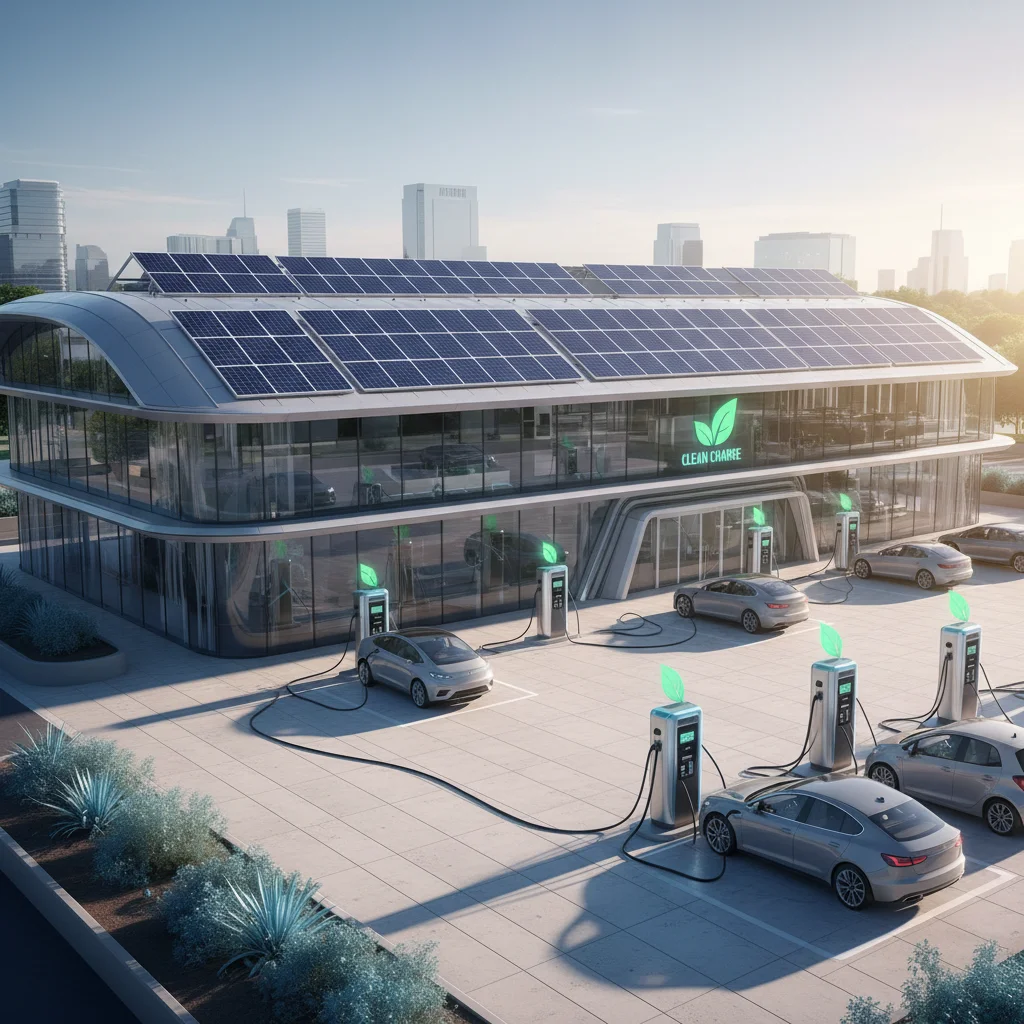
The year 2026 is rapidly approaching, bringing with it a pivotal moment for businesses globally. The convergence of electric vehicle (EV) adoption and the imperative for sustainable energy solutions is reshaping commercial operations. Businesses are no longer just considering, but actively pursuing, the integration of EV charging infrastructure with commercial solar power systems. This strategic move is not merely about environmental responsibility; it’s a critical blueprint for achieving energy independence, significant cost savings, and a competitive edge in a rapidly evolving market. The concept of EV Solar Integration is becoming a cornerstone of modern, forward-thinking business strategy.
The global push towards decarbonization, coupled with government incentives and consumer demand for eco-friendly practices, has accelerated the transition to electric mobility. For commercial entities, this presents both a challenge and an immense opportunity. How can businesses meet the growing demand for EV charging while simultaneously managing energy costs and reducing their carbon footprint? The answer lies in a well-planned, scalable EV Solar Integration strategy. This article will delve into the essential components of a 2026 blueprint for businesses looking to harness the power of the sun to fuel their EV fleets and support their employees’ and customers’ electric vehicles.
Understanding the landscape of 2026 requires a deep dive into technological advancements, regulatory frameworks, and economic incentives. Businesses that proactively embrace this integration will be better positioned to navigate future energy markets, enhance their brand image, and contribute meaningfully to a sustainable planet. From initial feasibility studies to advanced energy management systems, every step in this journey is crucial. We’ll explore the multifaceted benefits, potential hurdles, and practical steps required to successfully implement an EV Solar Integration project, ensuring your business is not just prepared, but thriving in the electric future.
The Compelling Case for EV Solar Integration in 2026
The synergy between electric vehicles and solar power is undeniable. For businesses, this integration offers a compelling array of benefits that extend far beyond environmental stewardship. As we look towards 2026, the economic, operational, and reputational advantages of EV Solar Integration are becoming increasingly significant. This section explores why this combination is not just a trend, but a strategic imperative for long-term business success.
Economic Advantages: Cost Savings and ROI
One of the most immediate and tangible benefits of integrating EV charging with commercial solar is the significant reduction in operational costs. By generating electricity on-site, businesses can substantially lower their reliance on grid power, especially during peak demand hours when electricity rates are highest. This translates directly into lower utility bills, a crucial factor for any budget-conscious enterprise. The fluctuating nature of fossil fuel prices makes grid electricity costs unpredictable, whereas solar power provides a stable, predictable energy source, allowing for more accurate financial forecasting.
Furthermore, the return on investment (ROI) for solar installations continues to improve. With decreasing panel costs, enhanced efficiency, and various federal, state, and local incentives (tax credits, grants, rebates), the upfront investment in solar energy is recouped more quickly than ever before. When EV charging infrastructure is powered by this ‘free’ and renewable energy, the fuel costs for company fleets or employee vehicles plummet, adding another layer to the economic benefits. Businesses can also explore opportunities for selling excess solar energy back to the grid through net metering programs, creating an additional revenue stream.
Energy Independence and Resilience
Reliance on a single energy source makes businesses vulnerable to grid outages, price volatility, and supply chain disruptions. EV Solar Integration, especially when coupled with battery storage solutions, offers a robust path to energy independence. By generating and storing their own power, businesses can ensure continuity of operations, even during grid failures. This resilience is invaluable, particularly for critical services or businesses where downtime can lead to substantial financial losses. For EV charging, this means a reliable power source that isn’t susceptible to external energy market fluctuations.
The ability to manage and control your own energy supply also provides greater flexibility. Businesses can optimize their energy consumption patterns, charging EVs during periods of high solar generation and low demand, or drawing from stored energy during peak times. This intelligent energy management system minimizes reliance on external grids and maximizes the efficiency of both solar generation and EV charging operations.
Environmental Stewardship and Brand Enhancement
In an era of increasing environmental consciousness, consumers, investors, and employees are increasingly drawn to businesses that demonstrate a genuine commitment to sustainability. Integrating EV charging with solar power sends a powerful message about a company’s dedication to reducing its carbon footprint and combating climate change. This commitment translates into enhanced brand reputation, attracting environmentally conscious customers and top talent.
Beyond public perception, genuine environmental benefits are achieved. By powering EVs with solar energy, businesses directly reduce greenhouse gas emissions associated with both electricity generation and vehicle propulsion. This contributes to cleaner air and a healthier planet, aligning with global sustainability goals. Reporting on these environmental achievements can also satisfy stakeholder demands for corporate social responsibility (CSR) initiatives, further strengthening the business’s standing.
Future-Proofing Operations
The transition to electric vehicles is not a passing fad; it’s a fundamental shift in transportation. Businesses that fail to adapt risk being left behind. By investing in EV Solar Integration now, companies are future-proofing their operations. They are preparing for a future where EVs are commonplace, where energy costs may be higher, and where regulatory pressures for sustainability are more stringent. This proactive approach ensures long-term viability and competitive advantage. It positions the business as an innovator and leader in its industry, ready to meet the demands of tomorrow’s market.
Key Components of a 2026 EV Solar Integration Blueprint
Developing a successful EV Solar Integration strategy for 2026 requires careful planning and consideration of several key components. This blueprint outlines the essential elements that businesses must address to ensure a robust, efficient, and scalable system.
1. Comprehensive Energy Audit and Site Assessment
The first critical step is a thorough energy audit of your existing facilities and a detailed site assessment. This involves analyzing current electricity consumption patterns, identifying peak demand times, and evaluating the available roof space or land for solar panel installation. The assessment should also consider the structural integrity of buildings, shading issues, and local zoning regulations. Understanding your current energy profile is fundamental to accurately sizing your solar array and battery storage system to meet both your operational needs and your projected EV charging demands.
2. Sizing the Solar PV System for EV Demand
Accurately sizing the solar photovoltaic (PV) system is paramount. This isn’t just about covering current building loads; it’s about anticipating future EV charging requirements. Businesses need to project the number of EVs they expect to support (fleet vehicles, employee vehicles, customer vehicles) and their charging patterns (e.g., overnight charging for fleets, daytime charging for employees/customers). This projection will dictate the required solar generation capacity. Over-sizing can lead to unnecessary costs, while under-sizing will negate the benefits of energy independence and cost savings. Advanced simulation tools can help model various scenarios and optimize system size.
3. Integrating Battery Energy Storage Systems (BESS)
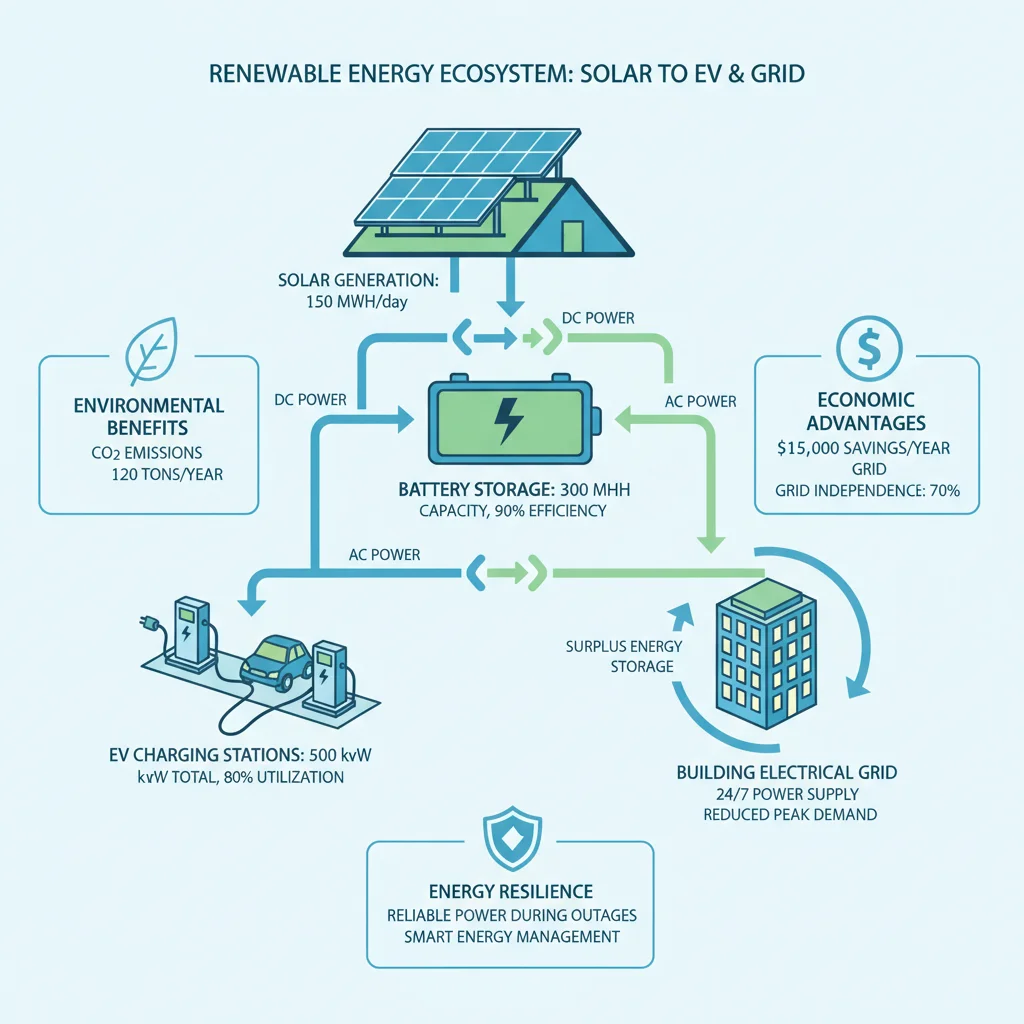
For true EV Solar Integration, battery energy storage systems (BESS) are almost indispensable. Solar power is intermittent, generating electricity only when the sun shines. BESS allows businesses to store excess solar energy generated during the day and discharge it during periods of low solar production (e.g., at night, on cloudy days) or high electricity demand. This not only maximizes self-consumption of solar energy but also provides demand charge management, shaving off expensive peak demand charges from the utility bill. BESS enhances resilience, offering backup power for both the building and EV charging stations during grid outages.
4. Smart EV Charging Infrastructure
The choice of EV charging infrastructure is crucial. Businesses should invest in smart charging stations that can communicate with the solar PV system and BESS. Smart chargers enable dynamic load management, allowing businesses to prioritize charging based on available solar power, battery levels, and time-of-use electricity rates. This prevents overloading the electrical system and optimizes energy consumption. Features like scheduled charging, remote monitoring, and payment processing are also important considerations. Businesses should assess Level 2 chargers for daily use and consider DC fast chargers for quicker turnaround needs, especially for public-facing stations or high-utilization fleet vehicles.
5. Advanced Energy Management Systems (EMS)
An advanced energy management system (EMS) acts as the brain of the entire EV Solar Integration setup. The EMS monitors solar production, battery state of charge, building load, and EV charging demand in real-time. It uses algorithms to optimize energy flow, ensuring maximum self-consumption of solar power, efficient battery utilization, and cost-effective EV charging. An effective EMS can integrate with building management systems (BMS) for a holistic approach to energy efficiency, providing valuable data analytics and reporting capabilities for continuous improvement.
6. Grid Interconnection and Net Metering
While the goal is energy independence, most businesses will still maintain a connection to the utility grid. Understanding grid interconnection requirements and local net metering policies is vital. Net metering allows businesses to send excess solar electricity back to the grid in exchange for credits on their utility bill. This effectively turns the grid into a virtual battery. Navigating the regulatory landscape and securing necessary permits for grid interconnection can be complex, making it advisable to work with experienced solar installers and consultants.
Challenges and Considerations for 2026 Implementation
While the benefits of EV Solar Integration are substantial, businesses must also be prepared to address potential challenges and critical considerations during implementation. Proactive planning can mitigate these hurdles and ensure a smoother transition.
Initial Capital Investment
The upfront cost of installing commercial solar panels, battery storage, and EV charging infrastructure can be significant. This initial capital outlay is often a primary barrier for businesses. However, it’s crucial to view this as a long-term investment with substantial ROI rather than a short-term expense. Exploring financing options such as power purchase agreements (PPAs), leases, and commercial loans can help spread the cost. Furthermore, government incentives, tax credits, and grants can significantly offset these initial expenses, making projects more financially viable.
Space and Infrastructure Constraints
Not all commercial properties are ideally suited for extensive solar installations. Roof space may be limited, shaded by adjacent buildings, or structurally unsuitable for the weight of solar panels. Similarly, installing EV charging stations requires adequate electrical capacity and physical space for parking. Businesses need to conduct thorough site assessments to identify any existing infrastructure limitations and plan for necessary upgrades to electrical panels, wiring, and potentially even parking lot layouts. Solutions like solar carports can address both shading and space issues while generating power.
Grid Interconnection and Permitting Complexities
Connecting a large-scale solar and EV charging system to the utility grid involves navigating a maze of regulations, permits, and utility requirements. Interconnection agreements can be complex and time-consuming, varying significantly by jurisdiction. Businesses must factor in these administrative delays and potential costs. Engaging with experienced solar developers and legal counsel specializing in renewable energy can streamline this process and ensure compliance with all local codes and utility standards.
Technology Evolution and Obsolescence
The renewable energy and EV sectors are characterized by rapid technological advancements. What is cutting-edge today might be outdated in a few years. Businesses need to design their EV Solar Integration systems with future-proofing in mind, opting for modular and scalable solutions. This includes choosing charging stations with upgradeable software, battery systems that can be expanded, and solar panels with high efficiency and long warranties. Regular technology reviews and maintenance plans are essential to keep the system optimized and avoid premature obsolescence.
Operational Management and Maintenance
While solar PV systems are relatively low-maintenance, the integrated system of solar, battery storage, and EV chargers requires ongoing monitoring and occasional maintenance. This includes cleaning solar panels, checking battery health, and ensuring EV chargers are operational. Businesses need to allocate resources for these tasks or contract with specialized service providers. An effective energy management system can simplify monitoring, alert operators to issues, and provide performance analytics, but human oversight remains critical.
Strategic Implementation for Businesses: A 2026 Roadmap
Having understood the components and challenges, businesses need a clear roadmap for strategic implementation of EV Solar Integration by 2026. This section outlines a phased approach to ensure a successful and sustainable transition.
Phase 1: Feasibility and Planning (Now – 2024)
- Conduct a Detailed Feasibility Study: Engage energy consultants to perform comprehensive energy audits, site assessments, and financial analyses. This includes projecting future EV charging needs and evaluating the economic viability of solar and storage.
- Research Incentives and Regulations: Identify all available federal, state, and local incentives (tax credits, rebates, grants) that can reduce project costs. Understand local permitting requirements and utility interconnection policies.
- Develop a Phased Implementation Plan: For larger businesses, a phased approach might be more manageable. Start with a pilot project or integrate solar for existing energy loads, then expand to EV charging.
- Select Technology Partners: Identify reputable solar installers, battery storage providers, and EV charging infrastructure vendors. Prioritize partners with proven track records, comprehensive warranties, and excellent customer support.
Phase 2: Design and Procurement (2024 – 2025)
- System Design and Engineering: Work with engineers to finalize the design of the solar PV system, battery storage, and EV charging infrastructure. Ensure designs comply with all electrical codes and optimize energy flow.
- Secure Financing: Finalize financing arrangements, whether through direct purchase, PPA, lease, or commercial loans. Apply for relevant grants and incentives.
- Procure Equipment: Order solar panels, inverters, battery storage units, EV chargers, and all necessary electrical components. Consider lead times and supply chain reliability.
- Obtain Permits: Begin the process of securing all necessary permits from local authorities and utility companies for construction and grid interconnection.

Phase 3: Installation and Commissioning (2025 – 2026)
- Installation: Oversee the installation of solar panels, battery storage, and EV charging stations. Ensure work is done by certified professionals and adheres to safety standards.
- Grid Interconnection: Work closely with the utility company to complete the grid interconnection process and activate net metering.
- System Commissioning: Thoroughly test all components of the EV Solar Integration system to ensure optimal performance. Calibrate the Energy Management System (EMS).
- Staff Training: Train relevant staff on the operation and basic maintenance of the EV charging stations and monitoring systems.
Phase 4: Operation, Monitoring, and Optimization (2026 and Beyond)
- Continuous Monitoring: Utilize the EMS to continuously monitor system performance, energy generation, consumption, and EV charging patterns.
- Performance Optimization: Regularly analyze data to identify areas for improvement in energy efficiency and cost savings. Adjust charging schedules or energy usage strategies as needed.
- Maintenance and Upgrades: Implement a proactive maintenance schedule for all components. Plan for future upgrades or expansions as EV adoption grows and technology evolves.
- Impact Reporting: Track and report on the environmental and economic impacts of the EV Solar Integration, showcasing sustainability achievements to stakeholders.
Future Trends and Innovations in EV Solar Integration
The landscape of EV Solar Integration is dynamic, with continuous innovations shaping its future. Businesses planning their 2026 blueprint should be aware of these emerging trends to ensure their systems are adaptable and future-ready.
Vehicle-to-Grid (V2G) Technology
V2G technology allows EVs to not only draw power from the grid but also feed excess energy back into it or to the building. This transforms EVs into mobile energy storage units. For businesses with large EV fleets, V2G can become a significant asset, providing grid services, participating in demand response programs, and further enhancing energy resilience. While still in nascent stages for commercial deployment, V2G is poised to revolutionize how businesses manage their energy and EV assets.
Advanced AI and Machine Learning for Energy Management
Artificial intelligence (AI) and machine learning (ML) are increasingly being integrated into Energy Management Systems. These advanced algorithms can predict energy demand and solar generation with higher accuracy, optimize battery dispatch, and even anticipate EV charging needs based on historical data and real-time conditions. AI-powered EMS will enable even more sophisticated demand charge management and energy arbitrage, maximizing economic benefits for businesses.
Modular and Scalable Solutions
The trend towards modular and scalable solutions will continue, making it easier for businesses to expand their EV Solar Integration systems as their needs grow. This includes modular battery units, easily expandable solar arrays, and charging stations that can be added or upgraded without overhauling the entire infrastructure. This flexibility is crucial in a rapidly evolving market.
Integrated Microgrids
For larger commercial campuses or industrial sites, the concept of integrated microgrids is gaining traction. A microgrid is a localized group of electricity sources and loads that typically operates connected to and synchronous with the traditional centralized grid (macrogrid), but can disconnect and function autonomously as an electrical island during grid disturbances. EV Solar Integration is a natural fit for microgrids, providing a resilient, self-sufficient energy ecosystem that can power an entire facility, including its EV charging needs, independent of the main grid when necessary.
Standardization and Interoperability
As the market matures, there will be a greater push for standardization and interoperability across different EV charging hardware, software platforms, and energy management systems. This will simplify integration, reduce complexity, and foster a more competitive market, ultimately benefiting businesses through lower costs and greater choice.
Conclusion: Powering the Future of Business with EV Solar Integration
The 2026 blueprint for businesses integrating EV charging with commercial solar is not just a technological upgrade; it’s a strategic imperative for a sustainable and profitable future. The convergence of economic advantages, environmental responsibility, and operational resilience makes a compelling case for this transformative approach. Businesses that proactively embrace EV Solar Integration will not only reduce their energy costs and carbon footprint but also enhance their brand, attract top talent, and future-proof their operations against market volatility and regulatory changes.
The journey towards full EV Solar Integration requires careful planning, significant investment, and a commitment to leveraging cutting-edge technology. From comprehensive energy audits and intelligent system design to advanced energy management and continuous optimization, each step is crucial. While challenges exist, the long-term benefits far outweigh the initial hurdles. By following a structured roadmap and staying abreast of emerging innovations, businesses can successfully navigate this transition, positioning themselves as leaders in the green economy.
As we move closer to 2026, the question is no longer whether to adopt EV charging and solar, but how to integrate them most effectively. The businesses that answer this question strategically and decisively will be the ones that thrive, demonstrating that environmental stewardship and economic success can, and indeed must, go hand-in-hand. This blueprint serves as a guide for those ready to power their future with the sun and electric vehicles, creating a more resilient, sustainable, and prosperous enterprise for years to come.