Enroll in Community Solar by June 2026: Secure 5% Electricity Bill Savings Annually
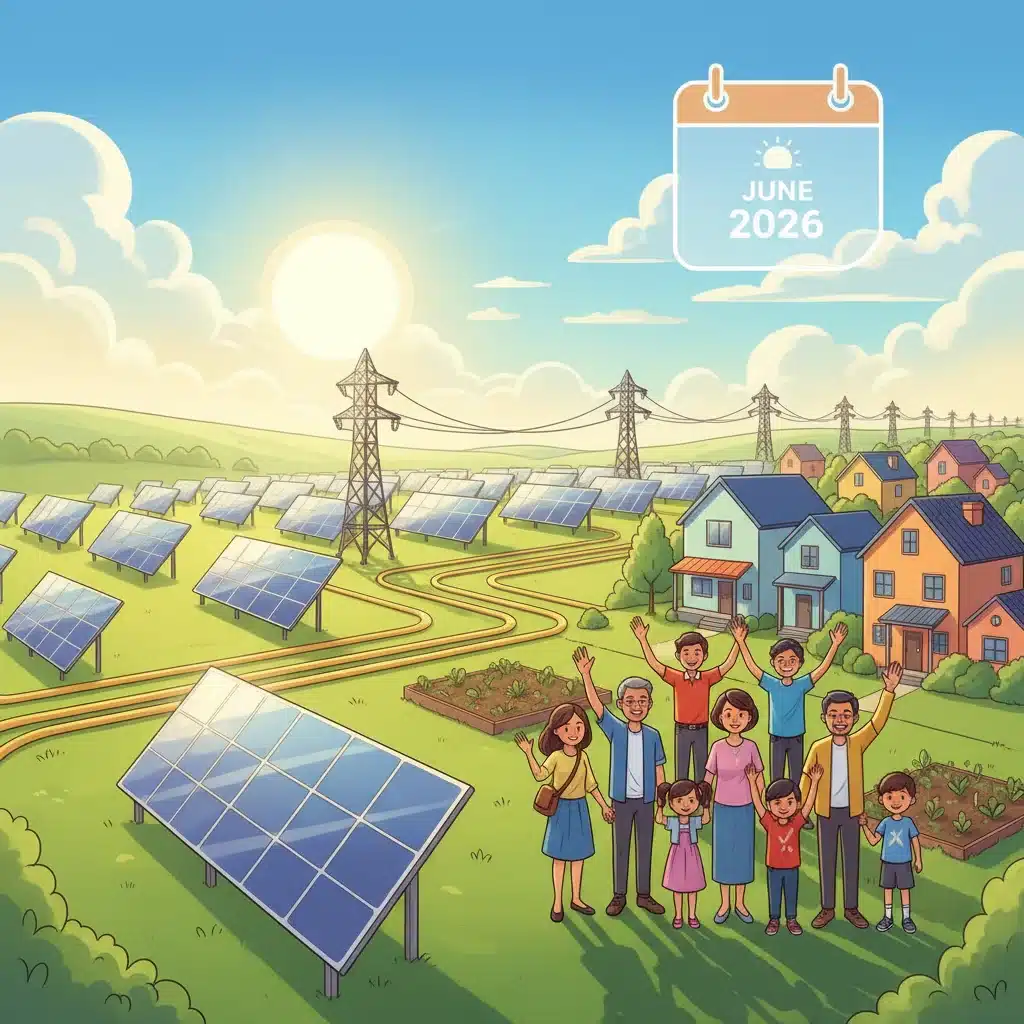
Time-Sensitive Opportunity: Enroll in Community Solar Programs by June 2026 to Secure an Average 5% Annual Electricity Bill Reduction
Are you looking for a simple, impactful way to save money on your electricity bills while also supporting clean, renewable energy? The clock is ticking! A significant, time-sensitive opportunity is available for many households and businesses: enrolling in community solar enrollment programs before June 2026. This isn’t just about going green; it’s about smart financial planning, with participants typically securing an average 5% annual reduction on their electricity bills. If you’ve ever considered solar but found rooftop panels impractical or too expensive, community solar offers an accessible and powerful alternative. This comprehensive guide will walk you through everything you need to know to take advantage of this limited-time offer, ensuring you don’t miss out on substantial savings and a greener future.
What Exactly is Community Solar? A Gateway to Affordable Clean Energy
Before diving into the benefits and the urgency, let’s clarify what community solar entails. Community solar, sometimes called shared solar or solar gardens, allows multiple utility customers to subscribe to a portion of a larger, off-site solar photovoltaic (PV) array. Instead of installing solar panels on your own roof, you subscribe to a share of electricity generated by a local solar farm. The energy produced by your share is then credited to your electricity bill, typically resulting in a discount on your total energy costs. This model democratizes access to solar energy, making it available to renters, homeowners with unsuitable roofs, or those who simply prefer not to install panels on their property. The beauty of community solar enrollment is its simplicity and inclusivity.
This innovative approach addresses many of the traditional barriers to solar adoption. You don’t need to own your home, have a south-facing roof, or make a significant upfront investment. Your participation directly supports the development of local renewable energy projects, contributing to a more sustainable energy grid in your region. The concept is straightforward: a developer builds a large solar farm, individuals and businesses subscribe to it, and in return, they receive credits on their monthly utility bills. These credits are typically valued at a slightly higher rate than what subscribers pay for their share, creating the savings. This financial incentive, combined with the environmental benefits, makes community solar enrollment an increasingly attractive option.
The June 2026 Deadline: Why Time is of the Essence for Community Solar Enrollment
The June 2026 deadline is not arbitrary; it often marks the sunset of specific state or federal incentives that make community solar programs particularly lucrative for both developers and subscribers. Many states have established programs and financial mechanisms to kickstart the community solar industry, offering generous incentives that reduce the cost of developing these projects and pass significant savings onto consumers. As these programs mature, or as initial legislative mandates expire, the level of financial benefit for new subscribers may diminish. This means that enrolling before June 2026 could lock in higher savings rates and more favorable terms than might be available afterward.
Think of it as a limited-time sale on clean energy savings. By acting now, you secure your position in programs that offer guaranteed bill reductions, often for the entire duration of your subscription (which can be 10-20 years). Waiting could mean missing out on these peak savings. The urgency stems from the potential for program changes, reduced incentives, or even the full subscription of available projects. Early adopters benefit the most, and this window provides a golden opportunity to become one of them. Understanding the specific policies in your state is crucial, but the general trend indicates that the most advantageous terms for community solar enrollment are often found in the earlier stages of these programs.
Unlocking Savings: How Community Solar Reduces Your Electricity Bill by an Average of 5%
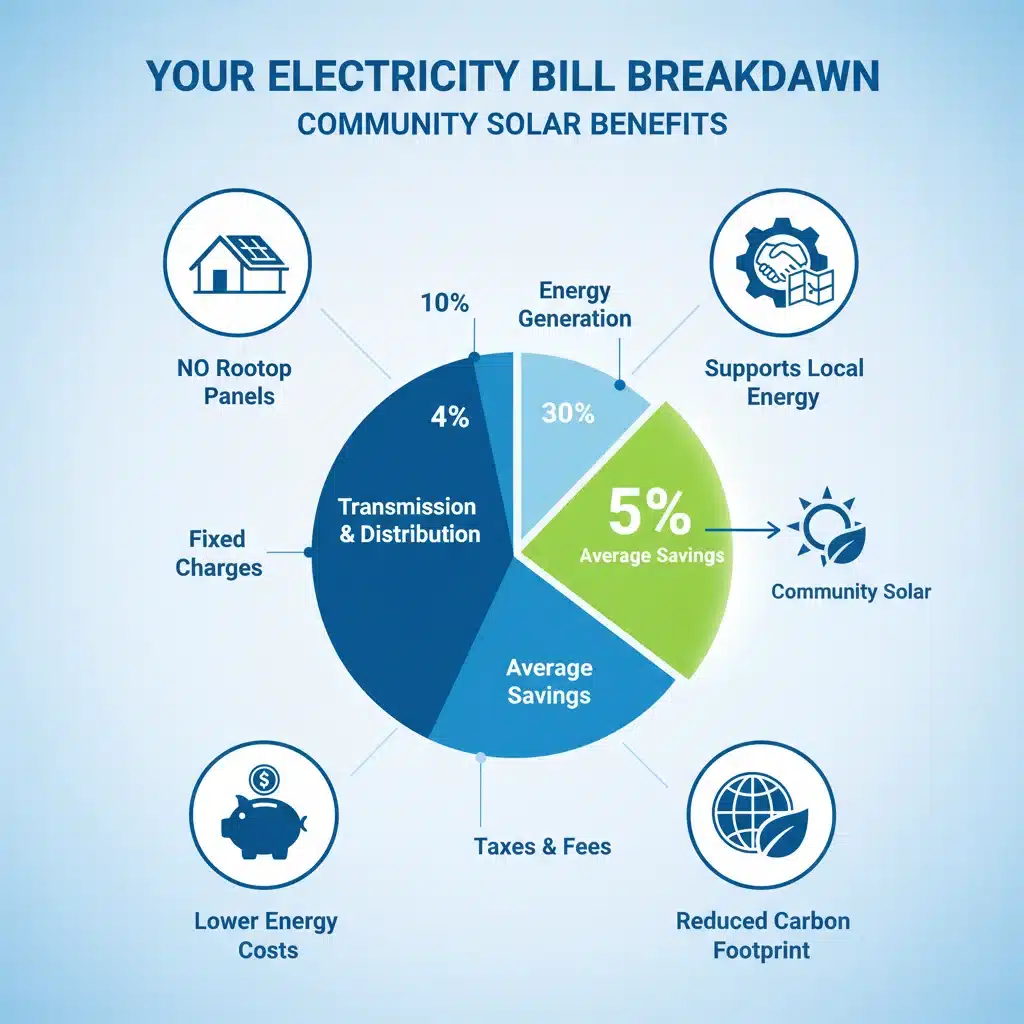
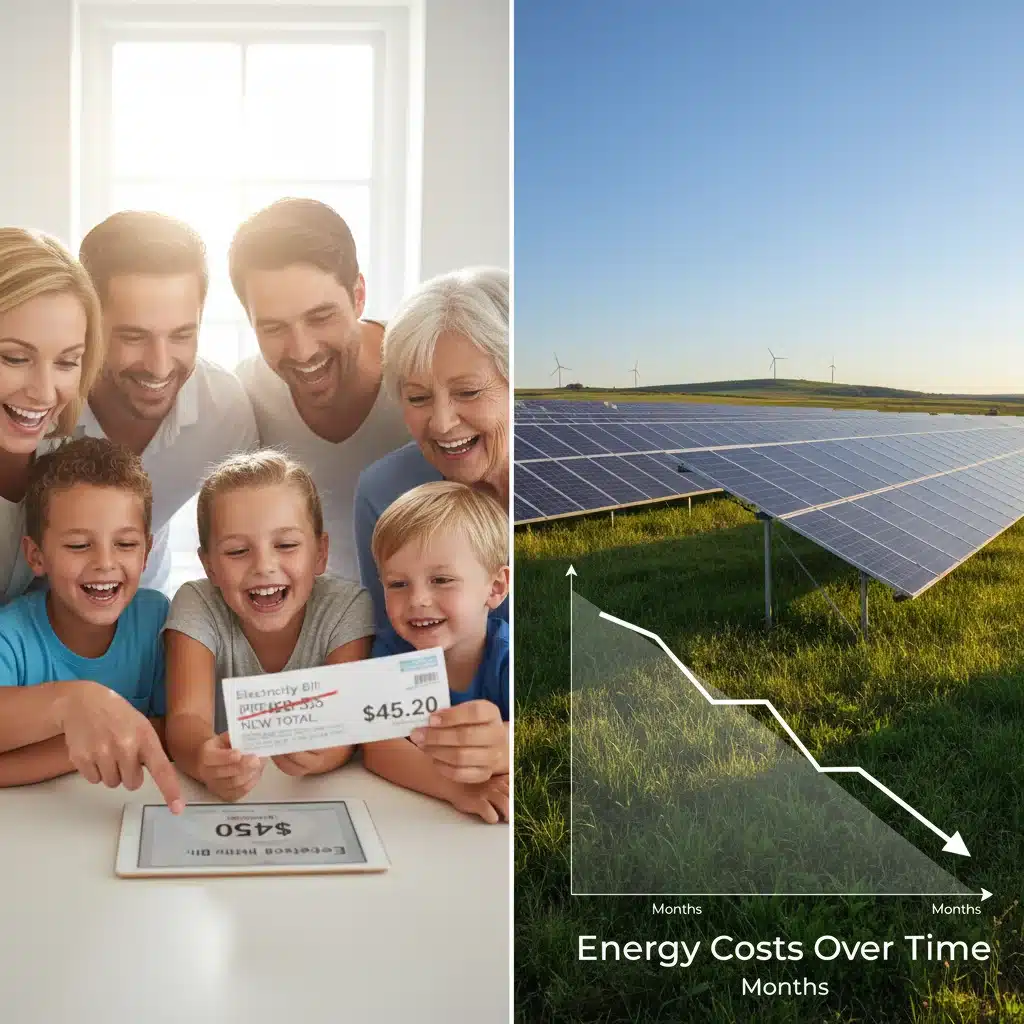
The primary driver for many considering community solar enrollment is the tangible financial benefit. On average, participants can expect to see a 5% reduction on their annual electricity bills. This might seem modest to some, but over the course of a year, and certainly over several years, these savings accumulate significantly. For a household paying $150 a month for electricity, a 5% saving translates to $7.50 per month, or $90 per year. Over a 20-year subscription, that’s $1,800 saved – often with no upfront cost or maintenance responsibilities.
The mechanism for these savings is typically a bill credit system. When you subscribe to a community solar project, you agree to purchase a portion of the solar farm’s output. The utility company then credits your monthly bill for the electricity generated by your share of the solar farm. The amount you pay for these solar credits is usually less than the value of the credits applied to your bill. This difference is your savings. For example, if you receive $100 in solar credits on your utility bill, you might only pay the community solar provider $95 for those credits, resulting in a $5 saving. This model ensures that you always save money, regardless of fluctuations in electricity prices. It’s a win-win: you support renewable energy and your wallet benefits directly. This consistent saving makes community solar enrollment a sound financial decision.
Beyond Savings: The Multifaceted Benefits of Community Solar Enrollment
While financial savings are a powerful motivator, the advantages of community solar enrollment extend far beyond your wallet. Participating in these programs offers a suite of environmental, social, and practical benefits:
- Environmental Impact: By subscribing to community solar, you directly support the growth of renewable energy and reduce reliance on fossil fuels. This helps decrease greenhouse gas emissions, combat climate change, and improve local air quality. It’s a tangible way to contribute to a cleaner planet without personal solar panel installation.
- Energy Independence and Grid Resiliency: Local solar projects diversify the energy supply, making the grid more robust and less susceptible to outages caused by disruptions to centralized power plants or transmission lines. It fosters local energy production and reduces dependence on distant energy sources.
- Accessibility for All: Community solar breaks down barriers. Renters, apartment dwellers, homeowners with shaded roofs, or those who can’t afford or don’t want rooftop panels can all participate. It democratizes access to clean energy.
- No Upfront Costs or Maintenance: Unlike rooftop solar, there are typically no upfront costs associated with joining a community solar program. You also bear no responsibility for the maintenance, insurance, or repair of the solar panels – that’s handled by the project developer.
- Support for Local Economies: Community solar projects often create local jobs in construction, installation, and maintenance. They also keep energy dollars circulating within the local economy.
- Predictable Energy Costs: While traditional electricity rates can fluctuate, many community solar subscriptions offer predictable rates for the solar credits, providing a hedge against rising utility costs.
- Simplicity and Flexibility: Signing up is usually a straightforward process. Many programs offer flexible subscription terms, and some allow you to transfer your subscription if you move within the same utility service territory.
These benefits collectively paint a picture of a forward-thinking choice that aligns personal financial goals with broader environmental and community well-being. The ease of community solar enrollment makes these benefits accessible to a wide audience.
Is Community Solar Right for You? Eligibility and What to Consider
Determining if community solar enrollment is the right move for you involves understanding eligibility and considering a few key factors. While specific criteria can vary by state and program, here are general guidelines:
Geographic Location and Utility Provider
The most crucial factor is whether community solar programs are available in your area and through your specific utility provider. Community solar projects are typically built to serve customers within a defined utility service territory. Check if your state has enabling legislation for community solar and if projects are active in your region. Many states, particularly in the Northeast, Mid-Atlantic, and some Western states, have robust programs.
Electricity Consumption
Providers often look for subscribers with a consistent electricity usage history. While there isn’t usually a strict minimum, your savings will be more significant if you have a moderately high electricity bill, as there’s more room for the credits to make an impact. Your subscription size will be tailored to your historical usage to maximize savings without over-subscribing.
Creditworthiness
Some community solar providers may conduct a soft credit check to ensure subscribers can meet their payment obligations for the solar credits. This is standard practice, similar to other service subscriptions.
Lease or Subscription Agreement
You’ll typically enter into a subscription agreement with the community solar provider. It’s essential to read and understand the terms, including the length of the contract, how savings are calculated, any cancellation policies, and transferability options. Most agreements are designed to be beneficial to the consumer, offering clear savings.
Commitment Level
Consider your long-term plans. While many programs offer flexibility, understanding the commitment period (e.g., 5, 10, or 20 years) is important. However, even if you move, many programs allow you to transfer your subscription to your new address if it’s within the same utility territory, or to another eligible subscriber.
By assessing these points, you can confidently determine if pursuing community solar enrollment aligns with your household’s or business’s needs and circumstances.
How to Enroll in Community Solar Before June 2026: Your Step-by-Step Guide
The process for community solar enrollment is generally straightforward, designed to be as easy as possible for consumers. Here’s a typical step-by-step guide to get you started before the June 2026 deadline:
Step 1: Research Availability in Your Area
Start by identifying if community solar programs are available in your state and specifically within your utility’s service territory. Websites of state energy offices, local environmental organizations, or even a quick online search for “community solar [your state/city]” can yield results. Several platforms also aggregate available projects.
Step 2: Compare Providers and Projects
Once you know programs are available, you might find multiple community solar developers operating in your region. Compare their offerings. Look at:
- Savings Guarantees: What percentage of savings do they promise?
- Contract Length: How long is the subscription agreement?
- Cancellation Policy: What happens if you need to cancel early?
- Customer Reviews: What do current subscribers say about their experience?
- Transparency: Is their billing structure clear and easy to understand?
Step 3: Check Your Eligibility
Most providers will have an online tool where you can enter your address and utility account number to quickly check if you’re eligible. They will also assess your historical electricity usage to recommend an appropriate subscription size.
Step 4: Review and Sign the Subscription Agreement
If you’re eligible and happy with the terms, you’ll receive a subscription agreement. Read it carefully. Pay attention to the details regarding billing, savings calculations, and any specific terms related to your state’s program. Don’t hesitate to ask the provider questions if anything is unclear.
Step 5: Enjoy Your Savings and Support Clean Energy!
Once your subscription is active (which might take a few billing cycles to fully integrate), you’ll start seeing solar credits appear on your utility bill, along with a separate charge from the community solar provider for those credits. The net result will be your monthly savings. It’s that simple! You’ll be saving money and contributing to a sustainable energy future without lifting a finger.
Remember, the key is to start this process soon. The June 2026 deadline will arrive faster than you think, and securing your spot in a beneficial community solar program takes a little time. Don’t procrastinate on securing your community solar enrollment.
Common Misconceptions About Community Solar
Despite its growing popularity, some myths and misunderstandings still surround community solar. Let’s debunk a few to provide a clearer picture of what community solar enrollment truly entails:
- Myth: It’s only for environmental activists.
Reality: While community solar is environmentally friendly, its primary appeal for many is the financial savings. It’s a practical choice for anyone looking to reduce household expenses. - Myth: I’ll have to pay extra fees or hidden costs.
Reality: Reputable community solar programs are transparent about their costs and savings. The goal is to save you money, not add new fees. Always review your contract, but generally, there are no hidden costs. - Myth: It’s complicated to switch.
Reality: The enrollment process is designed to be simple. You don’t need to change your utility provider or install any equipment. Your utility company remains your electric service provider; community solar just changes how part of your electricity is generated and billed. - Myth: My electricity will be less reliable.
Reality: Your electricity service reliability remains unchanged. You continue to receive electricity from your existing utility grid, just as before. The solar credits are a financial transaction based on the energy produced by the solar farm. - Myth: I need to install equipment or maintain anything.
Reality: Absolutely not. The solar farm is off-site and managed by the developer. Your participation is purely subscription-based, with no physical involvement required on your part. - Myth: The savings are too good to be true.
Reality: The savings are real and are often backed by state incentives and the economics of large-scale solar production. While 5% is an average, some programs may offer slightly more or less, but the benefit is consistent.
Understanding these points can help you approach community solar enrollment with confidence and clarity, dispelling any unfounded concerns.
Future Outlook: The Growing Importance of Community Solar
The landscape of energy production is rapidly evolving, and community solar is poised to play an increasingly vital role. As more states recognize the benefits of decentralized renewable energy, policies are being enacted to support its expansion. The June 2026 deadline, while marking a potential shift in current incentives, also highlights the dynamic nature of this sector. Future programs may emerge with different structures, but the overarching trend is clear: community solar is a key component of a sustainable energy future.
For consumers, this means more opportunities to participate and benefit. The continued growth of community solar projects will lead to increased energy independence for communities, reduced carbon footprints, and ongoing financial relief for subscribers. By choosing community solar enrollment now, you’re not just saving money; you’re investing in a future where clean, affordable energy is accessible to everyone. Don’t let this time-sensitive opportunity slip away. Secure your savings and contribute to a brighter, greener tomorrow by acting before June 2026.
Final Call to Action: Don’t Miss the June 2026 Deadline!
The opportunity to enroll in community solar programs and secure an average 5% annual reduction on your electricity bills is a tangible, impactful step you can take today. With the June 2026 deadline fast approaching, the time to act is now. This isn’t just about saving money; it’s about making a conscious choice to support local, clean energy, enhance grid resiliency, and contribute to a healthier planet, all without the hassle or expense of rooftop solar panels.
Take a few moments today to research community solar options in your area. Contact a reputable provider, understand the terms, and make the switch. Imagine the cumulative savings over years, coupled with the satisfaction of knowing your energy consumption is supporting sustainable practices. Don’t let this limited-time offer pass you by. Join the growing number of individuals and businesses benefiting from community solar enrollment and lock in your savings before June 2026. Your wallet and the planet will thank you.