Net Metering 2026: Residential Solar Impact & Bill Changes
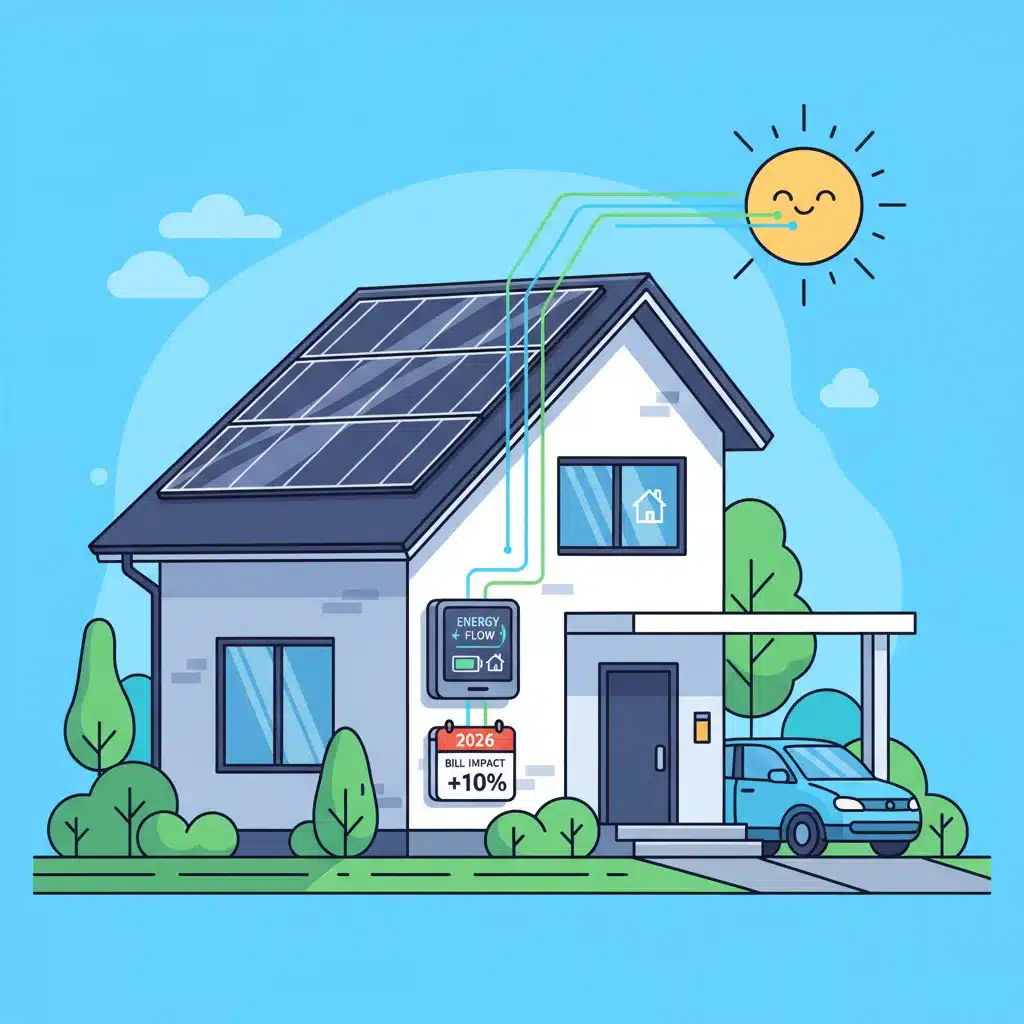
The landscape of residential solar energy is constantly evolving, and one of the most significant changes on the horizon for homeowners is the update to net metering 2026 policies. For years, net metering has been a cornerstone of the financial viability of home solar installations, allowing homeowners to receive credit for excess electricity their panels generate and send back to the grid. However, as the energy grid adapts to a higher penetration of renewable sources, many regions are re-evaluating these policies. The year 2026 is poised to bring substantial shifts, potentially impacting your residential solar bill by an estimated 10% or more. Understanding these changes is not just about staying informed; it’s about proactively planning to maintain the economic benefits of your solar investment.
This comprehensive guide will delve into the intricacies of the upcoming net metering 2026 updates, exploring what they mean for current and prospective solar homeowners. We will dissect the mechanisms behind net metering, examine the reasons for these policy shifts, and most importantly, provide actionable strategies to mitigate any negative financial impacts. From optimizing energy consumption to exploring advanced storage solutions, preparing for these changes now can safeguard your solar savings and ensure your home continues to thrive on clean, renewable energy.
Understanding Net Metering: The Foundation of Residential Solar Savings
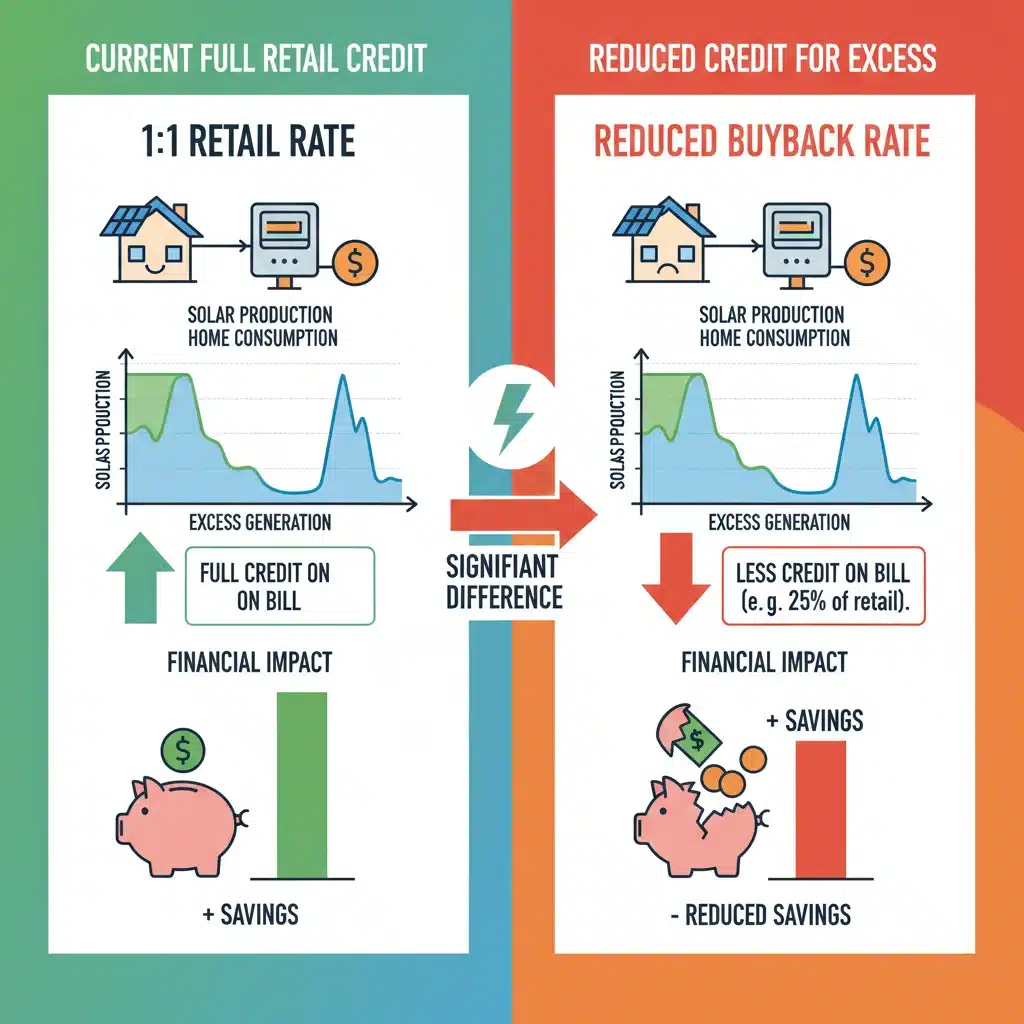
Before we explore the future, it’s crucial to grasp the fundamentals of net metering. At its core, net metering is a billing mechanism that credits solar energy system owners for the electricity they add to the grid. When your solar panels produce more electricity than your home consumes, the excess power is exported to the utility grid. Your utility meter literally spins backward (or, more accurately, registers the export digitally), and you receive a credit on your electricity bill for that power, typically at the full retail electricity rate. Conversely, when your solar panels aren’t producing enough electricity (e.g., at night or on cloudy days), you draw power from the grid, and your meter spins forward.
This system allows residential solar owners to effectively use the grid as a giant, free battery. Instead of needing to store all their excess energy, they can rely on the utility to ‘store’ it for them in the form of credits. This simplicity and the attractive financial returns have been a major driver for solar adoption across the globe. Without net metering, or with significantly reduced compensation, the economic incentive to install solar panels would diminish considerably, making the upfront investment harder to justify for many households.
The full retail rate compensation aspect of traditional net metering is particularly powerful. It means that every kilowatt-hour (kWh) you send back to the grid offsets a kWh you would have otherwise purchased at the same price. This 1:1 credit system has made predicting savings straightforward and appealing. However, this is precisely the aspect that is often targeted for revision in upcoming policy changes, leading to the discussions around net metering 2026.
The Impending Shift: What’s Driving Net Metering 2026 Updates?
The reasons behind the proposed and impending changes to net metering policies are multifaceted, often stemming from a confluence of economic, technological, and grid management considerations. Utilities, regulatory bodies, and non-solar ratepayers frequently voice concerns that current net metering structures disproportionately burden non-solar customers and strain grid infrastructure.
Grid Modernization and Cost Recovery
One of the primary arguments put forth by utilities is the need for cost recovery. They contend that even solar customers still rely on the grid for reliability, especially at night or during peak demand. Maintaining this infrastructure – including transmission lines, substations, and emergency services – comes at a significant cost. Under traditional net metering, utilities argue that solar customers are not paying their fair share for these fixed grid costs because their bills are heavily offset by credits, leaving non-solar customers to pick up a larger portion of the tab. The updates for net metering 2026 aim to rebalance these costs.
The Duck Curve Phenomenon
Another technical challenge driving these changes is the “duck curve” phenomenon. This refers to a graph of net load (total demand minus variable renewable generation) over the course of a day. In regions with high solar penetration, the curve often dips sharply in the middle of the day due to abundant solar generation, then rises steeply in the late afternoon/early evening as solar production drops off and demand increases. This rapid ramp-up in evening demand can create stress on the grid, requiring utilities to quickly bring online dispatchable power sources, which can be expensive and less efficient. Revised net metering policies, including those for net metering 2026, are often designed to encourage consumption of solar power during peak production hours or to incentivize energy storage.
Market Evolution and Technology Advancements
The solar industry itself has matured significantly. The cost of solar panels has plummeted, making solar energy more accessible than ever. This market evolution means that the initial subsidies and incentives, including generous net metering policies, are being re-evaluated. Furthermore, advancements in battery storage technology are making it increasingly viable for homeowners to store their excess solar energy instead of exporting it to the grid. Regulators are looking at policies that encourage this self-consumption and storage, rather than relying solely on grid export credits.
Projected Impact: Your Residential Solar Bill in 2026
The most pressing question for many homeowners is, “How will these changes affect my wallet?” While the exact impact will vary by region and specific policy details, the general trend indicates a reduction in the financial benefits of exporting excess solar power. Our analysis suggests that residential solar bills could see an average increase of approximately 10% compared to what they would be under current net metering regimes. This 10% figure is an average and can fluctuate based on several factors:
Reduced Export Compensation
The most common change expected in net metering 2026 policies is a shift from full retail rate compensation for exported electricity to a lower rate, often referred to as an “avoided cost” rate or a wholesale rate. This means that for every kWh you send back to the grid, you might receive credit for only a fraction of what you pay for electricity from the grid. For example, if you pay $0.20/kWh for grid electricity, you might only get $0.05-$0.10/kWh for your exports. This directly impacts the value proposition of your solar system.
Introduction of Fixed Charges or Demand Charges
Some updated policies may introduce or increase fixed monthly charges for solar customers, designed to cover the grid maintenance costs mentioned earlier. Additionally, demand charges, which bill customers based on their highest instantaneous electricity usage during a billing period, could become more prevalent for residential solar users. These charges can be particularly challenging for solar homeowners who rely on the grid during evening peaks.
Time-of-Use (TOU) Rates
While not new, Time-of-Use (TOU) rates are expected to become more prevalent and impactful under net metering 2026. TOU rates charge different prices for electricity depending on the time of day, week, or season. For solar customers, this means the value of their exported power might be low during midday (when solar production is high and grid demand is often lower) and the cost of imported power high during evening peaks. Strategic energy management becomes even more critical under such structures.
Strategies to Mitigate the Impact of Net Metering 2026
While the prospect of reduced solar savings might seem daunting, there are several proactive steps homeowners can take to adapt to the changes in net metering 2026 and continue to maximize the benefits of their solar investment.
1. Optimize Self-Consumption
With lower compensation for exported power, the most effective strategy is to use as much of your self-generated solar electricity as possible. This means shifting your energy consumption habits to align with your solar production. Consider running high-energy appliances like washing machines, dishwashers, and electric vehicle charging during the sunniest parts of the day. Smart home energy management systems can help automate this process by scheduling appliance operation when solar production is abundant.
2. Invest in Battery Storage
Battery storage systems are rapidly becoming a game-changer for residential solar. By storing excess solar energy generated during the day, you can use it later when your panels aren’t producing (e.g., at night) or during peak demand periods when grid electricity is most expensive. This significantly reduces your reliance on the grid and minimizes the impact of reduced export credits. As net metering 2026 policies unfold, the economic case for battery storage will only strengthen, especially with potential federal and state incentives.
3. Consider a Larger Solar System (Carefully)
While counterintuitive, in some scenarios, slightly oversizing your solar system might still be beneficial if the goal is to cover 100% of your annual consumption, even with reduced export rates. However, this needs careful calculation. The economic payback period will be longer if export rates are low, so ensure you understand the specific compensation rates in your area. Always consult with a reputable solar installer who can perform a detailed analysis based on your consumption patterns and the new net metering 2026 rules.
4. Embrace Energy Efficiency Upgrades
The cheapest energy is the energy you don’t use. Investing in energy efficiency upgrades for your home can reduce your overall electricity demand, meaning your solar system can cover a larger percentage of your needs without exporting as much. This includes LED lighting, improved insulation, energy-efficient appliances, and smart thermostats. These measures provide benefits regardless of net metering policies.
5. Monitor Your Energy Usage
Knowledge is power. Utilize smart meters, home energy monitoring apps, and your solar inverter’s data to understand your energy consumption and production patterns. Identifying when you’re importing electricity from the grid and when you’re exporting can help you fine-tune your energy habits and identify opportunities for optimization under the new net metering 2026 framework.
The Role of Policy and Advocacy
It’s important to remember that net metering 2026 policies are not set in stone everywhere. They are often the result of ongoing legislative and regulatory processes. Staying informed about proposed changes in your state or utility territory is crucial. Supporting solar advocacy groups and participating in public comment periods can help shape future energy policies. Collective action by solar homeowners can sometimes influence the direction of these important regulations.
While the general trend indicates a move away from the most generous net metering structures, the exact nature of these changes will vary significantly by region. Some states may adopt gradual transitions, while others might implement more drastic overhauls. Therefore, local engagement and awareness are paramount.

Advanced Considerations: Virtual Net Metering and Community Solar
Beyond individual rooftop solar, other models are emerging that could be impacted by or offer alternatives to traditional net metering. Virtual net metering (VNM) allows residents of multi-unit dwellings or those who cannot install solar on their own roofs to subscribe to a share of a larger, off-site solar project and receive credits on their electricity bill. The compensation structure for these programs will also likely be influenced by the broader shifts in net metering 2026 policies.
Community solar, where multiple individuals subscribe to a shared solar farm, is another growing option. These programs often have their own compensation mechanisms, which may or may not be tied directly to traditional net metering. As net metering policies evolve, community solar could become an even more attractive option for those seeking to participate in the clean energy transition without the complexities of individual rooftop installations and navigating changing regulations.
Preparing for the Future: A Timeline for Action
The year 2026 might seem distant, but for significant policy changes, it’s just around the corner. Here’s a suggested timeline for how residential solar owners and prospective owners can prepare:
- Now – Early 2024: Assess Your Current System and Usage. Understand your current electricity consumption patterns and how much solar energy you produce and export. If you’re considering solar, get quotes and understand the current net metering rules in your area.
- Mid-2024 – Early 2025: Stay Informed and Research Solutions. Actively track proposed net metering 2026 changes in your state or utility. Research battery storage options, smart home energy management systems, and energy efficiency upgrades.
- Mid-2025 – Early 2026: Plan and Implement Upgrades. Based on finalized policies, decide on the best strategies for your home. This might involve installing a battery, upgrading appliances, or adjusting your energy habits. Consult with solar professionals for tailored advice.
- 2026 and Beyond: Monitor and Adjust. Once new policies are in effect, closely monitor your energy bills and system performance. Be prepared to make further adjustments to your energy usage or system configuration if needed to maintain optimal savings.
For those considering installing solar before 2026, it’s crucial to understand any grandfathering provisions that might exist. Many states and utilities allow systems installed under older net metering rules to continue operating under those terms for a specified period (e.g., 10, 15, or 20 years). This can provide a significant advantage, but the specifics vary widely, so thorough research is essential.
Conclusion: Adapting to a New Solar Landscape
The changes anticipated with net metering 2026 represent a significant evolution in how residential solar interacts with the utility grid. While they may introduce new challenges, they also drive innovation in energy management and storage solutions. The projected 10% impact on residential solar bills underscores the importance of proactive planning and adaptation.
By understanding the reasons behind these policy shifts, optimizing your home’s energy consumption, exploring battery storage, and staying informed about local regulations, you can ensure your solar investment continues to provide substantial environmental and financial benefits. The future of residential solar remains bright, but it requires a more dynamic and informed approach from homeowners. Embrace these changes as an opportunity to make your home even more energy-independent and resilient.
The transition to a cleaner energy future is a collaborative effort between homeowners, utilities, and policymakers. By engaging with these changes thoughtfully, we can continue to advance the adoption of solar energy while ensuring a stable and equitable grid for all.