Closing the Loop: Advanced Solar Panel Recycling Innovations Unveiled
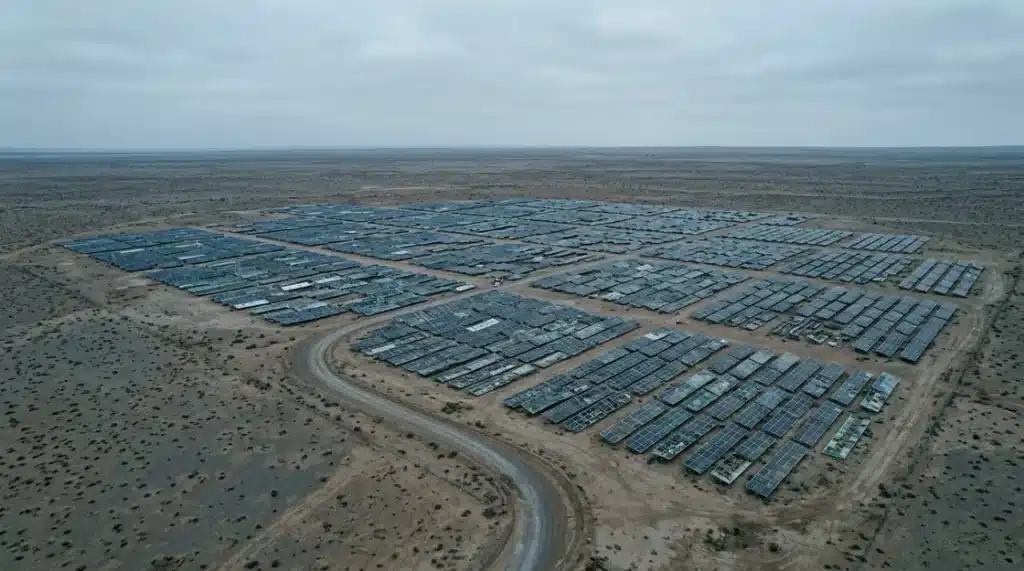
As the sun shines brighter on renewable energy, solar panel installations are skyrocketing globally. This surge is a triumph for environmental sustainability, yet it casts a long shadow: what happens to these panels once they reach the end of their operational life? The question of how to manage the impending wave of photovoltaic (PV) waste is no longer a distant concern but an immediate challenge that demands innovative solutions.
The scale of this challenge is immense. Projections indicate that millions of metric tons of PV waste could accumulate in the coming decades, posing significant environmental risks if not handled properly. Traditional disposal methods, such as landfilling, threaten to leach hazardous materials into our ecosystems, undermining the very green principles solar energy champions. This necessitates a underlying shift in our approach, moving beyond simple disposal to embrace technical recycling.
This article delves into the cutting-edge innovations revolutionizing the solar panel recycling process. We’ll explore next-generation technologies that dramatically enhance material recovery, examine the policy frameworks driving a circular economy for PV, and analyze the burgeoning economic viability of recycled solar materials. Finally, we’ll look at future infrastructure and logistics, ensuring solar power’s legacy remains sustainable from cradle to grave.
The Imperative for Advanced PV Recycling: A Current Overview
The global push for renewable energy has significantly increased solar panel installations, a positive step for the environment. what most people miss is the accompanying challenge: how do we handle the sheer volume of panels reaching their end-of-life? This growing necessity for effective solar panel recycling is becoming an urgent concern. Consider the data: the International Renewable Energy Agency (IRENA) projected that by 2030, the world could accumulate approximately 8 million metric tons of photovoltaic (PV) waste. That number could swell to over 78 million metric tons by 2050 if current trends persist. What then? While solar energy undeniably reduces carbon footprints during operation, manufacturing and disposal still carry an environmental impact. Traditional landfilling of PV panels, for instance, risks leaching heavy metals like lead and cadmium into the soil — a surprisingly underrated factor in sustainable energy discussions. Developing advanced recycling processes is notable to mitigate these potential harms and ensure solar power remains a green solution. It’s like tending a garden; you don’t just plant seeds, you also plan for what happens to the plants after their season. Addressing this “waste stream” is as vital as discussing the benefits of community solar projects or integrating solar with EV charging. Without solid recycling, the long-term sustainability promise of solar energy remains incomplete.
Revolutionizing the Process: Next-Gen Recycling Technologies
Basic shredding of solar panels simply isn’t cutting it anymore. We need more advanced ways to recover valuable materials from end-of-life photovoltaic (PV) modules, especially as the volume of decommissioned panels grows. The good news is that new technologies are emerging that promise significantly higher recovery rates and reduced environmental impact compared to older methods. What most people miss is how these advancements are changing the economic viability of solar panel recycling itself.
Traditional recycling often involved crude mechanical crushing, leading to a mix of glass, aluminum, and silicone that was difficult to separate efficiently. This approach typically yielded lower-quality secondary materials, often suitable only for downcycling. cutting-edge methods prioritize precise material separation, aiming for high-purity recovery.
Enhanced Mechanical Separation Techniques
Advanced mechanical separation goes far beyond simple crushing. Modern processes often begin with careful de-framing, removing the aluminum frame that surrounds the panel. This simple step immediately segregates a high-value, easily recyclable material. Following this, specialized machinery employs techniques like delamination – carefully separating the glass from the encapsulated solar cells – often with heat or specific solvents. The remaining materials, primarily the cells and encapsulant, then undergo further processing. High-speed grinders, sometimes coupled with air classification systems, can separate different density materials, improving the purity of the recovered silicon and metals. For instance, companies like Reclaim PV in Australia are achieving 90-95% recovery of glass and aluminum through these refined mechanical steps. This level of precision was once thought impossible.
Chemical and Thermal Treatment Advances
Beyond mechanical methods, chemical and thermal treatments are pushing the boundaries of material recovery. These processes are designed to target specific components, breaking down the encapsulant and isolating the valuable semiconductors and metals. It’s like carefully dissecting a complex circuit board rather than just smashing it.
Focus on Silicon and Precious Metals Extraction
One major focus is the extraction of silicon and precious metals like silver, copper, and sometimes even trace amounts of gold, which are critical components in PV cells. Chemical baths, often acid-based, are used to dissolve the metallic contacts and doping agents from the silicon wafers. This allows for the recovery of high-purity silicon, which can then be reused in new solar cells or other electronic applications. According to a report by the International Renewable Energy Agency (IRENA), advanced chemical treatments can boost silicon recovery rates to over 80%, a significant leap from the 50-60% seen in older methods. Thermal processes, involve heating the panels to break down the encapsulant (typically EVA, or ethylene-vinyl acetate). This can be done at relatively lower temperatures to simply debond the layers, or at higher temperatures in a controlled environment to volatilize the organic materials, leaving behind the silicon cells and metals. The key is managing emissions and ensuring efficient energy use — something that older, less controlled incineration methods struggled with.
Emerging Pyrolysis and Hydrometallurgy Applications
Perhaps the most promising — and certainly the most complex — advancements lie in pyrolysis and hydrometallurgy. Pyrolysis involves heating materials in an oxygen-free environment, which causes organic components to decompose into gases, liquids (bio-oils), and a solid char. For solar panels, this can efficiently remove the encapsulant, leaving behind pristine silicon cells and metallic contacts ready for further processing. What’s underrated here is the potential to capture and reuse these gaseous and liquid byproducts as energy sources, further reducing the overall environmental footprint of the recycling process. Hydrometallurgy uses aqueous solutions to recover metals from solid materials. After mechanical pre-treatment and thermal delamination, the remaining cell fragments are submerged in specific chemical solutions that selectively dissolve target metals. This allows for the separation and purification of individual metals like silver, copper, and even tin, with impressive purity levels. I suspect that as these methods scale, they will drastically reduce our reliance on virgin material mining for critical battery and solar components. The data from pilot projects, like those at the Fraunhofer Institute for Solar Energy Systems in Germany, suggests hydrometallurgical routes can achieve over 95% recovery of silver and copper. This meticulous approach is far more resource-efficient than traditional methods and is becoming a cornerstone for future recycling strategies, especially when considering the long-term value of these finite resources.
Economic incentives are often more effective than outright bans, as they encourage innovation rather than stifle it.
— Dr. Anya Sharma, Environmental Policy Expert, University of California, Berkeley
| Aspect | Traditional Recycling | Advanced Recycling Innovations |
|---|---|---|
| Material Recovery Rate | Lower (often <70%) | Significantly higher (often >90-95% for key materials) |
| Key Technologies | Crude mechanical crushing, basic separation | Enhanced mechanical separation (de-framing, delamination), chemical baths, thermal treatments, pyrolysis, hydrometallurgy |
| Purity of Recovered Materials | Lower, often suitable only for downcycling | High-purity, suitable for reuse in new PV cells or other high-value applications |
| Environmental Impact | Higher (potential for leaching, lower efficiency) | Reduced (minimized waste, lower energy use, capture of byproducts) |
| Economic Viability | Challenging due to low recovery & purity | Improving rapidly due to high-value material recovery & growing market |
| Policy Influence | Limited or basic waste management | Strongly influenced by Extended Producer Responsibility (EPR) & ‘design for recyclability’ incentives |
Policy Drivers and Circular Economy Frameworks for PV
Regulators globally are increasingly recognizing that solar panels, while a source of clean energy, eventually become waste. This shift in perspective is fueling new policies designed to ensure these panels don’t just end up in landfills, but are instead properly recycled. What most people miss is how these policy changes, often subtle, can dramatically alter manufacturing and recycling practices.
Global EPR Initiatives and Their Impact
Many regions have adopted Extended Producer Responsibility (EPR) schemes for photovoltaic (PV) panels. Under EPR, manufacturers or importers are held accountable for the entire lifecycle of their products, including collection and recycling at end-of-life. The data suggests that EPR programs significantly increase collection rates; for instance, PV Cycle, a European compliance scheme, reported collecting over 70,000 tons of PV waste by 2023. This demonstrates a tangible impact on reducing environmental burden. Take Europe, for example, where the Waste Electrical and Electronic Equipment (WEEE) Directive includes PV panels. This directive mandates specific collection and recycling targets, compelling manufacturers to fund and organize recycling operations. This creates a powerful incentive for companies to consider the end-of-life implications of their products right from the design phase. We’ve seen similar frameworks emerge in countries like Japan and Australia, though often with regional variations in their implementation and scope. Such policies are important for moving beyond basic disposal and fostering a true circular economy for solar technology. For businesses looking to invest, understanding these regulations can even influence decisions on system choice and financing—you can read more about financing innovations for small businesses.
Incentivizing Design for Recyclability
Beyond just handling waste, modern policies aim to encourage panels that are easier and more economical to recycle. This means pushing for “design for recyclability” — a concept that might sound like common sense, but has historically been overlooked in manufacturing. For instance, simplifying material separation, reducing the variety of plastics used, or even making it easier to extract valuable silicon and silver can drastically cut recycling costs. Consider the challenge of separating the various layers in a typical solar panel; it’s like trying to peel apart a tightly laminated document. Policymakers are exploring incentives, such as tax breaks or subsidies, for manufacturers who meet specific recyclability benchmarks. Dr. Anya Sharma, an environmental policy expert at the University of California, Berkeley, emphasizes that “economic incentives are often more effective than outright bans, as they encourage innovation rather than stifle it.” This approach is particularly relevant for optimizing efficiency in commercial systems, where long-term operational costs include disposal. The goal is to make recycling not just an obligation, but a competitive advantage.
Economic Viability and Market Growth in Recycled Solar Materials
The economics of solar panel recycling are quickly improving, driven by the increasing value of recovered materials. What most people miss is that the true cost of recycling isn’t just about processing; it’s also about the market for the outputs. Materials like silicon, silver, copper, and aluminum can fetch substantial prices. For instance, silicon, which makes up about 80% of a solar panel’s mass, is a critical component for new manufacturing, and its recovery significantly reduces the need for virgin material extraction. Currently, the global market for recycled solar materials is relatively small but projections show significant growth. According to a recent report by Grand View Research, the global solar panel recycling market size was valued at USD 190.7 million in 2022 and is expected to expand at a compound annual growth rate (CAGR) of 42.1% from 2023 to 2030. That’s a rapid climb. This growth is fueled by both environmental regulations and the rising material costs in primary production, making recycled inputs more attractive. It’s like finding valuable spare parts in an old car — a surprising amount can be reused. New business models are also emerging to capitalize on this trend. Companies are specializing in everything from collection logistics to advanced material separation techniques. Some operations even focus on recovering high-purity silicon for semiconductor manufacturing, which represents a higher value stream than simply downcycling. This specialization helps improve the overall efficiency of the recycling process. Others are exploring how recycled materials can feed back into the production of solar battery storage systems, creating a more circular economy. The underrated factor here is the development of solid reverse logistics chains, which are primary for making collection and transport economically sound.
Future Horizons: Innovations in Recycling Infrastructure and Logistics
Scaling up solar panel recycling means tackling the complex ballet of collection, transport, and processing. What most people miss is how much this relies on smart logistics, not just better chemistry. The industry is currently exploring new approaches to manage the growing volume of end-of-life PV panels, aiming for a more circular economy.
Automated Disassembly and Sorting Systems
Imagine a future where robots handle the delicate and sometimes hazardous task of disassembling solar panels. This isn’t science fiction; automated systems are rapidly evolving to improve efficiency and safety in recycling facilities. These machines can precisely separate materials like aluminum frames, glass, and junction boxes, which often contain valuable copper wiring. For example, a pilot project in Germany, led by the Fraunhofer Institute for Solar Energy Systems ISE, demonstrated a robotic cell capable of disassembling modules with 95% accuracy for aluminum frame removal. This level of precision significantly reduces manual labor and increases the purity of recovered materials, making them more attractive for reuse.
Developing Regional Recycling Hubs
Centralized recycling facilities often face high transportation costs due to the sheer bulk of solar panels. The underrated factor here is the need for localized solutions. Developing regional recycling hubs could drastically cut down on these logistical burdens, making the entire recycling process more economically viable. These smaller, strategically located hubs would act as collection points, performing initial sorting and basic material separation before shipping more concentrated waste streams to larger, specialized processing centers. This distributed model mimics the spoke-and-hub approach seen in other waste management sectors.
Overcoming Logistical Hurdles for Commercial PV
Commercial PV installations, particularly large-scale solar farms, present unique logistical challenges for recycling. Collecting thousands of panels from a single site requires coordinated transport and specialized equipment. I suspect that optimizing collection points will be key here. Consider this checklist for more efficient commercial PV collection:
- Pre-scheduled Pickups: Coordinate with decommissioning schedules to minimize on-site storage time.
- Bulk Packaging Solutions: Develop standard, stackable crates or pallets designed for multiple panels.
- Reverse Logistics Planning: Integrate recycling into initial project planning, including designated routes for end-of-life panels.
- Local Partnerships: Collaborate with local waste management companies for initial staging and transport.
- Digital Tracking: Implement systems to track panel locations and quantities for optimized routing.
This proactive planning can significantly reduce the environmental footprint and cost associated with transporting panels across long distances. What’s the point of recycling if the transport emissions negate the benefits?
The Role of Digital Platforms in Waste Stream Management
Digital platforms are emerging as powerful tools to manage the complex logistics of solar panel recycling. These systems can connect panel owners with recyclers, track material flows, and even forecast future waste volumes. Think of it like an Uber for solar waste. For instance, platforms like PV Cycle in Europe utilize a network of collection points and certified recyclers, streamlining the process through online portals. The data suggests—though not conclusively—that such platforms can reduce collection costs by as much as 18% by optimizing routes and consolidating shipments. This kind of smart management is important for handling the projected increase in decommissioned panels over the next decade. Developing accessible digital tools could also help smaller businesses navigate the complexities of managing their own solar waste streams, ensuring more panels reach proper recycling channels.
Choosing Sustainable Solar: What Commercial Buyers Need to Know
Commercial entities face a unique opportunity to shape the future of solar energy by prioritizing sustainability in their procurement decisions. It’s not just about energy savings anymore; the entire lifecycle of a solar panel—from manufacturing to end-of-life—is now a critical consideration. What most people miss is that investing in panels with better end-of-life considerations directly supports a circular economy, reducing waste and conserving valuable resources. This shift also aligns businesses with growing consumer and regulatory demands for greener operations.
Assessing Manufacturer Recycling Commitments
When evaluating solar panel manufacturers, their commitment to recycling should be a primary factor. Do they offer take-back programs, or do they partner with certified recycling facilities? For instance, some leading manufacturers, like First Solar, operate their own recycling facilities, demonstrating a tangible commitment to their products’ end-of-life. This kind of transparency provides a clear advantage. I suspect that a manufacturer’s willingness to invest in these programs signals a more forward-thinking and ultimately more reliable partner for long-term solar projects. Consider the specifics: what percentage of materials do they recover? Are their recycling processes certified by independent bodies? (It’s a bit like choosing a local coffee shop based on their fair trade practices.) Asking these pointed questions can reveal a lot about a company’s true dedication to sustainability, rather than just lip service.
Lifecycle Analysis and Environmental Product Declarations (EPDs)
Understanding the full environmental impact of a solar panel requires looking beyond its operational efficiency. This is where a Lifecycle Analysis (LCA) becomes incredibly useful. An LCA evaluates a product’s environmental impact from raw material extraction to disposal. While complex, these analyses provide a detailed overview. Many reputable manufacturers are now providing Environmental Product Declarations (EPDs), which are standardized, independently verified reports based on LCAs. Think of an EPD as a nutritional label for environmental impact, detailing everything from carbon footprint to water usage. For example, a recent EPD for a specific REC Solar panel revealed a 15% lower carbon footprint compared to the industry average due to innovations in manufacturing processes. This data suggests—though not conclusively for every panel—that materials and production methods significantly affect overall sustainability. Commercial buyers should actively request and compare EPDs when sourcing panels. This due diligence ensures you’re investing in products that not only perform well but also align with your organization’s broader sustainability goals. It’s also important to consider long-term factors, such as those discussed in deciphering solar battery storage costs and future value. Here are some pros and cons of choosing certified ‘recycling-ready’ panels:
- Pros:
- Reduced Waste: Minimizes landfill burden.
- Resource Conservation: Recovers valuable materials like silicon, silver, and copper.
- Enhanced Brand Image: Demonstrates corporate social responsibility.
- Regulatory Compliance: Prepares for potential future recycling mandates.
- Cons:
- Potentially Higher Upfront Cost: Some advanced panels or those from manufacturers with strong recycling programs might carry a premium.
- Limited Availability: Not all panel types or manufacturers currently offer fully certified ‘recycling-ready’ options.
- Logistical Challenges: Depending on location, access to certified recycling facilities might still be a hurdle, though this is improving with evolving community solar benefits.
Understanding these factors helps commercial entities make informed decisions, contributing to a sustainable energy future.
The Circular Future of Solar: Beyond Disposal
The journey towards sustainable solar energy doesn’t end with installation; it extends far into the future, encompassing responsible end-of-life management. As we’ve explored, advanced recycling technologies, forward-thinking policy, and reliable economic models are converging to transform PV waste into valuable resources. The challenge now lies in scaling these innovations and integrating them seamlessly into a global circular economy. Will the industry rise to meet this opportunity, ensuring that the promise of clean energy is fulfilled without creating a new environmental burden?
Frequently Asked Questions About Solar Panel Recycling
What are the main components recovered from recycled solar panels?
The primary components recovered from recycled solar panels include glass (approximately 70% by weight), aluminum from the frame, and semiconductor materials like silicon. Valuable metals such as silver and copper from the electrical contacts and wiring are also extracted, along with smaller amounts of plastics and other trace elements.
How does the recycling process for thin-film panels differ from crystalline silicon panels?
Recycling thin-film panels, which often contain materials like cadmium telluride or copper indium gallium selenide, typically involves different chemical processes to recover the specific semiconductors. Crystalline silicon panels, being more prevalent, focus on recovering high-purity silicon, glass, and metals through a combination of mechanical, thermal, and chemical methods. The hazardous materials in thin-film panels necessitate specialized handling to prevent environmental contamination.
Are there any financial incentives for recycling solar panels?
Yes, financial incentives for solar panel recycling are emerging, driven by Extended Producer Responsibility (EPR) schemes in many regions. These schemes often mandate manufacturers to fund or organize recycling, creating an incentive to make the process more cost-effective. the increasing market value of recovered materials like silicon, silver, and copper makes recycling an economically attractive proposition, reducing reliance on virgin resources.
What is the expected lifespan of a solar panel before it needs recycling?
Most solar panels are designed to operate efficiently for 25 to 30 years. While they can continue to generate some power beyond this period, their efficiency typically degrades over time, making them less economically viable. This lifespan means that the first large waves of panels installed in the early 2000s are now beginning to reach their end-of-life, necessitating reliable recycling infrastructure.
How can commercial businesses ensure their solar panels are recycled responsibly?
Commercial businesses can ensure responsible solar panel recycling by partnering with certified recycling facilities that adhere to environmental regulations and high recovery standards. They should look for recyclers that offer transparent reporting on material recovery rates and demonstrate advanced processing techniques. Engaging with companies that participate in EPR schemes or offer take-back programs can also simplify the process and guarantee compliance.