Maximize Commercial Solar ROI: 5-Year Financial Projections for US Businesses
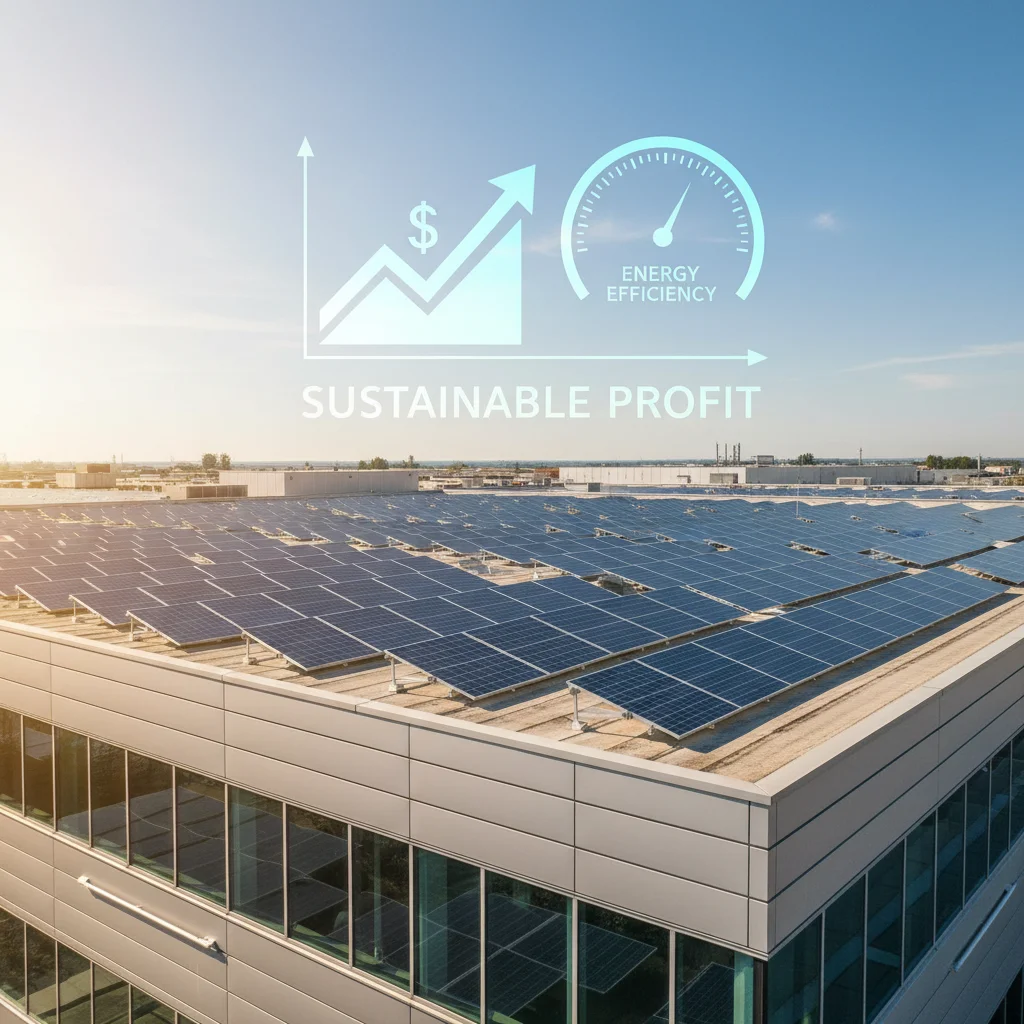
Maximizing Commercial Solar ROI: A 5-Year Financial Projection for U.S. Enterprises
In an era defined by fluctuating energy costs and a growing imperative for sustainability, U.S. enterprises are increasingly turning to solar energy as a strategic investment. Beyond the environmental benefits, the financial advantages of commercial solar installations are becoming undeniably attractive. Businesses are no longer just considering solar; they are actively seeking ways to maximize their Commercial Solar ROI (Return on Investment) over the long term. Understanding the financial trajectory of such an investment is crucial for making informed decisions, and a 5-year projection offers a clear, actionable roadmap.
This comprehensive guide delves into the intricacies of calculating and optimizing your Commercial Solar ROI. We will explore the initial investment, the myriad of incentives available, the substantial operational savings, and the factors that influence your net financial gain over a five-year period. Our aim is to provide a detailed financial projection that empowers U.S. businesses to confidently embrace solar energy, ensuring both environmental responsibility and robust financial performance.
The Foundation of Commercial Solar ROI: Initial Investment & System Sizing
The journey to a positive Commercial Solar ROI begins with a clear understanding of the initial investment. This isn’t just about the cost of solar panels; it encompasses the entire system, from design and engineering to installation, inverters, racking, and ongoing maintenance agreements. The total upfront cost can vary significantly based on several factors, including:
- System Size (kW): This is perhaps the most significant determinant. Larger systems, while more expensive in absolute terms, often benefit from economies of scale, leading to a lower cost per watt.
- Panel Type and Efficiency: Monocrystalline panels generally offer higher efficiency and a smaller footprint but come at a higher price point than polycrystalline panels.
- Installation Complexity: Factors like roof type, structural integrity, shading issues, and accessibility can all impact labor costs.
- Inverter Technology: String inverters, microinverters, and power optimizers each have different cost structures and performance benefits.
- Permitting and Interconnection Fees: These administrative costs vary by state and utility company.
Accurate system sizing is paramount for maximizing Commercial Solar ROI. An undersized system won’t meet your energy demands, while an oversized system can lead to unnecessary capital expenditure. A professional solar installer will conduct a thorough energy audit, analyze historical electricity consumption data, and assess your facility’s energy needs to design a system that optimally matches your load profile. This careful planning ensures that every dollar invested contributes directly to energy savings and a quicker payback period.
For a typical U.S. commercial enterprise, the average cost for a solar installation can range from $1.50 to $3.00 per watt, prior to incentives. For a 100 kW system, this could mean an upfront investment of $150,000 to $300,000. While this might seem substantial, it’s crucial to consider the various financial mechanisms and incentives designed to reduce this initial burden and accelerate your Commercial Solar ROI.
Unlocking Value: Federal, State, and Local Incentives
One of the most powerful drivers of Commercial Solar ROI in the U.S. is the robust landscape of federal, state, and local incentives. These programs are designed to encourage solar adoption by significantly reducing the net cost of installation and providing ongoing financial benefits. Understanding and leveraging these incentives is critical for any business considering solar.
Federal Incentives: The Investment Tax Credit (ITC)
The federal Investment Tax Credit (ITC), also known as the Solar Tax Credit, is the cornerstone of solar incentives. For commercial systems placed in service after December 31, 2021, and before January 1, 2033, the ITC provides a 30% tax credit for the cost of the solar system. This is a direct reduction in your federal income tax liability, not just a deduction. For a $250,000 system, this translates to a $75,000 reduction in your tax bill.
It’s important to note that the ITC has certain eligibility requirements, including prevailing wage and apprenticeship provisions for larger projects. However, for most commercial installations, the 30% credit is a game-changer for Commercial Solar ROI.
Accelerated Depreciation (MACRS)
Another significant federal incentive is the Modified Accelerated Cost Recovery System (MACRS). This allows businesses to depreciate the cost of their solar energy system over a five-year period, significantly faster than traditional depreciation schedules. This accelerated depreciation reduces taxable income, leading to further tax savings. When combined with the ITC, MACRS can effectively reduce the net cost of a solar system by over 50% in the first year alone, dramatically improving your Commercial Solar ROI.
State and Local Programs
Beyond federal incentives, states and local municipalities offer a diverse range of programs that can further enhance your Commercial Solar ROI. These can include:
- State Tax Credits: Some states offer additional tax credits on top of the federal ITC.
- Grants and Rebates: Various state and local programs provide upfront grants or rebates that reduce the initial capital outlay.
- Property Tax Exemptions: Many states exempt the added value of a solar system from property tax assessments, preventing an increase in your property tax bill.
- Sales Tax Exemptions: Some states waive sales tax on solar equipment and installation, providing immediate savings.
- Performance-Based Incentives (PBIs): These incentives, often in the form of Solar Renewable Energy Certificates (SRECs), pay businesses for the electricity their solar system generates. SRECs can be traded on a market, providing a recurring revenue stream that boosts Commercial Solar ROI.
Navigating these diverse incentives can be complex, but working with an experienced solar provider who understands the local landscape is key to maximizing your financial benefits. They can help identify all applicable programs and ensure your project is structured to take full advantage of every available incentive.
The Power of Savings: Reduced Operational Costs
While incentives significantly reduce the upfront cost, the core of long-term Commercial Solar ROI lies in the substantial reduction of operational expenses, primarily your monthly electricity bill. By generating your own power, businesses can:
- Lower or Eliminate Electricity Bills: Depending on system size and energy consumption, businesses can significantly reduce or even eliminate their reliance on grid electricity, leading to substantial monthly savings.
- Hedge Against Rising Energy Prices: Electricity rates have historically increased over time. By fixing a portion of your energy costs with solar, businesses gain predictability and protection against future price hikes, enhancing long-term financial stability.
- Reduce Demand Charges: For many commercial customers, demand charges (fees based on peak electricity usage) constitute a significant portion of their utility bill. Solar can help reduce these charges by offsetting peak demand.
These savings accrue month after month, year after year, directly contributing to your bottom line and accelerating your payback period. The more electricity your business consumes, the greater the potential savings and the higher your Commercial Solar ROI.
A 5-Year Financial Projection: Illustrative Example
To illustrate the power of Commercial Solar ROI, let’s consider a hypothetical U.S. enterprise investing in a 200 kW commercial solar system with an initial cost of $400,000 (before incentives). This example assumes an average electricity rate of $0.15/kWh and a modest annual electricity price escalation of 3%.
Year 1: The Foundation of Savings and Incentives
The first year is where the largest immediate financial benefits are realized. The 30% federal ITC provides a significant tax credit, and accelerated depreciation begins to reduce taxable income.
- Initial Investment: $400,000
- Federal ITC (30%): -$120,000 (direct tax credit)
- MACRS Depreciation (Year 1, approx. 20% of remaining basis): -$56,000 (tax savings based on your corporate tax rate, e.g., 21% of $280,000 depreciable basis, so $11,760 in tax savings on average)
- Annual Electricity Savings: ~$35,000 (based on generating ~250,000 kWh annually)
- Net Cost After ITC & Depreciation Savings (approx.): $400,000 – $120,000 – $11,760 = $268,240
- Total Financial Benefit (Year 1): $120,000 (ITC) + $11,760 (Depreciation Savings) + $35,000 (Electricity Savings) = $166,760
In Year 1, the immediate financial injection from incentives and the start of significant electricity bill reductions lay a strong foundation for a positive Commercial Solar ROI.
Year 2-5: Compounding Savings and Accelerated Payback
As the years progress, the initial investment continues to be offset by ongoing electricity savings and further depreciation benefits. The cumulative effect of these savings accelerates the payback period and boosts your Commercial Solar ROI.
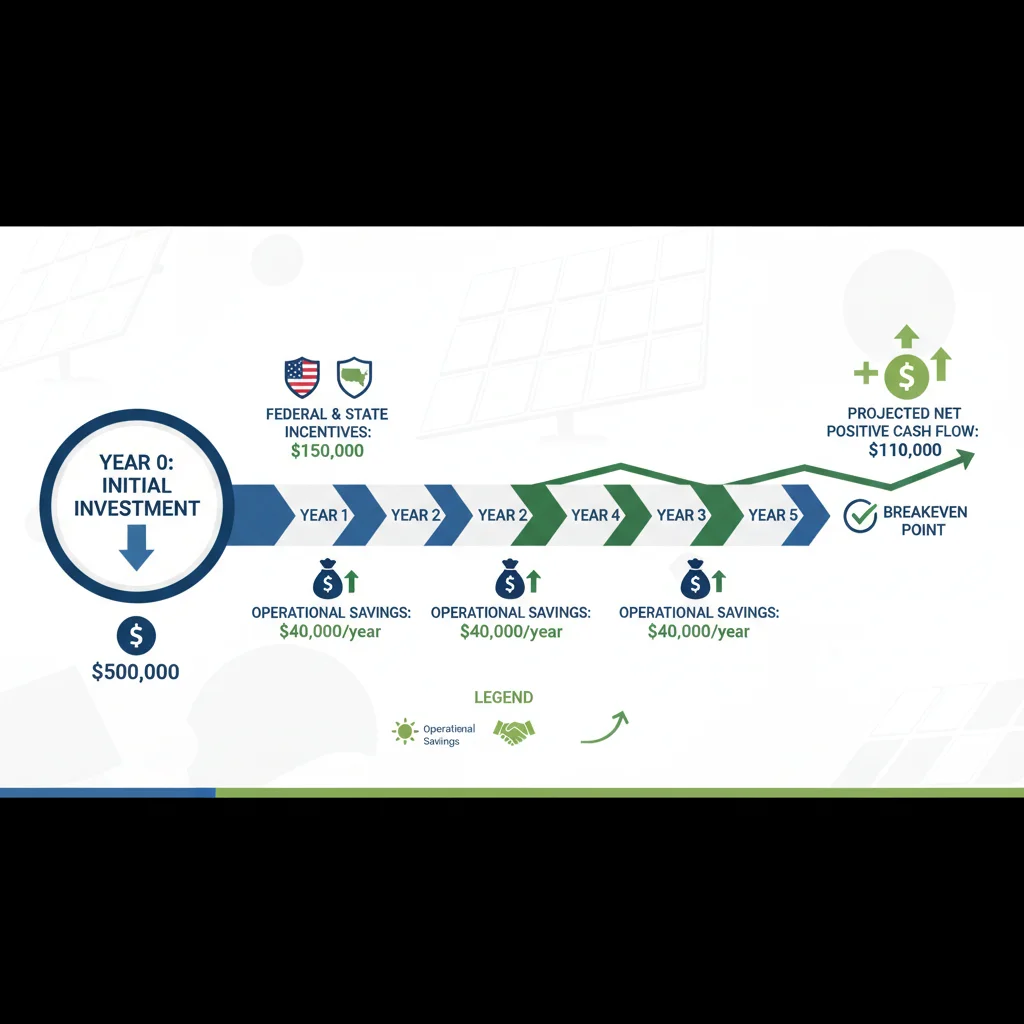
- Year 2 Electricity Savings: ~$36,050 (with 3% escalation) + MACRS Depreciation (approx. 32% of basis)
- Year 3 Electricity Savings: ~$37,130 + MACRS Depreciation (approx. 19.2% of basis)
- Year 4 Electricity Savings: ~$38,244 + MACRS Depreciation (approx. 11.52% of basis)
- Year 5 Electricity Savings: ~$39,391 + MACRS Depreciation (approx. 11.52% of basis)
Over these five years, the cumulative electricity savings alone can exceed $185,000. When combined with the initial ITC and the ongoing tax benefits from accelerated depreciation, the total financial benefit can easily surpass the initial net investment, leading to a payback period often within 3-7 years for commercial solar projects. This rapid payback is a powerful testament to the financial viability and high Commercial Solar ROI of these systems.
Factors Influencing Your Commercial Solar ROI
While the illustrative example provides a general framework, several specific factors can significantly influence the actual Commercial Solar ROI for your business:
1. Electricity Rates and Escalation
Businesses in areas with high electricity rates will naturally see a higher and faster Commercial Solar ROI, as their savings are more substantial. Furthermore, the rate at which electricity prices are projected to increase over time plays a crucial role. A higher escalation rate means greater long-term savings and a more attractive ROI.
2. System Performance and Degradation
The amount of sunlight your location receives (insolation), system orientation, shading, and panel efficiency all contribute to annual energy production. Solar panels also experience a slight degradation in performance over time (typically 0.5% to 1% per year). While modern panels come with long performance warranties (often 25 years), this degradation should be factored into long-term ROI calculations.
3. Maintenance and Monitoring
While solar systems are largely maintenance-free, periodic cleaning and monitoring are essential to ensure optimal performance. These costs are generally low but should be accounted for in your financial projections. Proactive maintenance helps sustain high energy output, thereby preserving your Commercial Solar ROI.
4. Financing Options
How you finance your solar system can profoundly impact your Commercial Solar ROI. Cash purchases offer the highest ROI due to immediate ownership of all savings and incentives. However, various financing options exist:
- Solar Loans: Traditional loans allow businesses to own the system while spreading the cost over time.
- Power Purchase Agreements (PPAs): A third-party developer owns, operates, and maintains the system, selling the electricity generated to your business at a fixed, often lower, rate. This requires no upfront capital from your business.
- Solar Leases: Similar to PPAs, but you pay a fixed monthly lease payment for the use of the system.
Each option has different implications for upfront costs, tax benefits, and overall Commercial Solar ROI, so it’s vital to choose the structure that best aligns with your business’s financial strategy.
5. Future Policy Changes
Government incentives are subject to change. While the federal ITC is currently stable, future policy shifts could impact the financial landscape. It’s prudent to consider the current incentive structure as the basis for your projections, but also to be aware of potential future adjustments.
Beyond Financials: The Intangible Benefits of Commercial Solar
While Commercial Solar ROI is primarily a financial metric, it’s important not to overlook the significant intangible benefits that solar adoption brings to a business:
- Enhanced Brand Image and Corporate Social Responsibility (CSR): Demonstrating a commitment to sustainability resonates positively with customers, employees, and investors. It can differentiate your brand in a competitive market.
- Energy Independence and Security: Reducing reliance on the grid provides greater control over your energy supply and hedges against grid instability or outages.
- Increased Property Value: Solar installations are increasingly viewed as valuable assets, potentially increasing the resale value of your commercial property.
- Employee Morale and Recruitment: Employees often prefer working for environmentally conscious companies, leading to improved morale and easier recruitment of top talent.
- Reduced Carbon Footprint: Contributing to a cleaner environment is a powerful ethical driver for many businesses.
These non-financial benefits, while harder to quantify, contribute significantly to the overall value proposition of commercial solar and can indirectly enhance your long-term business success, complementing the direct financial gains of a strong Commercial Solar ROI.
Steps to Achieve an Optimal Commercial Solar ROI
Achieving a stellar Commercial Solar ROI requires careful planning and execution. Here are the key steps businesses should take:
1. Conduct a Thorough Energy Audit
Before investing in solar, understand your energy consumption patterns. An energy audit can identify opportunities for efficiency improvements that might reduce your overall system size requirement, thereby optimizing your investment.
2. Partner with a Reputable Solar Provider
Choose an experienced commercial solar installer with a proven track record. They should offer comprehensive services, including system design, financial analysis, permitting, installation, and ongoing maintenance. A good provider will help you navigate incentives and ensure a high-quality installation that maximizes your Commercial Solar ROI.
3. Understand All Available Incentives
Work closely with your solar provider and financial advisor to identify and apply for every federal, state, and local incentive your business qualifies for. This is crucial for minimizing upfront costs and accelerating your payback period.
4. Evaluate Financing Options
Explore the various financing models (cash, loan, PPA, lease) and determine which best fits your business’s capital structure and financial goals. A detailed financial analysis comparing these options will highlight the one that delivers the best Commercial Solar ROI for your specific situation.
5. Monitor and Maintain Your System
Once installed, regularly monitor your system’s performance to ensure it’s operating optimally. Address any issues promptly to prevent energy production losses. Regular, albeit minimal, maintenance (like cleaning panels) can help preserve efficiency and maximize your long-term Commercial Solar ROI.

The Future of Commercial Solar in the U.S.
The outlook for commercial solar in the U.S. remains exceptionally bright. With continued technological advancements, declining costs, and strong policy support, the financial case for solar is only getting stronger. Businesses that embrace solar now are positioning themselves for long-term energy independence, financial stability, and a leadership role in sustainability.
The incentives currently in place, particularly the robust federal ITC, provide an unparalleled opportunity to invest in renewable energy with a highly attractive Commercial Solar ROI. As energy markets evolve and the demand for clean energy grows, businesses that have made this strategic shift will reap the benefits for decades to come.
Conclusion: A Smart Investment for Sustainable Growth
Optimizing Commercial Solar ROI is no longer a niche consideration but a mainstream financial strategy for U.S. enterprises. Through a combination of significant federal and state incentives, substantial operational savings, and a rapid payback period, commercial solar installations offer a compelling financial proposition. Our 5-year financial projection demonstrates that with careful planning and strategic implementation, businesses can expect a robust return on their investment, often recouping initial costs within just a few years.
Beyond the direct financial gains, the intangible benefits of enhanced brand image, energy independence, and environmental stewardship further solidify solar as a smart, sustainable investment. By taking the steps outlined in this guide, businesses can confidently harness the power of the sun to drive profitability, reduce operational costs, and secure a more sustainable future. The time to invest in your Commercial Solar ROI is now.