Commercial Solar for Multi-Tenant Properties: 2026 Strategies for Shared Benefits
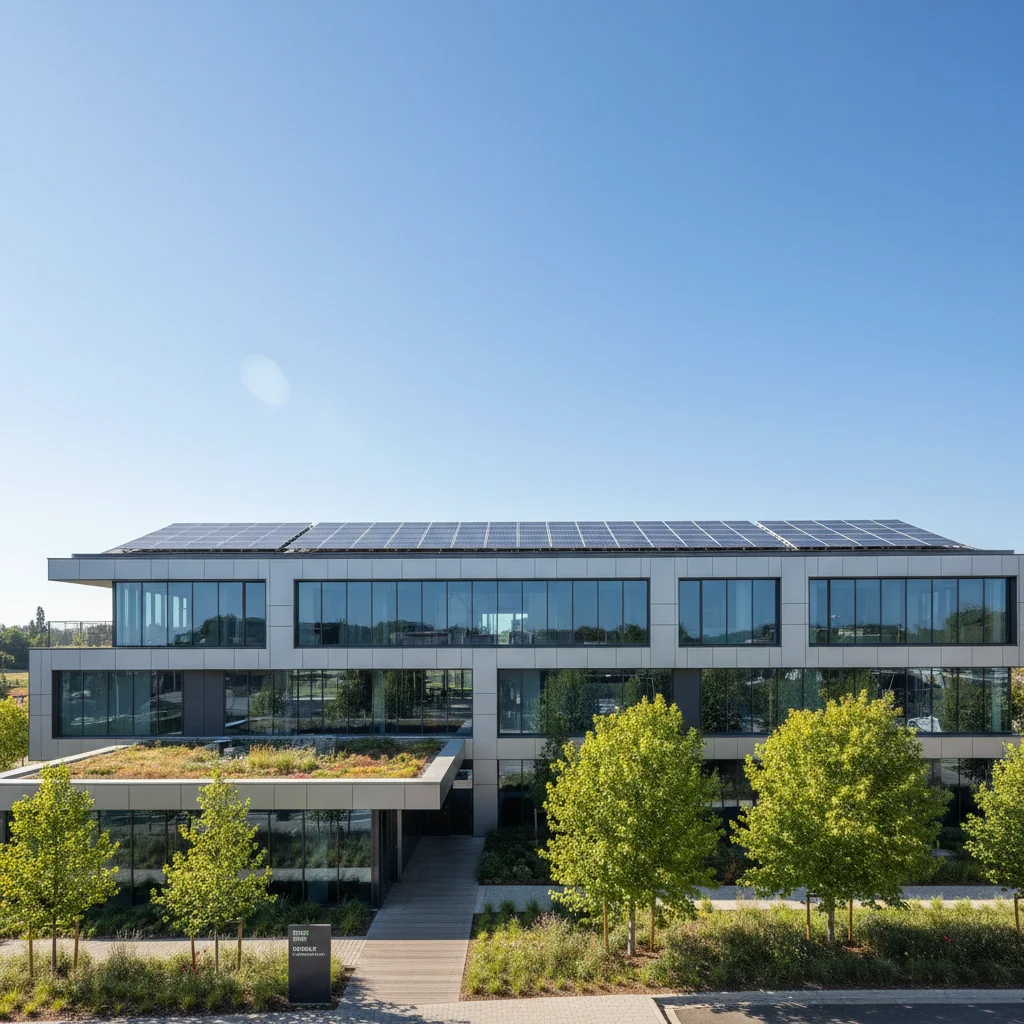
As we approach 2026, the landscape of commercial real estate is undergoing a profound transformation, driven by a heightened focus on sustainability, operational efficiency, and cost reduction. At the forefront of this shift is the widespread adoption of solar energy, particularly within multi-tenant properties. The integration of commercial solar for multi-tenant properties offers a compelling value proposition, providing shared benefits that extend from property owners and managers to individual tenants. This comprehensive guide will delve into the strategic considerations, technological advancements, financial incentives, and collaborative models essential for successfully implementing solar solutions in multi-tenant buildings by 2026 and beyond.
The imperative to embrace renewable energy sources is no longer a niche concern but a mainstream priority. Environmental regulations are tightening, corporate social responsibility (CSR) initiatives are gaining traction, and the economic advantages of solar power are becoming increasingly undeniable. For multi-tenant properties, where energy consumption can be substantial and diverse, a well-planned solar installation can unlock significant savings, enhance property value, and attract environmentally conscious tenants. Understanding the nuances of financing, legal frameworks, and tenant engagement is crucial for maximizing the return on investment and ensuring the long-term success of such projects.
The Evolving Landscape of Commercial Solar for Multi-Tenant Properties
The journey towards widespread commercial solar adoption in multi-tenant properties has been marked by continuous innovation and evolving market dynamics. What was once a complex and costly endeavor is now more accessible and economically viable than ever before. Several key factors are contributing to this accelerated growth.
Technological Advancements and Efficiency Gains
Solar panel technology has made remarkable strides in recent years. Modern photovoltaic (PV) panels boast higher efficiency rates, meaning they can convert more sunlight into electricity within a smaller footprint. This is particularly advantageous for multi-tenant properties where rooftop space might be limited. Furthermore, advancements in inverter technology, energy storage solutions (batteries), and smart energy management systems are making solar installations more robust, reliable, and capable of optimizing energy usage across multiple tenants. The integration of artificial intelligence (AI) and machine learning (ML) in energy management platforms allows for predictive analytics, further enhancing efficiency and cost savings for multi-tenant solar benefits.
Favorable Policy and Regulatory Environment
Governments worldwide are increasingly recognizing the importance of renewable energy and are implementing policies to incentivize its adoption. Tax credits, grants, rebates, and accelerated depreciation schedules are making solar projects more financially attractive. Net metering policies, which allow property owners to sell excess solar electricity back to the grid, are also critical for maximizing economic benefits. For multi-tenant properties, specific regulations regarding shared solar ownership and billing mechanisms are becoming clearer, paving the way for more seamless implementations. Staying abreast of these policy changes is vital for property owners looking to capitalize on these incentives.
Growing Demand for Sustainable Properties
Both businesses and consumers are placing a higher value on sustainability. Tenants are increasingly seeking properties that demonstrate a commitment to environmental responsibility, not only to align with their own CSR goals but also to reduce their operational costs. A multi-tenant property powered by solar energy can command higher rents, experience lower vacancy rates, and attract a more desirable tenant base. This growing demand for green buildings is a powerful driver for the adoption of commercial solar for multi-tenant properties.
Strategic Planning for 2026: Key Considerations
Implementing a successful commercial solar project in a multi-tenant property requires meticulous planning and a clear understanding of the unique challenges and opportunities involved. Here are the key strategic considerations for 2026:
1. Feasibility Assessment and Site Analysis
The initial step involves a thorough feasibility assessment. This includes evaluating the property’s energy consumption patterns, available rooftop or land space for solar panel installation, structural integrity of the building, and shading analysis. A professional solar installer or consultant can conduct a detailed site survey to determine the optimal system size, panel placement, and expected energy production. Understanding the current and projected energy needs of all tenants is crucial for designing a system that effectively meets demand and maximizes shared benefits.
2. Financial Modeling and Incentive Maximization
Developing a robust financial model is paramount. This involves estimating upfront costs, operational expenses, projected energy savings, and potential revenue from selling excess electricity. Property owners must thoroughly research and apply for all available federal, state, and local incentives, such as the Investment Tax Credit (ITC) in the United States, which can significantly offset installation costs. Exploring various financing options, including direct purchase, power purchase agreements (PPAs), and solar leases, is also essential. PPAs, in particular, can be attractive for multi-tenant properties as they often require no upfront capital investment from the property owner.
3. Legal and Regulatory Frameworks for Shared Solar
The legal and regulatory landscape for shared solar in multi-tenant properties can be complex. Issues such as inter-tenant billing, common area vs. individual tenant electricity usage, and contractual agreements need careful consideration. Property owners should consult with legal experts specializing in renewable energy and real estate to draft clear and equitable agreements that outline how solar benefits and costs will be allocated among tenants. The goal is to create a transparent and fair system that encourages participation and avoids disputes, thereby enhancing multi-tenant solar benefits.
4. Tenant Engagement and Communication
Successful solar integration in multi-tenant properties hinges on effective tenant engagement. Tenants need to understand the benefits of the solar project, including potential cost savings, environmental impact, and enhanced property value. Clear communication about the installation process, expected timelines, and how the solar system will affect their energy bills is crucial. Educational campaigns can help tenants appreciate the value proposition and foster a sense of shared responsibility for sustainability. Highlighting the property’s commitment to green initiatives can also be a powerful marketing tool.
Models for Commercial Solar Implementation in Multi-Tenant Properties
Several models exist for implementing commercial solar in multi-tenant properties, each with its own advantages and disadvantages. Choosing the right model depends on the property owner’s financial capacity, risk tolerance, and long-term objectives.
1. Owner-Owned and Operated System
In this model, the property owner purchases, installs, and maintains the solar energy system. The owner reaps all the financial benefits, including tax credits, energy savings, and potential revenue from selling excess power. This model offers the highest degree of control and potential for long-term profit but also requires a significant upfront capital investment. The property owner is responsible for all operational aspects, including maintenance and repairs. The energy generated can be used for common areas, or a portion can be allocated to tenants, with billing mechanisms established accordingly to maximize multi-tenant solar benefits.
2. Power Purchase Agreement (PPA)
A PPA involves a third-party developer owning, installing, and maintaining the solar system on the property owner’s premises. The property owner then purchases the electricity generated by the system at a predetermined, often lower, rate than traditional utility prices. This model requires minimal or no upfront capital from the property owner, making it an attractive option for those seeking to avoid large initial investments. PPAs typically have long-term contracts (e.g., 15-25 years) and can offer predictable energy costs, providing a stable financial outlook for both the property owner and tenants.
3. Solar Lease
Similar to a PPA, a solar lease involves a third party owning and installing the solar system. However, instead of purchasing electricity, the property owner leases the equipment for a fixed monthly payment. The property owner benefits from the generated electricity and associated savings, while the solar company handles maintenance and performance guarantees. This model also reduces upfront costs and provides predictable monthly expenses, making it a viable option for many multi-tenant properties.
4. Community Solar / Shared Solar Programs
In some regions, community solar programs allow multiple individuals or entities (including multi-tenant properties) to subscribe to a shared solar project located off-site. Participants receive credits on their electricity bills for the energy generated by their share of the community solar farm. While not directly on-site, this model offers a way for multi-tenant properties to access solar benefits without the need for rooftop installations, especially if the property has unsuitable roof space or other limitations. This is an excellent way to achieve multi-tenant solar benefits even without direct installation.
Maximizing Shared Benefits: Strategies for 2026
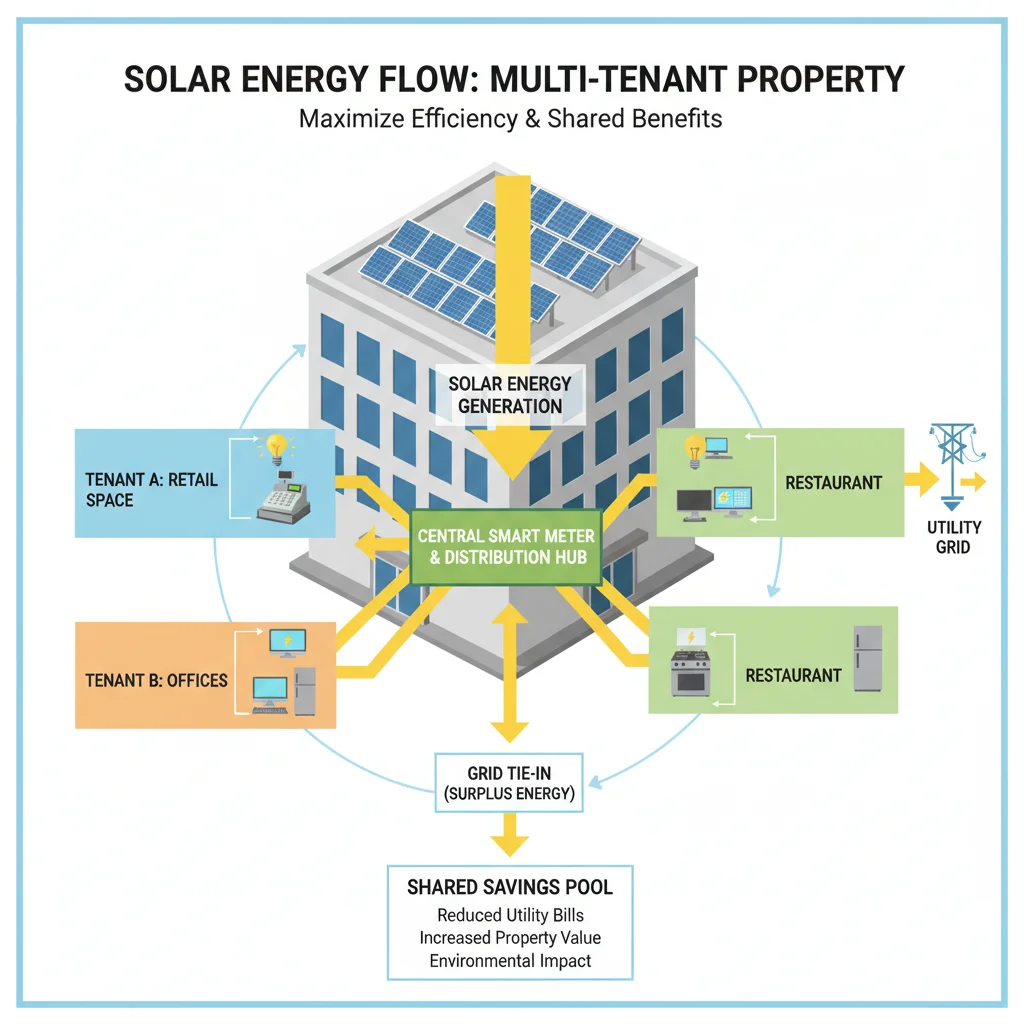
The true power of commercial solar for multi-tenant properties lies in its ability to create shared benefits for all stakeholders. Here’s how to maximize these advantages in 2026:
Cost Savings for All
Reduced Common Area Expenses: Solar energy can significantly offset the electricity costs for common areas such as lobbies, hallways, elevators, and parking lot lighting. This reduces operating expenses for the property owner, which can translate into lower common area maintenance (CAM) fees for tenants, making the property more attractive.
Lower Tenant Utility Bills: Through direct allocation of solar power or favorable billing mechanisms, tenants can enjoy reduced electricity bills. This is a tangible benefit that directly impacts their bottom line and improves tenant satisfaction. Clear communication about these savings is key to demonstrating the value of the solar investment.
Enhanced Property Value and Marketability
Increased Property Value: Properties with solar installations are often appraised at a higher value due to lower operating costs and increased energy independence. This is a long-term asset that benefits the property owner.
Competitive Advantage: In a competitive real estate market, a multi-tenant property powered by solar energy stands out. It appeals to businesses committed to sustainability and offers a modern, forward-thinking image. This can lead to higher occupancy rates and premium rents.
Green Building Certifications: Solar installations contribute significantly to achieving green building certifications (e.g., LEED, BREEAM), which further enhance a property’s marketability and appeal to environmentally conscious tenants.
Environmental Impact and Corporate Social Responsibility
Reduced Carbon Footprint: By generating clean, renewable energy, multi-tenant properties can significantly reduce their carbon footprint, contributing to broader environmental goals. This aligns with global efforts to combat climate change and promotes a healthier planet.
Improved Brand Image: Embracing solar energy demonstrates a commitment to corporate social responsibility, enhancing the brand image of both the property owner and the tenants. This can attract socially conscious investors, partners, and employees.
Challenges and Solutions for Multi-Tenant Solar in 2026
While the benefits of multi-tenant solar are clear, there are also challenges that need to be addressed. Proactive planning and innovative solutions are essential for overcoming these hurdles.
1. Complex Billing and Allocation
Challenge: Allocating solar energy credits and billing individual tenants for their share of solar power can be intricate, especially with varying consumption patterns.
Solution: Implement smart metering systems that track individual tenant consumption and solar energy usage. Advanced energy management software can automate billing and provide transparent data to all parties. Consider a community solar model where tenants receive virtual credits on their utility bills.
2. Tenant Turnover and Lease Structures
Challenge: High tenant turnover can complicate long-term solar agreements and the allocation of benefits.
Solution: Integrate solar provisions directly into lease agreements. Clearly define how solar benefits (e.g., reduced electricity rates) are transferred or adjusted upon tenant turnover. Long-term PPAs can help mitigate this by providing stable energy costs regardless of tenant changes.
3. Upfront Costs and Financing
Challenge: The initial capital investment for a solar system can be substantial, particularly for larger multi-tenant properties.
Solution: Explore diverse financing options such as PPAs, solar leases, and commercial loans specifically tailored for renewable energy projects. Leverage government incentives, grants, and tax credits to reduce the overall financial burden. Green bonds and impact investing are also emerging avenues for funding sustainable projects.
4. Rooftop Space and Structural Limitations
Challenge: Limited or unsuitable rooftop space, or structural limitations of older buildings, can hinder solar panel installation.
Solution: Conduct a detailed structural assessment early in the planning phase. Explore alternative installation methods, such as carports with solar canopies, or ground-mounted systems if land is available. If on-site solar is not feasible, consider participating in off-site community solar projects to still reap multi-tenant solar benefits.
The Role of Technology in 2026 and Beyond
Technology will continue to play a pivotal role in optimizing commercial solar for multi-tenant properties. The integration of smart solutions will make solar systems more efficient, manageable, and beneficial.
Smart Energy Management Systems (EMS)
Advanced EMS platforms will become standard, providing real-time data on energy generation, consumption, and storage. These systems can optimize energy flow, predict demand, and even integrate with building automation systems to adjust HVAC and lighting based on solar availability. This level of control enhances efficiency and maximizes savings for all tenants.
Battery Storage Solutions
Battery energy storage systems (BESS) are becoming more cost-effective and essential for multi-tenant properties. They allow excess solar energy generated during peak sunlight hours to be stored and used when solar production is low (e.g., at night or during cloudy weather) or when electricity prices are high. This not only increases energy independence but also provides backup power during outages, a significant value proposition for tenants.
Blockchain for Energy Trading
Emerging technologies like blockchain could revolutionize energy trading within multi-tenant properties. It could enable peer-to-peer energy sharing among tenants, allowing those who generate more solar energy than they consume to sell it to neighbors within the building. This creates a localized energy market, further enhancing the economic benefits of solar for multi-tenant properties.

Case Studies: Multi-Tenant Solar Success Stories
Across the globe, numerous multi-tenant properties are demonstrating the successful integration of solar energy, showcasing the tangible benefits and innovative approaches. These examples serve as powerful blueprints for future projects.
The Green Business Park Initiative
A business park in California, housing over 20 different companies, implemented a large-scale solar array across its rooftops and carports. Through a PPA model, the property owner avoided upfront costs, and tenants now benefit from electricity rates significantly below market value. The park has achieved LEED Gold certification, attracting a new wave of environmentally conscious businesses and reducing its overall operational expenses by 30%.
Urban Mixed-Use Development with Shared Solar
A new mixed-use development in an urban center, comprising retail spaces, offices, and residential units, incorporated a sophisticated shared solar system with battery storage. The system powers all common areas and provides a portion of the electricity to individual units. A custom-built energy management platform allows tenants to monitor their solar usage and savings in real-time. This project has become a benchmark for sustainable urban living, commanding premium rents and achieving near-zero carbon emissions for its common facilities.
Industrial Complex with Rooftop Solar and EV Charging
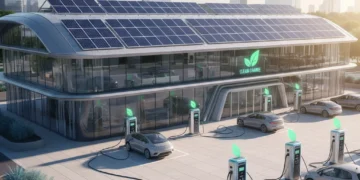
An industrial complex, housing several manufacturing and logistics companies, installed a massive rooftop solar array. Beyond reducing energy costs for its tenants, the complex also integrated numerous EV charging stations powered by solar, catering to the growing demand for electric vehicle infrastructure. This initiative not only reduced operational costs but also positioned the complex as a leader in sustainable industrial operations, attracting tenants focused on green logistics and manufacturing practices, thereby amplifying multi-tenant solar benefits.
The Future of Multi-Tenant Solar: 2026 and Beyond
Looking ahead to 2026 and beyond, the trajectory for commercial solar in multi-tenant properties is one of accelerated growth and increased sophistication. We can expect:
- Further Cost Reductions: Continued advancements in solar technology and manufacturing processes will drive down installation costs, making solar even more accessible.
- Enhanced Integration with Smart Grids: Solar systems in multi-tenant properties will become more integrated with smart grids, allowing for dynamic energy management, demand response programs, and optimized energy trading.
- Proliferation of Energy Storage: Battery storage will become a standard component of most commercial solar installations, providing greater energy independence and resilience.
- Standardized Regulatory Frameworks: As multi-tenant solar becomes more common, regulatory frameworks and billing mechanisms will become more standardized and streamlined, simplifying implementation.
- Increased Tenant Demand: The demand from tenants for sustainable and energy-efficient properties will continue to grow, making solar a must-have amenity rather than a luxury.
Conclusion: Embracing a Brighter, Sustainable Future
The strategic implementation of commercial solar for multi-tenant properties by 2026 is not merely an environmental choice; it is a smart business decision. The shared benefits, encompassing significant cost savings, enhanced property value, improved tenant satisfaction, and a reduced carbon footprint, create a compelling case for investment. While challenges exist, technological advancements, favorable policies, and innovative financing models provide viable solutions. Property owners and managers who proactively embrace solar energy will not only future-proof their assets but also contribute to a more sustainable and resilient energy landscape. The time to invest in multi-tenant solar benefits is now, paving the way for a brighter, more sustainable future for commercial real estate.