Commercial Solar Microgrids: Ensuring 99% Uptime for Critical Operations in 2026
Commercial Solar Microgrids: Ensuring 99% Uptime for Critical Operations in 2026
In an increasingly unpredictable world, where power outages can cripple businesses and disrupt essential services, the quest for uninterrupted power supply has never been more critical. Traditional grid reliance, while foundational, is proving insufficient for organizations that demand absolute operational continuity. This is where commercial solar microgrids emerge not just as an alternative, but as a superior solution, particularly for critical operations. By 2026, these advanced systems are poised to become the cornerstone of energy resilience, guaranteeing an impressive 99% uptime and ushering in a new era of energy independence and reliability.
The concept of a microgrid is simple yet revolutionary: a localized group of electricity sources and loads that typically operates connected to a traditional centralized grid but can disconnect and function autonomously as an ‘island’ during grid disturbances. When you integrate solar power into this equation, you get a sustainable, resilient, and often more cost-effective energy solution. For businesses with critical operations – think data centers, hospitals, manufacturing plants, and essential services – the ability to maintain power regardless of external grid conditions is not a luxury; it’s a fundamental requirement for survival and success.
This comprehensive guide will delve into the transformative power of commercial solar microgrids, exploring their core components, the unparalleled benefits they offer, the technological advancements driving their adoption, and the strategic considerations for businesses looking to implement these systems by 2026. We’ll examine how these microgrids are engineered to provide near-perfect uptime, mitigate risks, and contribute to a more sustainable and economically viable future for critical operations across various sectors.
The Imperative for Uptime: Why 99% Isn’t Just a Goal, It’s a Necessity
For many critical operations, even a momentary power flicker can have catastrophic consequences. Data loss, production halts, safety compromises, and significant financial penalties are just some of the repercussions. The traditional utility grid, despite its robustness, is susceptible to a myriad of vulnerabilities, including extreme weather events, cyberattacks, equipment failures, and increasing demand strains. These vulnerabilities translate directly into downtime risks for businesses.
Consider a hospital where life-sustaining equipment relies on constant power, or a data center managing petabytes of critical information. A minute of downtime can mean lives lost or millions in revenue gone. This is why the 99% uptime offered by commercial solar microgrids is not merely an attractive feature but a non-negotiable imperative. It represents a fundamental shift from reactive contingency planning to proactive, self-sufficient energy management.
Understanding the Costs of Downtime
The financial implications of power outages are staggering. According to various industry reports, the average cost of a single hour of downtime for large enterprises can range from hundreds of thousands to several million dollars, depending on the industry. This includes direct costs like lost revenue, damaged equipment, and recovery expenses, as well as indirect costs such as reputational damage, customer churn, and decreased employee productivity. For critical operations, these figures are often significantly higher due to the specialized nature of their services and the high value of continuous operation.
Beyond the financial aspect, there are significant operational and safety risks. In manufacturing, unexpected shutdowns can damage sensitive machinery and lead to extensive waste. In healthcare, patient safety is directly linked to uninterrupted power for medical devices and critical infrastructure. The increasing frequency and intensity of extreme weather events further exacerbate these risks, making grid resilience a top priority for businesses in vulnerable regions.
Commercial solar microgrids provide a robust defense against these threats, ensuring that even when the main grid fails, critical operations continue without interruption. This level of guaranteed uptime offers peace of mind, protects assets, and allows businesses to maintain their competitive edge in a demanding global market.
Deconstructing Commercial Solar Microgrids: Key Components and How They Work
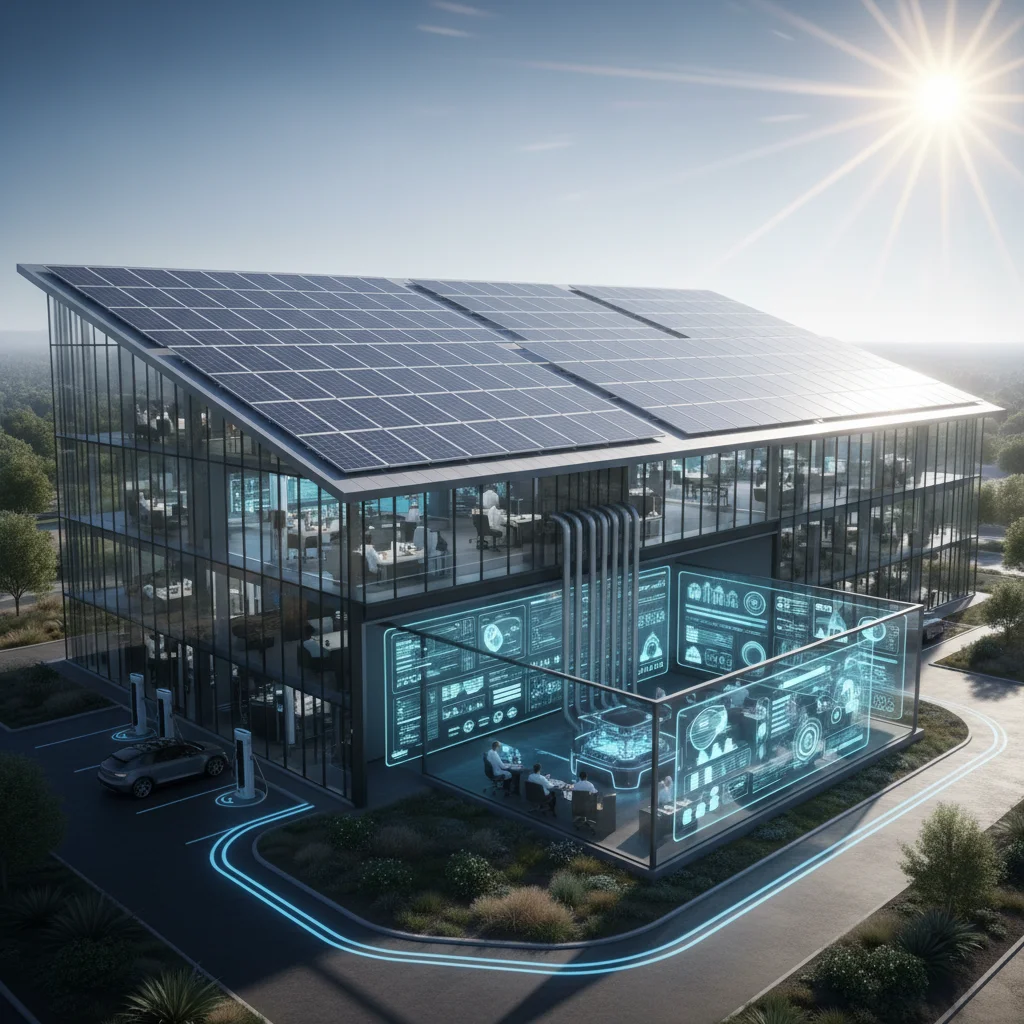
To appreciate the resilience and efficiency of commercial solar microgrids, it’s essential to understand their constituent parts and how they interact to form a cohesive, intelligent energy system. These systems are far more than just solar panels; they are sophisticated networks designed for optimal performance and reliability.
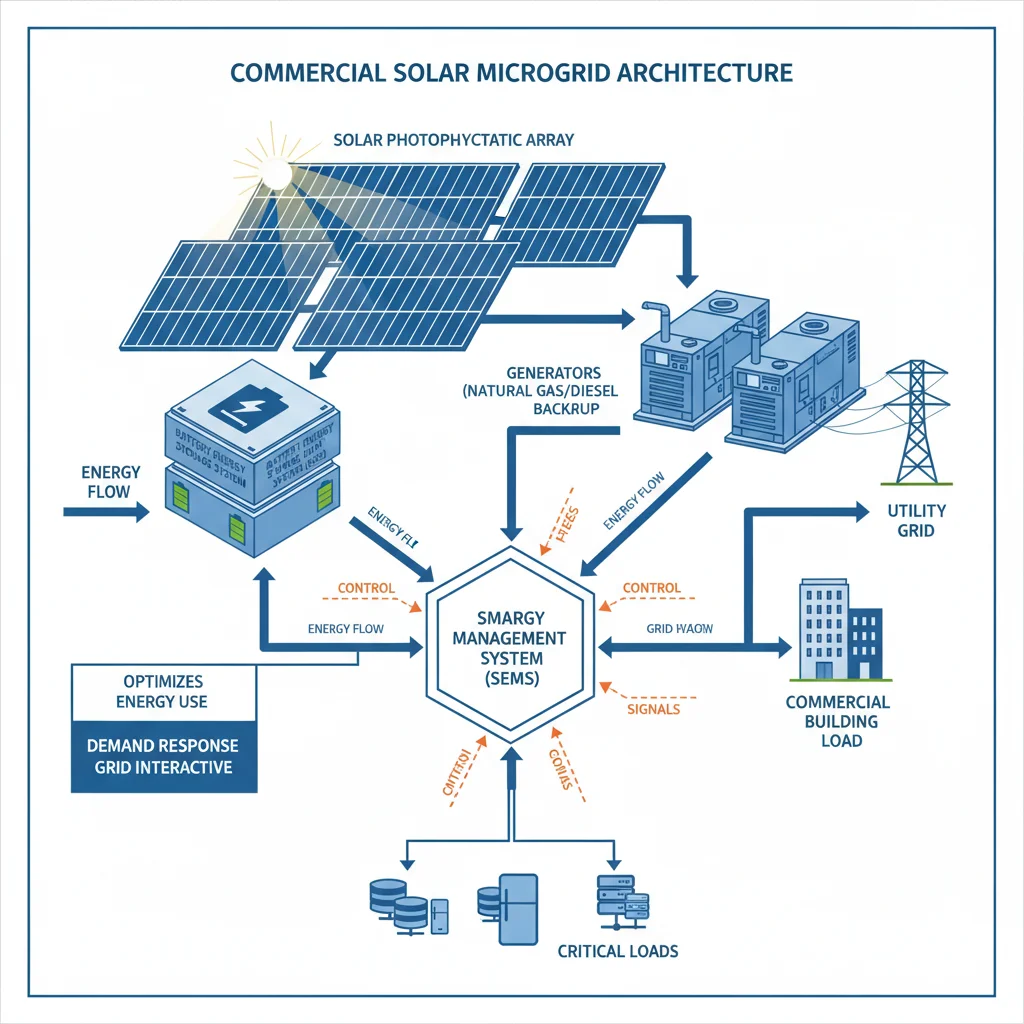
1. Solar Photovoltaic (PV) Arrays
The primary renewable energy source in a solar microgrid, these panels convert sunlight directly into electricity. Modern solar PV technology is highly efficient and durable, capable of generating substantial power even in varying weather conditions. The size and placement of these arrays are customized based on the energy demands of the commercial facility and available space.
2. Battery Energy Storage Systems (BESS)
This is arguably the most critical component for ensuring 99% uptime. Batteries store excess solar energy generated during peak production hours (e.g., midday) for use during periods of low solar output (e.g., night, cloudy days) or during grid outages. Advanced battery technologies, such as lithium-ion, offer high energy density, long lifespans, and rapid response times, making them ideal for critical load support and grid stabilization.
3. Generators (Diesel, Natural Gas, or Other)
While the goal is maximum reliance on solar, backup generators provide an additional layer of redundancy. They can kick in during extended periods of low solar generation (e.g., multiple consecutive cloudy days) or if battery storage is depleted, ensuring that critical loads never lose power. Integrating these generators into the microgrid allows for intelligent dispatch, using them only when absolutely necessary to minimize fuel consumption and emissions.
4. Smart Inverters and Power Conditioning Systems
Inverters convert the direct current (DC) electricity produced by solar panels and stored in batteries into alternating current (AC) electricity, which is what most commercial buildings use. Smart inverters are crucial for microgrid functionality, as they can rapidly switch between grid-connected and islanded modes, manage voltage and frequency, and ensure power quality.
5. Microgrid Controller (Energy Management System – EMS)
This is the ‘brain’ of the microgrid. The EMS uses advanced algorithms and real-time data to monitor energy generation, consumption, storage levels, and grid conditions. It makes intelligent decisions about when to use solar, when to charge or discharge batteries, when to activate generators, and when to connect or disconnect from the main grid. This intelligent orchestration is what enables seamless transitions and guarantees continuous power for critical operations.
6. Load Management and Critical Load Prioritization
A well-designed commercial solar microgrid identifies and prioritizes critical loads within a facility. During an extended outage, the EMS can shed non-essential loads to conserve energy and ensure that vital systems remain operational for as long as possible. This strategic load management is key to achieving high uptime figures.
The Unparalleled Benefits of Commercial Solar Microgrids for Critical Operations
The advantages of implementing commercial solar microgrids extend far beyond simply keeping the lights on. They offer a multifaceted return on investment that impacts operational efficiency, financial stability, and environmental stewardship.
1. Unmatched Energy Resilience and 99% Uptime
As discussed, this is the primary driver. The ability to island from the main grid and operate autonomously ensures that critical operations remain unaffected by external power disruptions. This resilience is paramount for sectors where continuity is directly linked to safety, security, and profitability.
2. Significant Cost Savings and Energy Independence
By generating their own electricity from solar, businesses can substantially reduce their reliance on grid power, leading to lower utility bills. Furthermore, battery storage allows for ‘peak shaving’ – drawing power from batteries during times of high grid electricity prices – and ‘arbitrage’ – buying power when cheap and selling when expensive (where regulations allow). This active management of energy consumption can lead to considerable long-term savings and greater control over energy costs, protecting businesses from volatile energy markets.
3. Enhanced Sustainability and Reduced Carbon Footprint
Harnessing solar energy significantly reduces a business’s carbon emissions, contributing to corporate sustainability goals and improving brand image. For environmentally conscious consumers and stakeholders, a commitment to renewable energy can be a significant differentiator. This also helps businesses comply with increasingly stringent environmental regulations.
4. Improved Power Quality and Stability
Microgrids can provide more stable and higher-quality power than the main grid, which can be subject to voltage fluctuations and harmonics. This is particularly beneficial for sensitive electronic equipment and machinery, reducing wear and tear and extending equipment lifespan.
5. Scalability and Flexibility
Commercial solar microgrids are highly adaptable. They can be designed to meet current energy needs and expanded as a business grows or as energy demands change. New generation sources (e.g., wind, fuel cells) or additional storage can be integrated relatively seamlessly.
6. Potential for Revenue Generation
In some regulatory environments, businesses with microgrids can sell excess power back to the main grid (net metering) or participate in demand response programs, creating additional revenue streams. This transforms energy from a pure cost center into a potential profit center.
Technological Advancements Driving Microgrid Adoption in 2026
The rapid evolution of several key technologies is making commercial solar microgrids more powerful, efficient, and economically viable than ever before. By 2026, these advancements will be standard, solidifying microgrids as a mainstream solution.
1. Advanced Battery Technology
The cost of battery storage, particularly lithium-ion, has plummeted in recent years while energy density and cycle life have dramatically improved. Newer chemistries, such as solid-state batteries and flow batteries, are also emerging, promising even greater safety, longevity, and performance. These advancements are crucial for extending islanding capabilities and ensuring consistent power delivery.
2. Artificial Intelligence and Machine Learning in EMS
Microgrid controllers are becoming incredibly intelligent, leveraging AI and ML to optimize energy management. These systems can predict solar generation based on weather forecasts, anticipate load demands based on historical data, and dynamically adjust power flows to maximize efficiency and minimize costs. AI-driven fault detection and self-healing capabilities further enhance resilience.
3. Internet of Things (IoT) Integration
IoT sensors and devices provide granular, real-time data from every component of the microgrid, from individual solar panels to critical load points. This comprehensive data stream feeds the EMS, enabling more precise control, predictive maintenance, and rapid response to any anomalies.
4. Modular and Scalable Designs
Microgrid components are increasingly designed for modularity, allowing for easier installation, expansion, and maintenance. This reduces upfront costs and shortens deployment times, making microgrids more accessible to a wider range of commercial entities.
5. Enhanced Cybersecurity Measures
As microgrids become more interconnected and intelligent, cybersecurity is paramount. Advanced encryption, intrusion detection systems, and secure communication protocols are being integrated into microgrid architecture to protect against cyber threats and ensure the integrity of the energy system.
Strategic Considerations for Implementing Commercial Solar Microgrids by 2026
While the benefits are clear, successfully implementing a commercial solar microgrid requires careful planning and strategic execution. Businesses looking to embrace this technology by 2026 should consider the following key factors:
1. Comprehensive Energy Audit and Load Analysis
Before any design work begins, a detailed understanding of the facility’s energy consumption patterns, peak demands, and critical loads is essential. This audit will inform the sizing of solar arrays, battery storage, and backup generators, ensuring the microgrid is optimally designed to meet specific uptime requirements.
2. Site Assessment and Feasibility Study
Evaluating the physical site for solar panel placement (roof space, shading, ground area), battery storage location, and interconnection points is crucial. A feasibility study will also assess regulatory hurdles, permitting requirements, and potential incentives or rebates available for renewable energy projects.
3. Financial Modeling and Return on Investment (ROI) Analysis
A thorough financial analysis should include upfront capital costs, operational expenses, projected energy savings, potential revenue streams, and the value of avoided downtime. This will help justify the investment and demonstrate the long-term economic benefits of the microgrid.
4. System Design and Component Selection
Working with experienced microgrid developers and engineers is vital to design a system that is robust, efficient, and tailored to the specific needs of the critical operation. This includes selecting appropriate solar panels, battery chemistry, inverter technology, and the most suitable EMS.
5. Regulatory and Interconnection Agreements
Navigating local, state, and federal regulations, as well as securing interconnection agreements with the utility company, can be complex. Expert guidance is often required to ensure compliance and smooth integration with the existing grid infrastructure.
6. Operations, Maintenance, and Monitoring
A well-defined plan for ongoing operation, routine maintenance, and continuous monitoring is essential to ensure the microgrid performs optimally and delivers its promised uptime. Remote monitoring capabilities and predictive maintenance schedules can help identify and address potential issues before they impact operations.
Real-World Impact: Industries Benefiting from Commercial Solar Microgrids
The adoption of commercial solar microgrids is not confined to a single sector; its benefits are applicable across a wide array of industries that prioritize uptime and resilience. By 2026, we expect to see even broader implementation.
Data Centers
With their immense power demands and zero-tolerance for downtime, data centers are prime candidates for microgrids. Uninterrupted power ensures data integrity, continuous service delivery, and protection against financial losses that can run into millions of dollars per hour of outage.
Healthcare Facilities (Hospitals, Clinics)
Maintaining power for life support systems, operating rooms, diagnostic equipment, and patient records is paramount. Microgrids offer the critical reliability needed to save lives and ensure continuous patient care, even during widespread grid failures.
Manufacturing and Industrial Facilities
Modern manufacturing relies on automated processes and sensitive machinery. Power outages can lead to damaged equipment, spoiled products, and significant production delays. Microgrids protect against these disruptions, ensuring continuous production and maintaining supply chain integrity.
Commercial Campuses and Office Parks
Large commercial complexes can leverage microgrids to provide reliable power to multiple buildings, enhance tenant satisfaction, and reduce operating costs. This also positions them as leaders in corporate sustainability.
Essential Services (Water Treatment Plants, Emergency Services)
Facilities providing vital public services cannot afford to lose power. Microgrids ensure that water purification, emergency communication systems, and public safety operations remain functional, protecting communities.
The Future of Resilient Power: 2026 and Beyond
As we look towards 2026 and beyond, the trajectory for commercial solar microgrids is one of accelerated growth and increasing sophistication. The convergence of decreasing renewable energy costs, advanced battery storage, and intelligent control systems is creating an irresistible proposition for businesses seeking energy independence and operational continuity.
Expect to see more integrated solutions that combine solar with other distributed energy resources (DERs) like small wind turbines, fuel cells, and even electric vehicle (EV) charging infrastructure that can provide vehicle-to-grid (V2G) services. The concept of ‘grid services’ will also expand, allowing microgrids to actively participate in grid stability and potentially generate more revenue for their owners.
Policy and regulatory frameworks are also evolving to better support microgrid deployment, recognizing their critical role in national energy security and climate resilience. Incentives, streamlined permitting processes, and favorable interconnection rules will further accelerate adoption.
Ultimately, the widespread implementation of commercial solar microgrids will not only benefit individual businesses but will also contribute to a more robust, decentralized, and sustainable energy infrastructure for entire regions. By reducing strain on the centralized grid and providing localized resilience, microgrids are a key component of a modern, future-proof energy system.
Conclusion: Securing Your Operations with Commercial Solar Microgrids
For businesses with critical operations, the question is no longer if they need enhanced energy resilience, but how to achieve it most effectively. Commercial solar microgrids offer a compelling answer, delivering not just an energy solution, but a strategic asset that guarantees 99% uptime, significant cost savings, and a reduced environmental footprint.
By 2026, these advanced systems will be indispensable for organizations that cannot afford the devastating consequences of power outages. Investing in a solar microgrid is an investment in operational continuity, financial stability, and a sustainable future. It’s a proactive step towards taking control of your energy destiny and safeguarding your most critical assets in an increasingly uncertain world. Embrace the future of energy resilience and ensure your operations are powered by the unwavering reliability of commercial solar microgrids.