Understanding Residential Solar Warranties: 2026 Guide
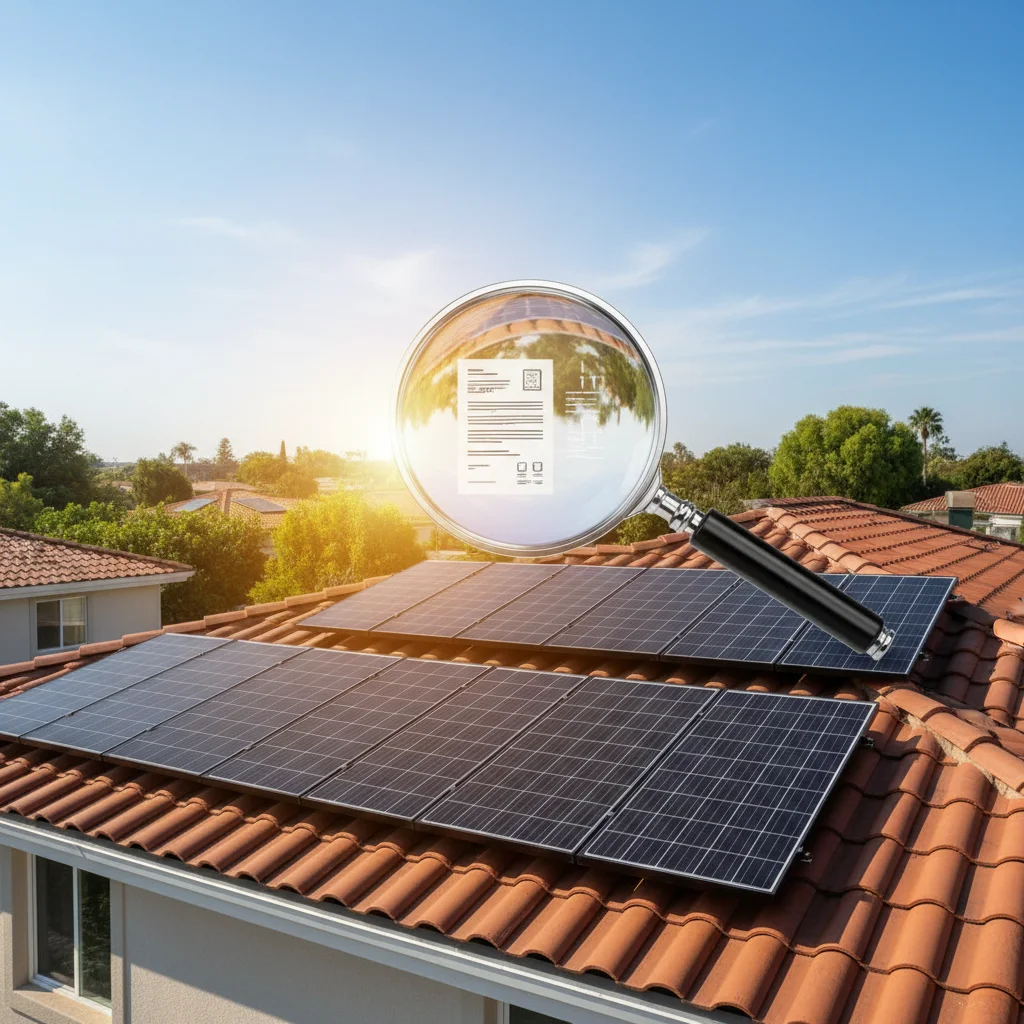
Understanding Residential Solar Warranties: What to Expect and Look For in 2026
As we advance into 2026, the adoption of solar energy for residential use continues to accelerate. Homeowners are increasingly recognizing the long-term financial and environmental benefits of installing solar panels. However, like any significant home improvement or investment, understanding the guarantees that protect your solar system is paramount. This is where solar panel warranties come into play. Navigating the intricacies of these warranties can be complex, but a clear understanding is crucial for safeguarding your investment and ensuring peace of mind for decades to come.
The solar industry is dynamic, with technological advancements and evolving consumer expectations. As such, what constitutes a robust warranty package in 2026 might differ from previous years. This comprehensive guide will break down the essential components of residential solar panel warranties, helping you identify what to expect, what to look for, and how to make informed decisions when going solar.
We’ll delve into the different types of warranties, explain their coverage, and provide actionable advice on how to evaluate and compare offers from various solar providers. By the end of this article, you’ll be equipped with the knowledge to confidently choose a solar system backed by excellent solar panel warranties, ensuring your home’s energy future is bright and secure.
The Three Pillars of Residential Solar Panel Warranties
When you invest in a residential solar system, you’re not just buying panels; you’re investing in a complete energy solution that includes various components and an installation service. To cover all these aspects, solar panel warranties are typically divided into three main categories:
- Performance Warranty (or Power Output Warranty): This is arguably the most critical warranty for homeowners, as it guarantees that your solar panels will produce a certain percentage of their rated power output over a specified period.
- Product Warranty (or Equipment Warranty): This warranty covers the physical components of your solar panels and other equipment against manufacturing defects, material flaws, and environmental damage.
- Workmanship Warranty (or Installation Warranty): This warranty specifically covers the quality of the installation itself, addressing any issues arising from faulty installation practices.
Let’s explore each of these in detail to understand what they entail and what you should prioritize when evaluating solar panel warranties in 2026.
1. Performance Warranties: Ensuring Your Solar Panels Produce Power
The core promise of solar energy is to generate electricity, and the performance warranty is designed to uphold that promise. Solar panels naturally degrade over time, meaning their power output will slightly decrease each year. A performance warranty, therefore, doesn’t guarantee 100% output indefinitely, but rather that the degradation will not exceed a certain rate.
What to Expect from Performance Warranties in 2026:
- Typical Duration: Most reputable manufacturers offer performance warranties for 25 to 30 years. Some premium brands might even extend this to 35 or 40 years.
- Degradation Rate: The industry standard usually guarantees about 90% of the original power output after 10 years and 80-85% after 25 years. However, leading manufacturers are now offering even better degradation rates, guaranteeing higher output percentages over the warranty period. For instance, some might guarantee 92% after 10 years and 87% after 25 years.
- Linear vs. Stepped Warranties:
- Linear Warranties: These are generally preferred as they guarantee a steady, predictable degradation rate year over year (e.g., no more than 0.5% degradation per year). This provides a clearer expectation of your system’s output.
- Stepped Warranties: These guarantee specific output levels at certain intervals (e.g., 90% at 10 years, 80% at 25 years). While still valuable, they offer less transparency on annual degradation.
- Remedy for Underperformance: If your panels fail to meet the guaranteed output, the manufacturer is typically obligated to repair or replace the faulty panels, or in some cases, provide financial compensation for the lost production.
Key Considerations for Performance Warranties:
- Manufacturer’s Reputation: A warranty is only as good as the company backing it. Research the financial stability and long-term track record of the solar panel manufacturer.
- Clarity of Terms: Ensure the warranty document clearly defines how power output is measured, what constitutes a claim, and the process for resolution.
- Transferability: If you plan to sell your home, check if the performance warranty is transferable to the new homeowner. This can add significant value to your property.
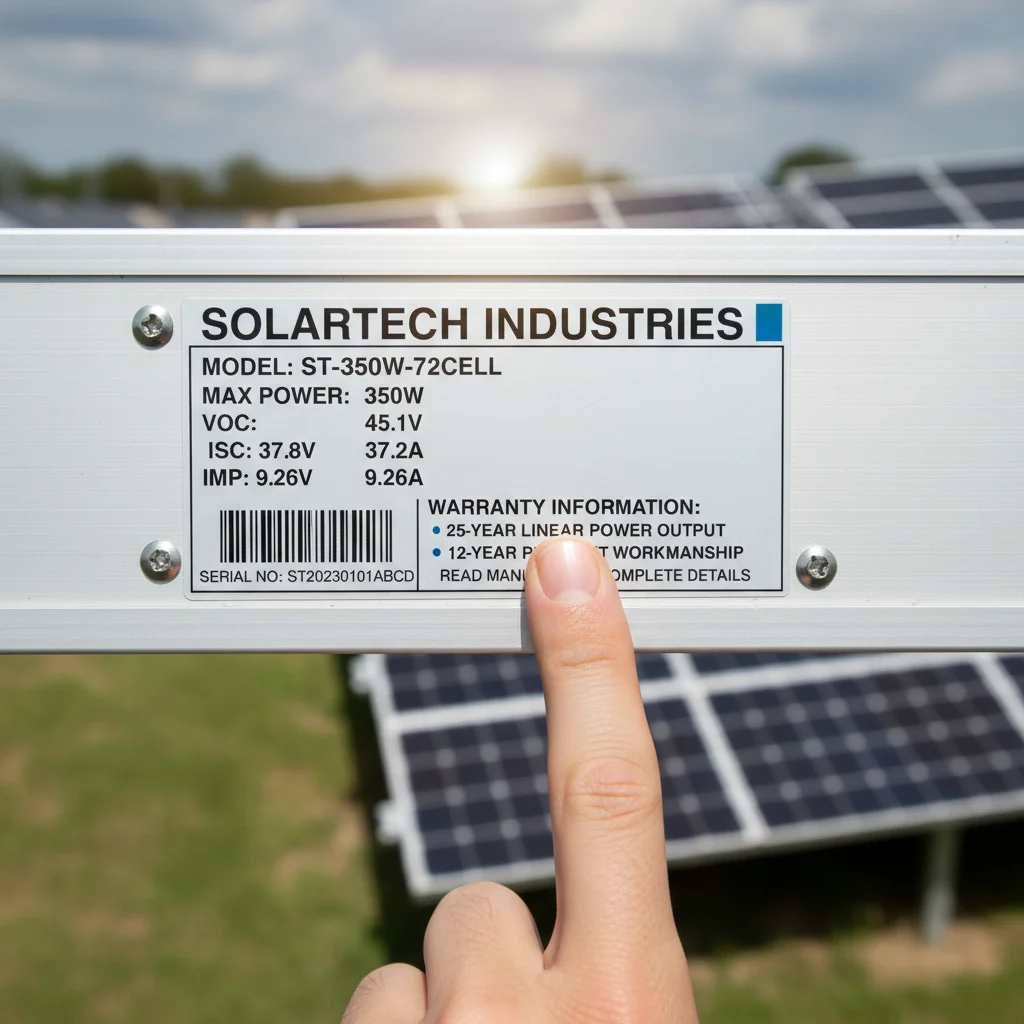
2. Product Warranties: Protecting Your Solar Equipment
Beyond power output, the physical integrity and functionality of your solar panels and associated hardware are covered by product warranties. This warranty protects against defects in materials and workmanship that could lead to equipment failure.
What to Expect from Product Warranties in 2026:
- Typical Duration: Product warranties for solar panels generally range from 10 to 12 years, but many premium manufacturers are now offering 20 to 25 years, and some even match their performance warranties at 25-30 years. This trend reflects increased confidence in the durability of modern solar technology.
- Components Covered: This warranty primarily covers the solar panels themselves. However, it’s crucial to understand that other components of your solar system, such as inverters, optimizers, and racking, will have their own separate product warranties.
- Inverter Warranties: Inverters are critical components that convert the DC electricity from your panels into AC electricity usable by your home. Their warranties typically range from 5-12 years for string inverters and 20-25 years for microinverters. Given their importance, pay close attention to inverter warranties.
- Coverage Details: The warranty should specify what types of defects are covered (e.g., material flaws, manufacturing errors) and what is excluded (e.g., damage from natural disasters, improper installation by an unauthorized party).
- Remedy for Defects: If a component fails due to a covered defect, the manufacturer will typically repair or replace it. Some warranties may also cover the labor costs associated with replacement, which is a significant benefit.
Key Considerations for Product Warranties:
- Comprehensive Coverage: Ensure all major components of your system – panels, inverters, optimizers, and mounting hardware – are covered by robust product warranties.
- Labor Costs: A product warranty that includes labor costs for replacement is highly advantageous, as these can be substantial.
- Exclusions: Carefully review the exclusions section to understand what circumstances might void your warranty.
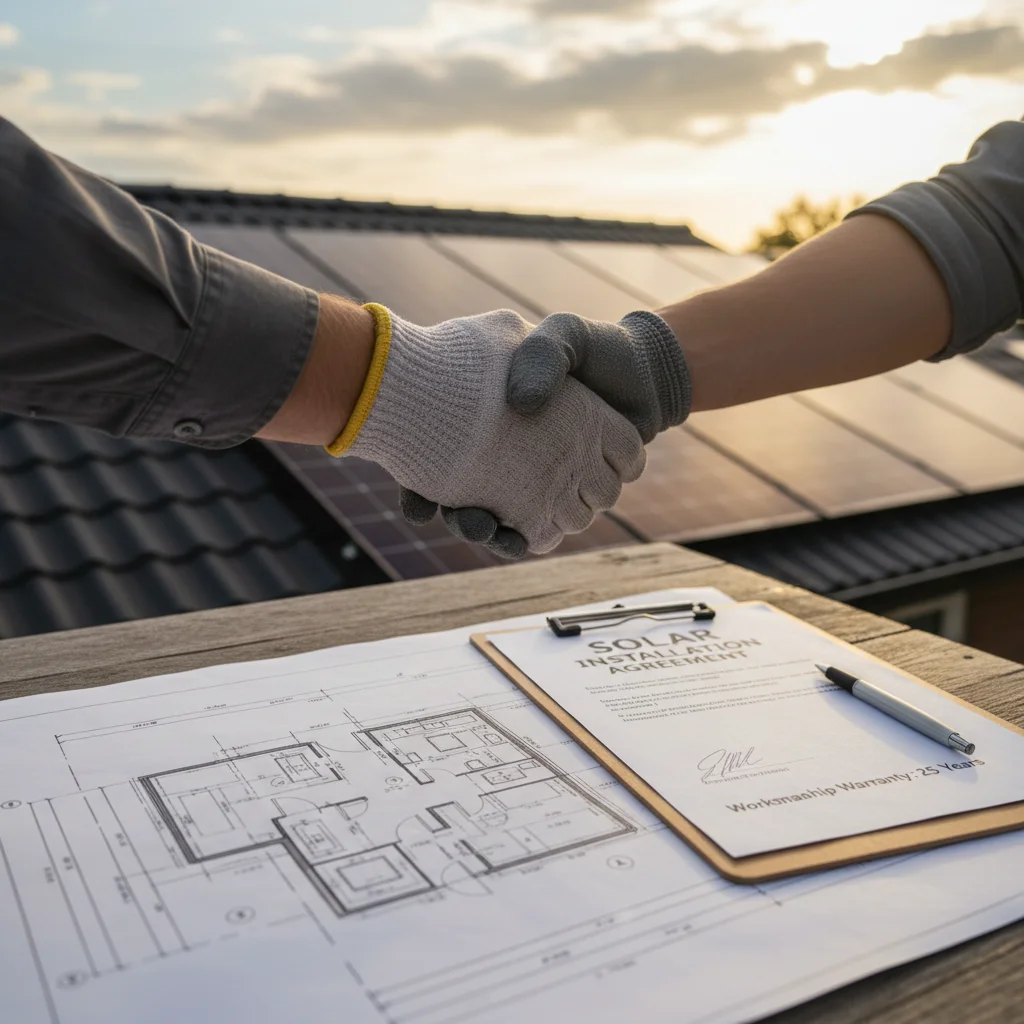
3. Workmanship Warranties: Guaranteeing Quality Installation
Even the best solar panels with the longest product and performance warranties won’t perform optimally if they are not installed correctly. This is where the workmanship warranty, provided by your solar installer, becomes indispensable.
What to Expect from Workmanship Warranties in 2026:
- Typical Duration: Workmanship warranties vary more widely than manufacturer warranties, typically ranging from 5 to 25 years. In 2026, a strong installer will offer at least 10 years, with many reputable companies providing 20 or even 25-year warranties, matching the lifespan of the panels themselves.
- Coverage Details: This warranty covers any issues directly related to the installation process. This includes problems like roof leaks due to improper sealing, faulty wiring, incorrect mounting, or any structural issues arising from the installation.
- Remedy for Issues: If an installation-related problem arises, the installer is responsible for correcting it at no additional cost to you. This could involve repairs, re-installation of components, or addressing any damage caused by the faulty installation.
- Who Provides It: Unlike performance and product warranties which come from the manufacturers, the workmanship warranty is provided by the solar installation company.
Key Considerations for Workmanship Warranties:
- Installer’s Reputation and Longevity: Choose an installer with a proven track record and strong financial stability. A workmanship warranty from a company that goes out of business is worthless. Look for companies with many years in the industry and positive customer reviews.
- Scope of Coverage: Understand precisely what the workmanship warranty covers. Does it include roof penetration integrity? Electrical connections? System commissioning?
- Transferability: Just like performance warranties, check if the workmanship warranty is transferable if you sell your home.
- Insurance: Ask if the installer carries adequate insurance to cover potential damages during installation or due to faulty work.
Beyond the Basics: Other Important Aspects of Solar Panel Warranties
While the three main types of warranties form the backbone of your solar protection, several other factors contribute to a truly comprehensive warranty package in 2026.
System Monitoring and Maintenance:
Many solar providers offer monitoring services as part of their package. This allows you and the installer to track your system’s performance in real-time. Early detection of underperformance can help initiate warranty claims promptly. Some companies also offer maintenance packages, which, while not strictly a warranty, can help prevent issues and ensure your system operates at peak efficiency.
All-in-One vs. Individual Warranties:
Some solar companies offer an "all-in-one" or "bumper-to-bumper" warranty that consolidates all three types of warranties under a single umbrella, often with a single point of contact for any issues. This can simplify the claims process significantly, as you don’t have to determine whether an issue falls under a product, performance, or workmanship warranty. If a single entity stands behind the entire system for its full lifespan, it offers immense peace of mind. This is a growing trend in 2026, especially among larger, vertically integrated solar companies.
Understanding Warranty Claim Processes:
A warranty is only as good as its claims process. Before signing any contract, ask your installer about the procedure for filing a claim. What documentation is required? What are the typical response times? Who is your primary point of contact? A clear, streamlined process is indicative of a reliable provider.
Force Majeure and Exclusions:
All warranties will have exclusions. Common exclusions include damage from natural disasters (acts of God), vandalism, unauthorized repairs, or improper maintenance by the homeowner. It’s crucial to read these sections carefully to understand the limitations of your coverage. For example, if a hurricane damages your panels, your homeowner’s insurance would typically cover this, not your solar panel warranties.
The Importance of a Reputable Solar Installer in 2026
Choosing the right solar installer is as important as selecting high-quality panels. A reputable installer will not only use reliable equipment but will also stand behind their work with strong workmanship warranties and excellent customer service. They will also guide you through understanding all aspects of your solar panel warranties.
What to Look For in an Installer:
- Certifications and Licenses: Ensure they are properly licensed and certified (e.g., NABCEP certification).
- Experience: Look for installers with significant experience in residential solar installations.
- Customer Reviews and References: Check online reviews and ask for references from previous customers.
- Transparency: A good installer will be transparent about all costs, timelines, and, most importantly, all warranty details.
- Financial Stability: A long workmanship warranty is meaningless if the company goes out of business. Research their financial health.
The Future of Solar Panel Warranties in 2026 and Beyond
As solar technology continues to mature, we can expect solar panel warranties to become even more robust and standardized. The trend towards longer durations, higher guaranteed outputs, and more comprehensive coverage is likely to continue. Integrated solutions, where a single company provides panels, inverters, and installation, often come with simplified, all-encompassing warranties, which will likely become more prevalent.
Additionally, with the rise of smart home technology and advanced monitoring systems, warranties might increasingly incorporate predictive maintenance and proactive problem-solving, further enhancing the reliability and longevity of residential solar systems. The emphasis will remain on ensuring homeowners feel confident and secure in their long-term investment.
Checklist for Evaluating Solar Panel Warranties:
To summarize, here’s a handy checklist to help you evaluate solar panel warranties:
- Performance Warranty:
- Duration: 25+ years (ideally 30+).
- Degradation Rate: < 0.5% annual degradation, with >85% output at 25 years.
- Type: Linear preferred.
- Transferable: Yes.
- Product Warranty:
- Panels: 15-25+ years (ideally matching performance warranty).
- Inverter: 10-25 years (depending on type).
- Racking/Mounting: 10+ years.
- Includes Labor Costs: Yes.
- Transferable: Yes.
- Workmanship Warranty:
- Duration: 10-25 years (longer is better).
- Clear Coverage: Details installation-related issues.
- Installer Reputation: Strong and stable.
- Transferable: Yes.
- Overall:
- Clear Claim Process: Easy to understand and execute.
- Minimal Exclusions: Read carefully.
- All-in-One Option: Consider for simplicity.
Conclusion: Securing Your Solar Investment with Robust Warranties
Investing in a residential solar system is a significant decision that promises long-term savings and environmental benefits. However, to truly maximize these advantages, a thorough understanding and careful evaluation of solar panel warranties are absolutely essential. In 2026, homeowners have access to increasingly comprehensive and extended warranty options, but the responsibility remains to scrutinize these guarantees.
By focusing on the three core types of warranties – performance, product, and workmanship – and delving into their specific terms, durations, and exclusions, you can protect your investment against unforeseen issues. Remember that the reputation and longevity of both the solar panel manufacturer and your chosen installer are paramount, as their stability directly impacts the value of their warranties.
Take the time to compare offers, ask detailed questions, and read the fine print. A well-warranted solar system not only provides reliable, clean energy for your home but also offers invaluable peace of mind, knowing that your investment is protected for its entire lifespan. Embrace the power of the sun with confidence, backed by the best solar panel warranties available in 2026.
Related Posts: