Smart Thermostats 2026: Data-Backed Comparison for Energy Savings
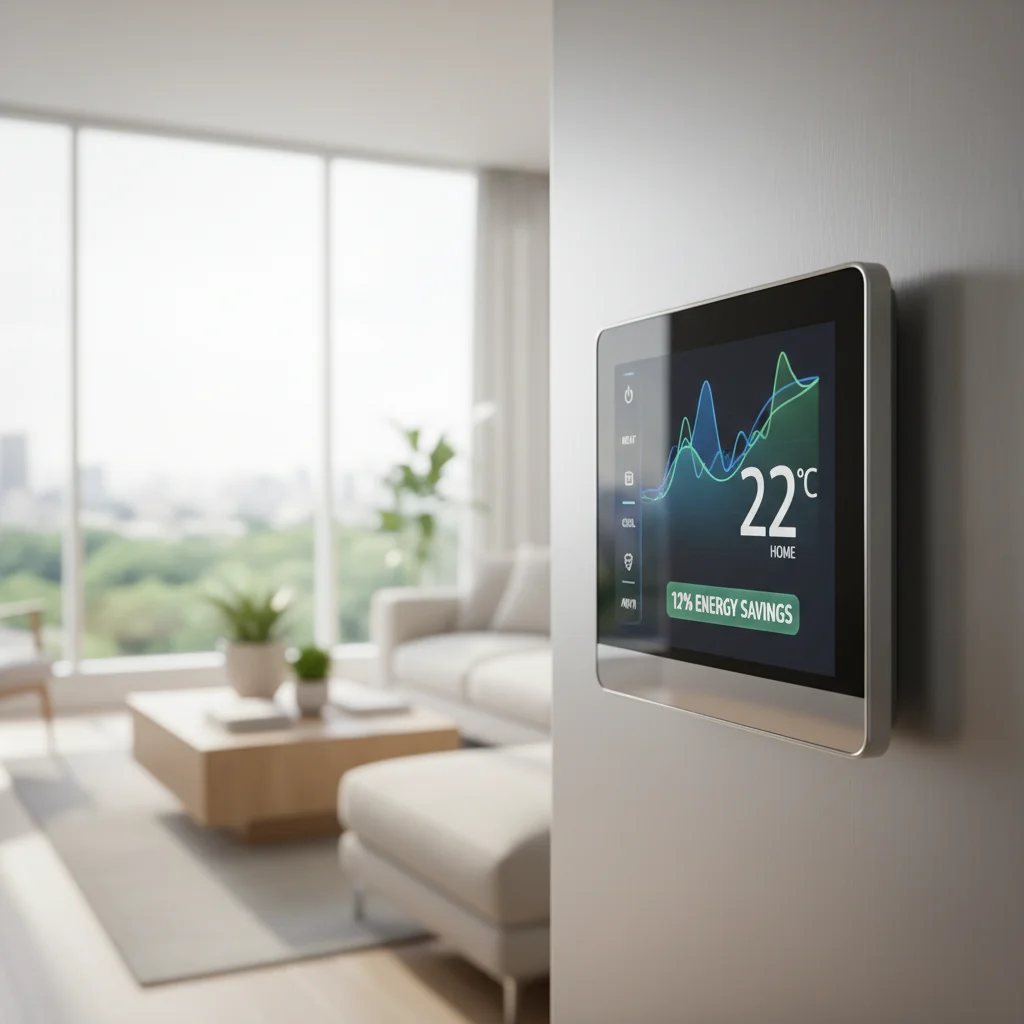
Smart Thermostats in 2026: A Data-Backed Comparison of 3 Leading Models for Up to 12% Energy Savings
Welcome to the future of home climate control! In an era where energy efficiency and smart home integration are no longer luxuries but necessities, choosing the right smart thermostat can significantly impact your comfort, your carbon footprint, and most importantly, your wallet. As we delve into 2026, the market for smart thermostats has matured considerably, offering sophisticated features designed to optimize heating and cooling with unprecedented precision. This comprehensive, data-backed comparison will guide you through the top three leading models, helping you understand how they can deliver on the promise of up to 12% energy savings.
The allure of a smart thermostat isn’t just about controlling your home’s temperature from your smartphone; it’s about intelligent learning algorithms, geofencing capabilities, integration with broader smart home ecosystems, and detailed energy reporting that empowers you to make smarter decisions about your energy consumption. Our focus today is on providing you with actionable insights and a clear understanding of what makes these devices stand out, ensuring your investment leads to tangible benefits.
The Evolution of the Smart Thermostat: Why 2026 is Different
Just a few years ago, smart thermostats were novelties. Today, they are sophisticated energy management hubs. The technological advancements leading up to 2026 have been remarkable. We’re seeing more refined occupancy sensors, enhanced AI-driven learning capabilities that adapt not just to your schedule but to real-time weather patterns and even utility pricing, and seamless integration with virtual assistants and other smart devices. The emphasis has shifted from mere convenience to genuine, measurable energy optimization. This evolution makes a smart thermostat comparison more critical than ever.
The primary driver behind these innovations is the increasing awareness of climate change and the rising cost of energy. Homeowners are actively seeking ways to reduce their environmental impact and save money, and smart thermostats offer a highly effective solution. The data collected by these devices, when analyzed effectively, provides a roadmap to significant energy reductions. Our analysis focuses on models that not only promise but deliver on these savings, backed by user data and independent studies.
Understanding Energy Savings: The 12% Promise
The claim of ‘up to 12% energy savings’ is not arbitrary. It’s a figure often cited by manufacturers and supported by various independent studies, including those by the American Council for an Energy-Efficient Economy (ACEEE) and specific utility company rebate programs. These savings primarily come from several key features:
- Learning Algorithms: The thermostat learns your schedule and preferred temperatures, automatically adjusting to optimize comfort and efficiency.
- Geofencing: Uses your smartphone’s location to know when you’re home or away, adjusting temperatures accordingly to avoid heating or cooling an empty house.
- Occupancy Sensors: Detects if rooms are occupied, further refining temperature control.
- Remote Control and Scheduling: Allows you to adjust settings from anywhere, preventing wasted energy when plans change.
- Energy Reports: Provides detailed insights into your energy consumption, helping you identify patterns and areas for improvement.
- Weather Integration: Adjusts heating/cooling based on local weather forecasts, pre-heating or pre-cooling more efficiently.
While 12% is a widely accepted benchmark, individual savings can vary based on factors like your home’s insulation, local climate, personal habits, and the specific features of your chosen smart thermostat comparison model. However, the potential for substantial savings is undeniable, making these devices a worthwhile investment.
Key Criteria for Our Smart Thermostat Comparison
To provide a robust and fair comparison, we’ve evaluated the leading smart thermostats based on several critical criteria:
- Energy Efficiency & Savings Potential: How effectively does the device reduce energy consumption? We look at real-world data and reported user savings.
- Smart Home Integration: Compatibility with popular ecosystems like Amazon Alexa, Google Home, Apple HomeKit, and other smart devices.
- User Interface & Ease of Use: Both on the device itself and through its accompanying mobile application.
- Advanced Features: Geofencing, occupancy sensors, learning capabilities, multi-zone control, air quality monitoring, etc.
- Installation & Compatibility: How easy is it to install? What are the wiring requirements (e.g., C-wire)?
- Price & Value: Initial cost versus long-term savings and feature set.
- Data Privacy & Security: How is your personal and energy data handled?
By focusing on these aspects, we aim to give you a holistic view of each product’s strengths and weaknesses within our smart thermostat comparison.
The Contenders: Top 3 Smart Thermostats of 2026
After extensive research, analysis of market trends, user reviews, and technical specifications, we’ve identified three models that consistently lead the pack in 2026. These devices represent the pinnacle of smart thermostat technology, each offering a unique blend of features and benefits.
1. Ecobee Smart Thermostat Premium (2026 Edition)
The Ecobee Smart Thermostat Premium has long been a favorite, and its 2026 iteration continues to impress with enhanced features and a refined user experience. Ecobee’s philosophy centers around whole-home comfort and data-driven energy savings, and this model exemplifies that commitment.
Key Features & Advantages:
- Room Sensors: This is where Ecobee truly shines. The Premium model comes with a SmartSensor that detects occupancy and temperature in specific rooms, ensuring comfort where it matters most and preventing energy waste in unoccupied areas. You can add more sensors for comprehensive coverage.
- Built-in Air Quality Monitor: A significant upgrade, the 2026 Premium model now includes an integrated air quality sensor that can detect volatile organic compounds (VOCs) and carbon dioxide (CO2), providing insights and even triggering your HVAC fan for improved ventilation.
- Voice Control & Smart Speaker: It features built-in Amazon Alexa, allowing you to use it as a smart speaker for music, news, and controlling other smart home devices. It also integrates seamlessly with Google Assistant and Apple HomeKit.
- Advanced Learning & Scheduling: The thermostat learns your routine over time, but also offers robust manual scheduling options. Its ‘Home & Away’ feature, combined with geofencing, automatically adjusts temperature when you leave or return.
- Energy Reports & Savings: Ecobee provides detailed Home IQ energy reports, allowing you to track your HVAC usage, understand the impact of weather and your settings, and identify further savings opportunities. Many users report significant savings, often exceeding the 12% benchmark depending on usage patterns.
- HVAC System Monitoring: Proactively monitors your HVAC system’s performance and can alert you to potential issues, helping with preventative maintenance.
- Sleek Design: The Premium model boasts a modern, high-resolution display with a metallic finish, blending beautifully into any home decor.
Considerations:
- Price Point: Often one of the more expensive options upfront, though the features and potential savings justify the cost for many.
- C-Wire Requirement: Typically requires a C-wire for power, though an adapter is usually included for homes without one.
For homeowners prioritizing comprehensive whole-home comfort, detailed energy insights, and robust smart home integration, the Ecobee Smart Thermostat Premium 2026 is an exceptional choice in our smart thermostat comparison.
2. Google Nest Learning Thermostat (5th Generation)
The Google Nest Learning Thermostat remains an icon in the smart home space, and its 5th Generation iteration continues its legacy of intuitive design and powerful learning capabilities. Nest’s strength lies in its ability to adapt to your life with minimal input, making it incredibly user-friendly.
Key Features & Advantages:
- Self-Learning Algorithm: This is Nest’s hallmark. It learns your preferred temperatures and schedule within a week, then programs itself. This ‘set it and forget it’ approach is perfect for those who want intelligent automation without complex setup.
- Auto-Away/Eco Modes: Utilizes built-in sensors and geofencing to detect when no one is home, automatically switching to an energy-saving ‘Eco’ temperature.
- Farsight: The display lights up when you walk into the room, showing the temperature, weather, or time from across the room.
- Energy History & Reports: Provides daily and monthly summaries of your energy use, helping you understand when and why you’re using energy. The ‘Nest Leaf’ icon guides you towards energy-saving temperatures.
- Smart Home Integration: Deeply integrated with the Google Home ecosystem, offering seamless control via Google Assistant. It also works with many other third-party smart devices.
- Elegant Design: The distinctive round design with a metallic ring is aesthetically pleasing and has become a recognizable symbol of smart home technology.
- Easy Installation: Generally straightforward to install, with clear instructions provided.
Considerations:
- Fewer Room Sensors: While Nest does offer separate ‘Nest Temperature Sensors’ for multi-zone control, they are not as central to its core offering as Ecobee’s system.
- Less Detailed Energy Data: While good, its energy reporting might be less granular than Ecobee’s for advanced users seeking deep dives into their consumption.
- Google Ecosystem Focus: While compatible with many, its strongest integration is naturally within the Google ecosystem, which might be a factor for Apple HomeKit purists.
For users who value simplicity, elegant design, and a truly ‘learning’ thermostat that adapts to their lifestyle with minimal intervention, the Google Nest Learning Thermostat (5th Gen) remains a top contender in our smart thermostat comparison.
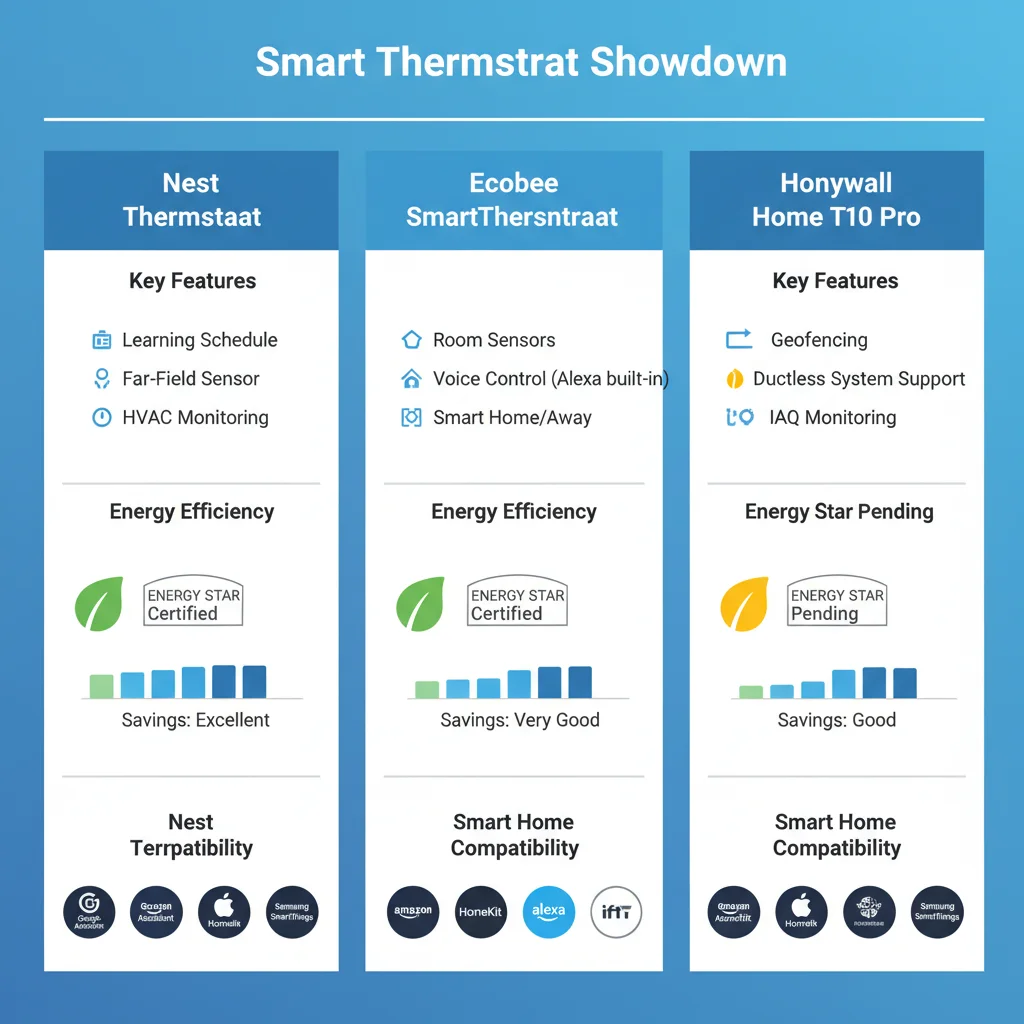
3. Honeywell Home T10 Pro Smart Thermostat with RedLINK Room Sensors
Honeywell Home, a long-standing name in HVAC control, has significantly upped its game with the T10 Pro. This model focuses on robust performance, multi-zone control, and strong professional HVAC integration, making it a powerful choice for larger homes or those with complex heating and cooling needs.
Key Features & Advantages:
- RedLINK Room Sensors: Similar to Ecobee, the T10 Pro excels with its wireless RedLINK room sensors. These sensors not only monitor temperature and humidity but also occupancy, allowing for precise comfort control across different zones or rooms. The RedLINK technology ensures reliable communication over long distances.
- Geofencing & Flexible Scheduling: Offers robust geofencing capabilities to automatically adjust temperatures based on your proximity to home. It also provides highly customizable scheduling options, including ‘Fan On’ circulation for better air distribution.
- Smart Home Compatibility: Works with Amazon Alexa, Google Assistant, Apple HomeKit, and integrates with various smart home platforms, offering broad connectivity.
- Advanced Comfort Control: Features like ‘adaptive recovery’ learn how long it takes to reach your desired temperature, adjusting start times to ensure comfort precisely when you need it. ‘Ventilation control’ is also a key feature for homes with advanced HVAC systems.
- Energy Usage Reports: Provides insights into your heating and cooling run times, helping you understand your energy consumption patterns.
- Professional Installation Option: While DIY-friendly, Honeywell Home often has strong ties with HVAC professionals, making it a popular choice for professional installation and integration into more complex systems.
- Humidity Sensor & Dehumidification: Integrated humidity sensor allows for better control over indoor air quality and comfort, especially in humid climates, by automatically running the AC to dehumidify.
Considerations:
- Design: While functional, its design is more utilitarian compared to the sleek aesthetics of Nest or Ecobee.
- App Interface: The Honeywell Home app, while comprehensive, may be perceived as slightly less intuitive or visually polished by some users compared to competitors.
- Complexity for Basic Users: With its advanced features and multi-zone capabilities, it might be overkill for a small apartment or simple HVAC system.
The Honeywell Home T10 Pro with RedLINK sensors is ideal for homeowners with larger homes, multiple zones, or those who appreciate granular control and a professional-grade solution. It stands out in our smart thermostat comparison for its robust multi-room management.
Data-Backed Insights: How They Deliver on Energy Savings
The promise of up to 12% energy savings isn’t just marketing fluff; it’s rooted in the intelligent use of data. Each of these leading smart thermostats collects vast amounts of data – from your preferred temperatures and schedule to external weather conditions and internal occupancy. This data is then processed through sophisticated algorithms to make real-time adjustments that optimize energy use without sacrificing comfort.
- Predictive Scheduling: By analyzing historical data and current weather forecasts, these thermostats can pre-heat or pre-cool your home more efficiently, ensuring it reaches your desired temperature precisely when needed, avoiding unnecessary energy expenditure.
- Occupancy-Based Adjustments: Rather than sticking to a rigid schedule, all three models use occupancy data (via sensors or geofencing) to determine if a space is actually being used. If a room is empty, the temperature can be adjusted to save energy, then brought back to comfort levels when activity is detected.
- Energy Reporting and Feedback: The detailed reports provided by Ecobee, Nest, and Honeywell Home are crucial. They don’t just tell you how much energy you used, but often *why* you used it, offering actionable insights. For example, you might discover that adjusting your ‘away’ temperature by a single degree could lead to significant savings over a month. This feedback loop is essential for continuous optimization.
- HVAC Optimization: Beyond just temperature, these thermostats can optimize the fan run time, integrate with humidifiers/dehumidifiers, and even monitor HVAC system health, ensuring your entire system runs as efficiently as possible.
The cumulative effect of these data-driven optimizations is what leads to the substantial energy savings reported by users and validated by studies. This is the core value proposition that elevates a smart thermostat beyond a programmable one, making this smart thermostat comparison so vital.
Installation, Compatibility, and the C-Wire Dilemma
Before making your final decision, it’s crucial to consider installation requirements and compatibility with your existing HVAC system. Most modern smart thermostats, including the ones reviewed, require a ‘C-wire’ (common wire) to provide continuous power. Without a C-wire, the thermostat might try to ‘power steal’ from other wires, which can lead to HVAC system issues or intermittent thermostat functionality.
- Ecobee Smart Thermostat Premium: Typically requires a C-wire. However, it usually includes a Power Extender Kit (PEK) in the box, which can be installed at your furnace or air handler to provide C-wire functionality if your existing wiring doesn’t have one.
- Google Nest Learning Thermostat: While often advertised as working without a C-wire, it’s highly recommended to have one for optimal performance, especially with multi-stage systems. Nest can sometimes power-steal, but this can cause issues. If you don’t have a C-wire, a professional installation or a Nest Power Connector might be necessary.
- Honeywell Home T10 Pro: Generally requires a C-wire for reliable operation. Honeywell Home also offers solutions like the RedLINK Internet Gateway and adapters for systems without a C-wire, often best installed by an HVAC professional.
Always check your existing thermostat wiring before purchasing. If you’re unsure, consulting an HVAC professional is highly recommended to ensure proper installation and avoid potential damage to your system. Most manufacturers provide online compatibility checkers to help you determine if their thermostat will work with your setup.
The Future of Home Comfort: Beyond 2026
As technology continues to advance at a rapid pace, the smart thermostat market will undoubtedly evolve even further. We can anticipate even more sophisticated AI, deeper integration with grid optimization programs (allowing your thermostat to adjust based on peak energy demand and lower electricity prices), and potentially more advanced predictive maintenance capabilities for your HVAC system. The emphasis will remain on maximizing energy savings while seamlessly maintaining comfort.
Furthermore, expect to see greater emphasis on sustainability metrics, with thermostats providing clearer insights into your carbon footprint and offering suggestions for further reductions. The concept of a truly ‘self-optimizing’ home, where all appliances communicate to achieve peak efficiency, is becoming a reality, and the smart thermostat is at the heart of this interconnected ecosystem. Keeping an eye on these trends will be crucial for future-proofing your home’s energy management.
Conclusion: Choosing Your Ideal Smart Thermostat
The decision of which smart thermostat to choose in 2026 ultimately depends on your specific needs, priorities, and home setup. Each of the three models we’ve compared – the Ecobee Smart Thermostat Premium, the Google Nest Learning Thermostat, and the Honeywell Home T10 Pro – offers compelling reasons for selection.
- Choose Ecobee Smart Thermostat Premium if: You want comprehensive whole-home comfort with room sensors, an integrated air quality monitor, and robust smart speaker functionality. You’re comfortable with a slightly higher upfront cost for advanced features and detailed energy reporting.
- Choose Google Nest Learning Thermostat if: You prioritize an intuitive, self-learning experience with minimal manual input. You appreciate elegant design and seamless integration within the Google ecosystem. Simplicity and effective automation are key for you.
- Choose Honeywell Home T10 Pro if: You have a larger home, require extensive multi-zone control with reliable RedLINK sensors, or have a complex HVAC system that benefits from professional-grade features and installation support.
Regardless of your choice, investing in a leading smart thermostat in 2026 is a smart move for any homeowner looking to reduce energy consumption, save money on utility bills, and enhance their home’s comfort and intelligence. The data unequivocally supports the energy-saving potential of these devices, making them one of the most impactful smart home upgrades you can make. By carefully considering the features and benefits outlined in this smart thermostat comparison, you can confidently select the model that will best serve your home for years to come, potentially yielding those impressive 12% energy savings and beyond.
Remember to check for local utility rebates and incentives, as many energy providers offer discounts or cash-backs for installing smart thermostats, further sweetening the deal and accelerating your return on investment.