2026 Homeowner’s Guide: Solar Panel Sizing & Installation for Maximum Savings
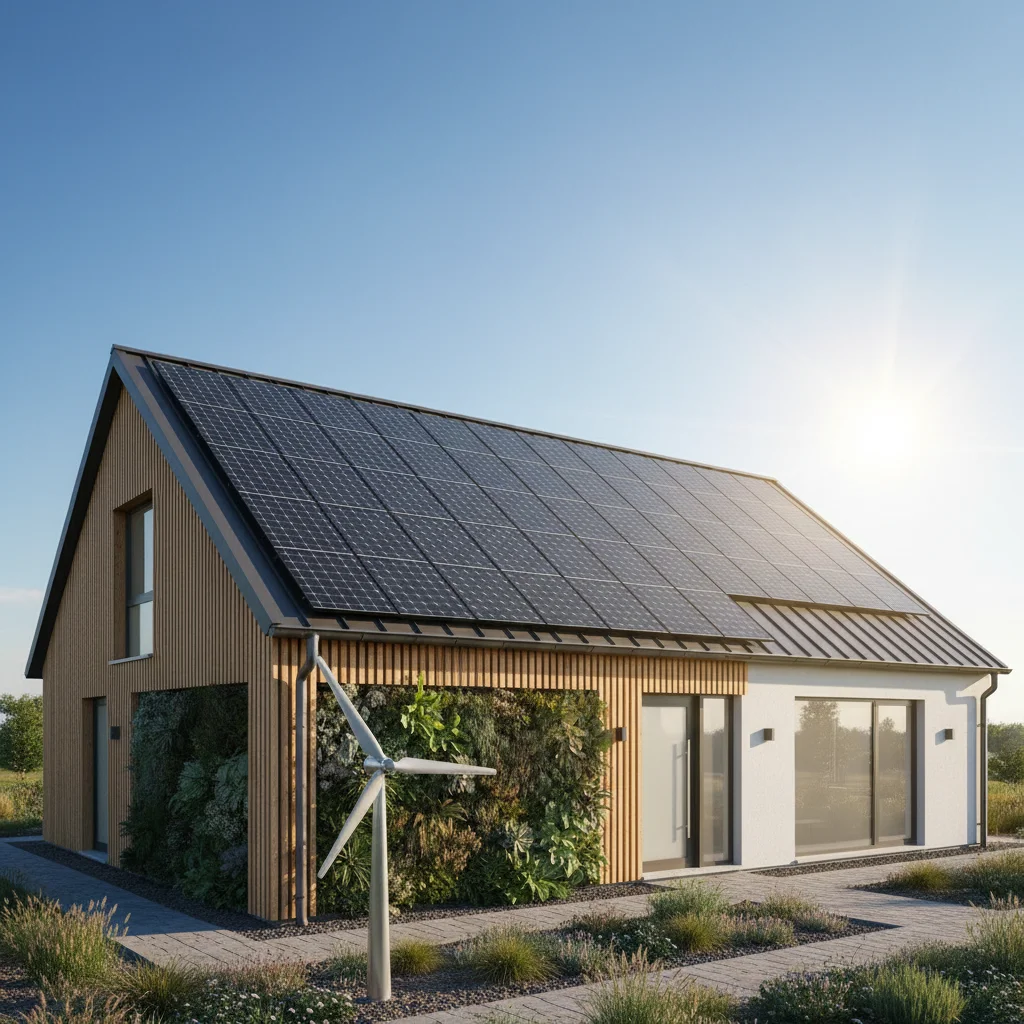
The year 2026 marks a pivotal moment for homeowners considering the transition to solar energy. With advancements in technology, more accessible financing options, and a growing global emphasis on sustainability, there has never been a better time to explore the benefits of solar panel installation. This comprehensive guide is designed to equip you with the knowledge and tools necessary to make an informed decision, ensuring your journey to energy independence is both smooth and rewarding. We’ll delve into everything from understanding your energy needs to navigating the installation process, all centered around helping you achieve maximum savings and a reduced carbon footprint.
Understanding Your Energy Needs: The First Step in Solar Panel Sizing
Before embarking on any solar panel installation guide, the foundational step is a thorough understanding of your household’s energy consumption. This isn’t just about looking at your monthly electricity bill; it’s about dissecting where and how you use power. Accurate solar panel sizing hinges on this crucial data. Over-sizing your system can lead to unnecessary costs, while under-sizing it may not meet your energy demands, negating some of the financial benefits you’re aiming for.
Analyzing Your Electricity Bills
Start by gathering at least 12 months of electricity bills. This will provide a complete picture of your annual energy usage, accounting for seasonal variations. Most utilities display consumption in kilowatt-hours (kWh). Look for patterns: do you use more electricity in the summer for air conditioning, or in the winter for heating? These fluctuations are critical for proper solar panel sizing.
Conducting a Home Energy Audit
Beyond the bills, a home energy audit can reveal inefficiencies that, if addressed, could reduce your overall energy needs and, consequently, the size and cost of your solar system. This audit can be performed by a professional or as a DIY project. Look for:
- Insulation levels: Are your walls, attic, and crawl spaces adequately insulated?
- Window and door seals: Are there drafts allowing conditioned air to escape?
- Appliance efficiency: Are any of your major appliances (refrigerator, washer, dryer, water heater) outdated and consuming excessive energy?
- Lighting: Have you switched to LED lighting throughout your home?
Addressing these issues before your solar panel installation can significantly lower your required system size, saving you money on both the initial investment and ongoing energy costs.
Projecting Future Energy Needs
Consider any planned changes to your home or lifestyle that might impact your energy consumption. Are you planning to add an electric vehicle, install a hot tub, or expand your living space? These additions will increase your electricity demand and should be factored into your solar panel sizing calculations. A forward-thinking approach ensures your solar system remains adequate for years to come.
Solar Panel Sizing: Calculating Your System Requirements
Once you have a clear understanding of your energy consumption, the next step in our solar panel installation guide is to calculate the appropriate system size. This involves a few key variables.
Average Daily Energy Consumption
Take your annual kWh usage from your electricity bills and divide it by 365 days to get your average daily kWh consumption. This number is your target for solar production.
Peak Sun Hours in Your Location
Solar panels produce electricity based on direct sunlight. The amount of usable sunlight your location receives daily is known as ‘peak sun hours.’ This isn’t the same as daylight hours; it represents the intensity of sunlight equivalent to full sun. Websites like the National Renewable Energy Laboratory (NREL) provide data on peak sun hours for various locations across the United States. This factor is crucial for accurate solar panel sizing.
System Efficiency and Derate Factor
No solar system operates at 100% efficiency. Factors like temperature, shading, dust, and inverter losses reduce the actual power output. This is accounted for by a ‘derate factor,’ typically ranging from 0.75 to 0.85 (or 75% to 85% efficiency). Your installer will use a more precise derate factor based on your specific conditions.
The Sizing Formula
The basic formula for calculating the required system size (in kilowatts, kW) is:
System Size (kW) = (Average Daily kWh Consumption / Peak Sun Hours) / Derate Factor
For example, if your average daily consumption is 30 kWh, you have 5 peak sun hours, and a derate factor of 0.80:
System Size (kW) = (30 kWh / 5 hours) / 0.80 = 6 kW / 0.80 = 7.5 kW
This means you would need approximately a 7.5 kW solar system to meet your energy needs. This calculation is a critical component of any effective solar panel installation guide.
Choosing the Right Solar Panels and Equipment
The market for solar technology is constantly evolving, offering a variety of panels and equipment. Making the right choices for your solar panel installation involves understanding the different types and their implications.
Types of Solar Panels
- Monocrystalline Panels: These are generally the most efficient, offering a sleek, uniform black appearance. They perform well in high temperatures and are ideal for homes with limited roof space.
- Polycrystalline Panels: Slightly less efficient than monocrystalline panels, but often more affordable. They have a blueish hue and are a good option if you have ample roof space and a tighter budget.
- Thin-Film Panels: These are flexible and lightweight, suitable for non-traditional surfaces. However, they are less efficient and typically used for niche applications rather than standard residential solar panel installation.
Inverters: The Heart of Your System
Inverters convert the direct current (DC) electricity produced by your solar panels into alternating current (AC) electricity that your home appliances use. There are three main types:
- String Inverters: The most common and cost-effective. Panels are wired together in a ‘string,’ and the inverter converts the DC from the entire string. If one panel is shaded or underperforms, it can affect the output of the whole string.
- Microinverters: Each solar panel has its own microinverter. This maximizes individual panel performance, as shading on one panel doesn’t impact the others. They are more expensive but offer greater efficiency and monitoring capabilities.
- Power Optimizers: A hybrid solution. Optimizers are attached to each panel to condition the DC power before it goes to a central string inverter. They offer similar benefits to microinverters in terms of individual panel optimization but at a slightly lower cost.
Mounting Systems and Racking
The mounting system secures your panels to the roof. Factors like roof type (shingle, tile, metal), pitch, and local wind/snow loads will determine the best racking solution. A professional installer will assess your roof’s structural integrity and recommend the most suitable and durable system for your solar panel installation.
Battery Storage (Optional but Recommended)
While not strictly part of a basic solar panel installation guide, battery storage is becoming increasingly popular. It allows you to store excess solar energy generated during the day for use at night or during power outages. This enhances energy independence and can further reduce reliance on the grid, especially if your utility has unfavorable net metering policies.
Navigating Financing and Incentives for Solar Panel Installation
The initial cost of solar panel installation can seem daunting, but numerous financing options and incentives can make it highly affordable and economically beneficial. Understanding these can significantly impact your return on investment.
Federal Tax Credit (ITC)
The federal Investment Tax Credit (ITC) is one of the most significant incentives. It allows homeowners to deduct a percentage of the cost of their solar system from their federal taxes. As of 2026, the ITC remains substantial, making solar a more attractive investment. Always consult with a tax professional to understand your eligibility and the exact percentage.
State and Local Incentives
Many states, counties, and even cities offer additional incentives, such as:
- State Tax Credits: Similar to the federal ITC, but at the state level.
- Rebates: Direct payments from utilities or state programs for installing solar.
- Property Tax Exemptions: Solar panels can increase your home’s value, but some areas exempt this increase from property tax assessments.
- Sales Tax Exemptions: Eliminating sales tax on solar equipment can reduce upfront costs.
Researching these local incentives is a critical step in your solar panel installation guide planning.
Net Metering
Net metering policies allow you to send excess electricity generated by your solar panels back to the grid in exchange for credits on your electricity bill. This is a crucial mechanism for maximizing savings and offsetting periods when your solar system might not produce enough power (e.g., at night or on cloudy days). The specifics of net metering vary by state and utility, so understanding your local policy is essential.
Financing Options
- Cash Purchase: The most straightforward option, offering the highest long-term savings and eligibility for all incentives.
- Solar Loan: You take out a loan to purchase the system, much like a home improvement loan. You own the system and receive all incentives.
- Power Purchase Agreement (PPA): A third-party company owns, installs, and maintains the solar system on your roof. You purchase the electricity generated at a fixed rate, often lower than your utility rate. You don’t own the system or receive the incentives, but you also have no upfront costs.
- Solar Lease: Similar to a PPA, but you pay a fixed monthly ‘rent’ for the solar system. You don’t own the system or receive the incentives.
Each option has its pros and cons, and the best choice depends on your financial situation and long-term goals. A reputable solar provider can help you navigate these choices as part of your solar panel installation guide.
The Solar Panel Installation Process: What to Expect
Once you’ve sized your system, chosen your equipment, and secured financing, the physical solar panel installation process begins. Understanding the steps involved can help you prepare and ensure a smooth experience.
Permitting and Approvals
Before any physical work begins, your solar installer will handle all necessary permits from your local municipality and approvals from your utility company. This can be a lengthy process, often taking several weeks or even months, depending on your location. It’s crucial that your installer manages this, as improper permitting can lead to delays and fines.
Site Preparation and Scaffolding
On the day of installation, the crew will prepare the site, which often involves setting up safety equipment like scaffolding. They will ensure the work area is secure and that all necessary precautions are taken to protect your property and their team.
Mounting Racks Installation
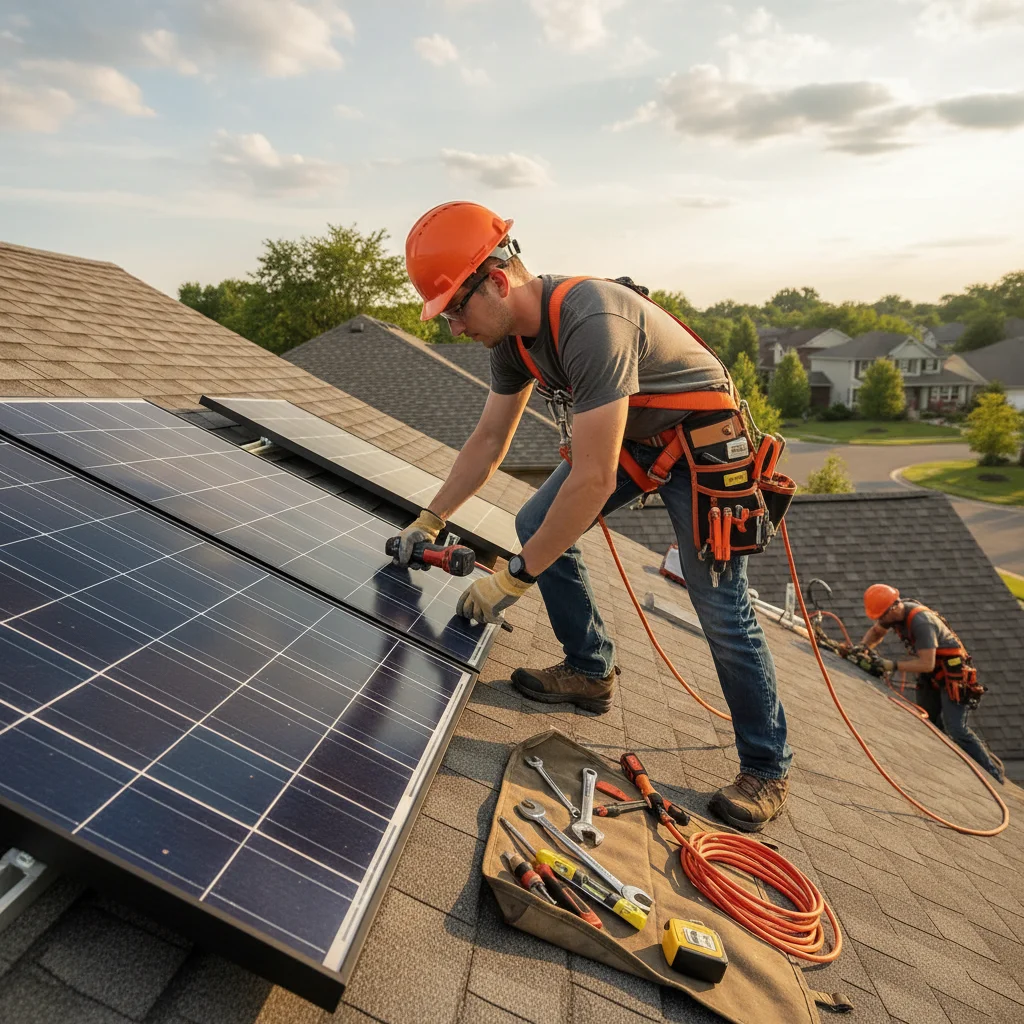
The first step on the roof is installing the mounting system or racking. This involves attaching rails to your roof’s rafters, ensuring they are securely fastened and properly aligned. This forms the foundation for your solar panels.
Solar Panel Installation
Next, the solar panels are carefully lifted onto the roof and secured to the mounting racks. This is a precise process, ensuring each panel is correctly positioned and electrically connected. The electrical wiring will run from the panels to the inverter(s).
Inverter and Electrical Work
The inverter(s) will be installed, typically near your main electrical panel or in a garage. The DC electricity from the panels is fed into the inverter, converted to AC, and then connected to your home’s electrical system. This also involves installing a new meter (often a net meter) and ensuring all electrical connections meet safety codes.
Inspection and System Activation
After installation, your system will undergo a series of inspections. This includes a local building department inspection to ensure code compliance and a utility company inspection to approve connection to the grid and activate net metering. Once all inspections pass, your system will be turned on, and you can begin generating your own clean electricity! This final step is the culmination of your solar panel installation guide journey.
Maintenance and Monitoring Your Solar System
While solar systems are renowned for their low maintenance, a proactive approach to care and monitoring will ensure optimal performance and longevity, maximizing the benefits of your solar panel installation.
Routine Cleaning
Solar panels generally self-clean with rain. However, in dry climates or areas with significant dust, pollen, or bird droppings, occasional cleaning may be necessary. Most manufacturers recommend cleaning panels once or twice a year. Use a soft brush, mild soap, and water, preferably in the early morning or late evening when the panels are cool.
Shading Management
Keep an eye on any potential shading issues from growing trees or new constructions. Even partial shading on one panel can significantly reduce the output of an entire string if you have a string inverter. Regular trimming of trees or adjusting landscaping can mitigate this.
System Monitoring
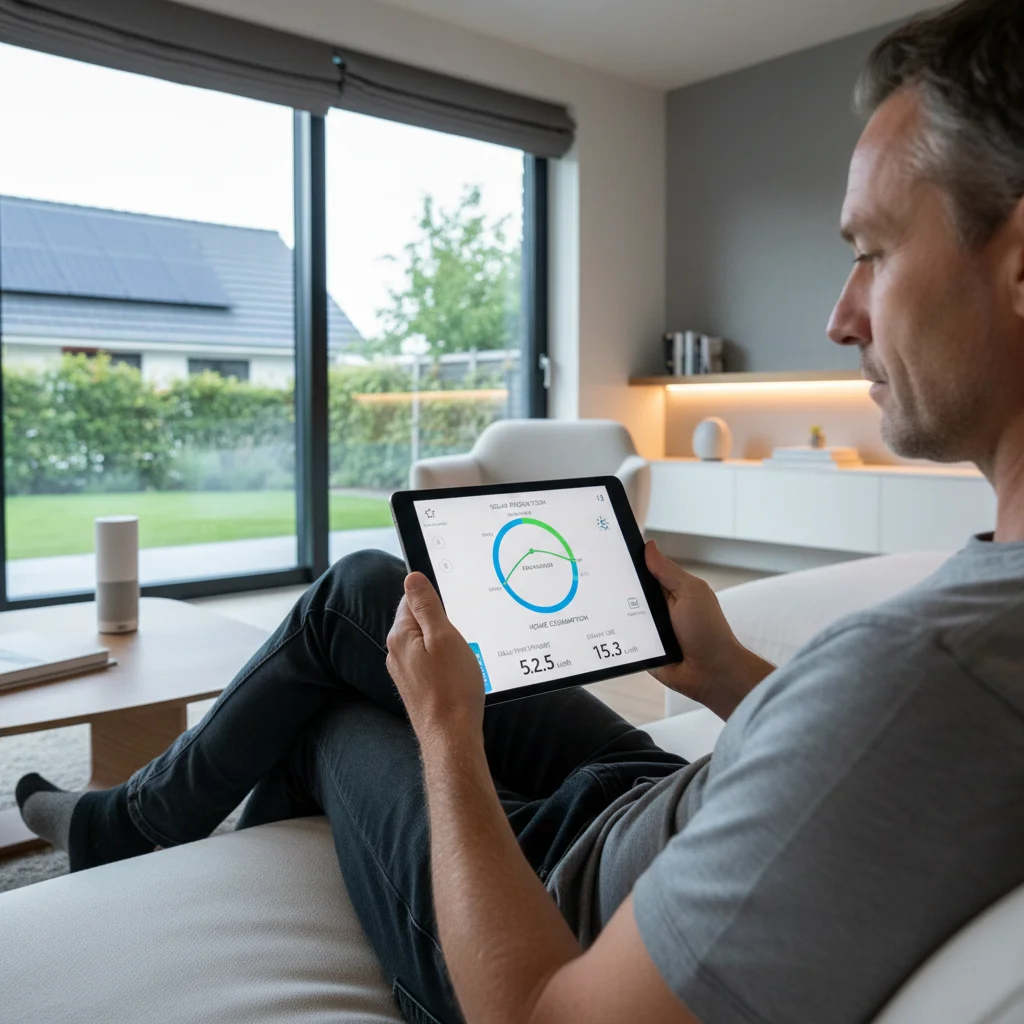
Most modern solar systems come with monitoring software, often accessible via a smartphone app or web portal. This allows you to track your system’s energy production in real-time, identify any performance issues, and understand your energy consumption patterns. Regular monitoring is a key aspect of maintaining a high-performing solar panel installation.
Professional Inspections
While not always required, consider a professional inspection every few years. An installer can check electrical connections, inverter health, and structural integrity of the mounting system, addressing any potential issues before they become major problems. This ensures the long-term efficiency and safety of your solar panel installation.
The Environmental and Economic Benefits of Solar
Beyond the detailed steps of our solar panel installation guide, it’s important to remember the overarching benefits that make this investment so worthwhile for homeowners in 2026 and beyond.
Reduced Carbon Footprint
By generating your own electricity from a renewable source, you significantly reduce your reliance on fossil fuels, thereby lowering your household’s carbon emissions. This direct contribution to combating climate change is a powerful motivator for many homeowners.
Significant Cost Savings
Once your solar system is paid off, your electricity costs can drop dramatically, often to just a basic grid connection fee. Even before that, net metering and reduced consumption will lead to substantial monthly savings. Over the lifespan of a solar system (typically 25-30 years), these savings can amount to tens of thousands of dollars.
Increased Home Value
Studies consistently show that homes with solar panel installations sell faster and at a higher price than comparable non-solar homes. Solar panels are increasingly viewed as a desirable upgrade, enhancing your property’s market appeal and resale value.
Energy Independence and Security
Owning a solar system provides a degree of independence from rising utility rates and grid outages. With battery storage, you can achieve even greater energy security, knowing you have a reliable power source even when the grid goes down.
Common Questions About Solar Panel Installation
As you consider a solar panel installation, you likely have many questions. Here are answers to some of the most common ones:
How long do solar panels last?
Most solar panels are guaranteed to produce electricity for 25 to 30 years, though they often continue to operate beyond that, albeit with a slight decrease in efficiency.
What happens on cloudy days or at night?
On cloudy days, panels still produce electricity, but at a reduced rate. At night, they produce no power. During these times, your home draws electricity from the grid, and if you have net metering, the credits you’ve accumulated from excess solar production during sunny hours will offset these draws. With battery storage, you can use stored solar energy during these periods.
Do solar panels work in cold climates?
Yes, solar panels are actually more efficient in colder temperatures, as long as there is sunlight. Snow can temporarily cover panels, reducing production, but it often slides off due to the panel’s dark color and tilt.Will solar panels damage my roof?
When installed correctly by certified professionals, solar panels should not damage your roof. Reputable installers take great care to ensure the mounting system is properly sealed to prevent leaks and that your roof’s structural integrity is maintained.
How long does the entire process take, from consultation to activation?
The timeline can vary significantly based on permitting requirements and installer schedules, but typically ranges from 2 to 4 months. The actual physical installation usually takes only a few days.
Conclusion: Embracing a Solar-Powered Future
The 2026 homeowner’s guide to solar panel sizing and installation reveals a clear path to embracing a sustainable and economically advantageous future. From meticulously understanding your energy needs and precisely sizing your system, to navigating the myriad of financing options and overseeing the installation process, every step is an investment in your home’s value and the planet’s health. With ongoing advancements in technology and a supportive regulatory landscape, making the switch to solar energy has never been more accessible or rewarding.
By following the insights within this guide, you are empowered to make informed decisions that will lead to significant long-term savings, reduced environmental impact, and greater energy independence. The journey to a solar-powered home is a journey towards a brighter, more sustainable future for you and generations to come. Take the first step today and explore how a professional solar panel installation can transform your home and lifestyle.