Geothermal Home Heating: 70% Energy Cost Reduction by 2026

The Future of Home Heating: Evaluating Geothermal Systems for a 70% Reduction in Energy Costs by 2026
The quest for sustainable and economically viable home heating solutions has never been more urgent. As energy prices continue to fluctuate and environmental concerns grow, homeowners are increasingly seeking alternatives to traditional fossil fuel-based systems. Among the most promising technologies emerging on the horizon, and indeed already making significant strides, is geothermal home heating. This innovative approach harnesses the stable temperature of the earth to provide highly efficient heating and cooling, promising not just comfort but also substantial long-term savings. In fact, projections suggest that by 2026, homes equipped with geothermal systems could see a remarkable 70% reduction in their energy costs compared to conventional methods.
This article delves deep into the world of geothermal technology, exploring its mechanics, benefits, installation considerations, and the compelling financial incentives that make it an increasingly attractive option for modern homeowners. We will dissect how geothermal systems achieve such impressive energy savings and what steps you can take to embrace this sustainable heating revolution.
Understanding Geothermal Home Heating: How It Works
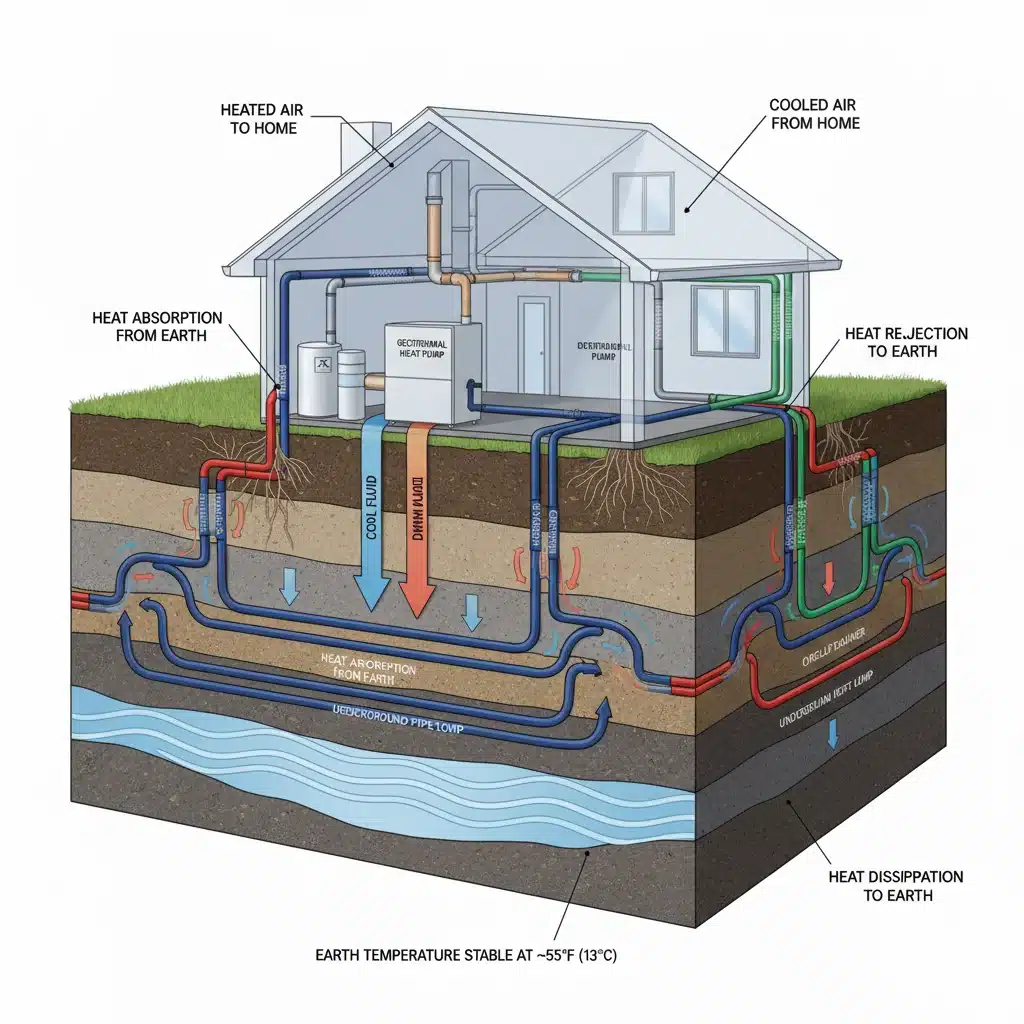
At its core, geothermal home heating leverages the consistent temperature of the earth a few feet below the surface. Unlike the fluctuating air temperatures above ground, the earth’s temperature remains relatively stable year-round, typically between 45°F and 75°F (7°C and 24°C), depending on the geographic location. A geothermal heat pump system consists of three main components: the heat pump unit, the ground loop (or earth connection), and the heat distribution system within your home.
The Ground Loop: Tapping into Earth’s Energy
The ground loop is a network of pipes buried in the ground, either horizontally or vertically, filled with a mixture of water and antifreeze. In winter, this fluid absorbs heat from the warmer earth and carries it to the heat pump. In summer, the process is reversed: the system extracts heat from your home and transfers it to the cooler earth, effectively providing air conditioning. This continuous exchange of thermal energy is what makes geothermal systems so efficient.
The Heat Pump Unit: The Heart of the System
The heat pump unit, typically located indoors, uses a small amount of electricity to compress and decompress a refrigerant, transferring the heat from the ground loop into your home’s air distribution system (ductwork) or radiant floor heating. This process is incredibly efficient because it’s simply moving heat, not generating it by burning fuel. For every unit of electricity consumed, a geothermal system can deliver three to five units of heating or cooling energy, resulting in Coefficients of Performance (COPs) ranging from 3.0 to 5.0.
Heat Distribution: Comfort Throughout Your Home
Once the heat is extracted or rejected by the heat pump, it’s distributed throughout your home using conventional ductwork, similar to a traditional forced-air system, or through radiant floor heating. This seamless integration means minimal disruption to your existing home infrastructure for many installations, especially if you already have a ducted system.
The Economic Advantage: 70% Energy Cost Reduction Explained
The claim of a 70% energy cost reduction by 2026 might sound ambitious, but it’s firmly rooted in the inherent efficiencies of geothermal home heating. Let’s break down how these savings are achieved:
Superior Energy Efficiency
As mentioned, geothermal systems don’t create heat; they transfer it. This fundamental difference is key to their efficiency. Traditional furnaces burn fuel (natural gas, oil, propane) to generate heat, a process that is inherently less efficient due to energy loss during combustion. Air-source heat pumps are more efficient than furnaces but lose efficiency as outdoor temperatures drop or soar. Geothermal systems, however, are largely unaffected by extreme ambient air temperatures because they rely on the stable underground temperature.
Reduced Operating Costs
Because less energy is consumed to achieve the desired heating or cooling, the monthly utility bills for geothermal-equipped homes are significantly lower. This reduction is particularly pronounced in regions with extreme weather conditions, where conventional systems work harder and consume more energy to maintain comfortable indoor temperatures.
Long Lifespan and Low Maintenance
Geothermal systems are renowned for their durability. The underground loop system can last for 50 years or more, while the indoor heat pump unit typically has a lifespan of 20-25 years, far exceeding that of conventional HVAC equipment. This longevity, combined with fewer moving parts and protection from outdoor elements, translates to lower maintenance costs and less frequent replacement, further contributing to long-term savings.
Government Incentives and Rebates
To encourage the adoption of renewable energy technologies, many governments, states, and local utilities offer significant financial incentives, including tax credits, grants, and rebates for geothermal installations. These incentives can substantially offset the initial installation cost, making the payback period much shorter and accelerating the realization of energy savings. For instance, the federal tax credit in the U.S. offers a significant percentage of the installation cost back to homeowners, making geothermal home heating more accessible.
Installation Considerations and Types of Ground Loops
While the benefits of geothermal home heating are compelling, understanding the installation process and available options is crucial. The primary consideration is the type of ground loop system best suited for your property.
Horizontal Loops
Horizontal loops are typically installed in trenches dug 4-6 feet deep. This option is generally less expensive to install if sufficient land is available. It requires more land area than vertical loops, making it suitable for new constructions or homes with ample yard space.
Vertical Loops
Vertical loops are used when land area is limited. Boreholes are drilled deep into the ground (often 150-400 feet per bore), and the pipes are inserted. While more expensive per foot to drill, vertical loops require less surface area and are often preferred for existing homes or properties with smaller lots.
Pond/Lake Loops
If your property has a nearby pond or lake, a pond loop can be a cost-effective option. Coils of pipe are submerged in the water body, utilizing its stable temperature for heat exchange. This method is highly efficient and can be less disruptive than ground-based installations.
Open-Loop Systems
Open-loop systems use groundwater from a well as the heat exchange fluid, discharging it back into the ground or a surface body of water after use. These systems can be very efficient but depend on adequate groundwater supply and quality, and local regulations regarding water discharge must be considered.
Factors Influencing Installation Cost and Payback
The initial investment for a geothermal system can be higher than traditional HVAC. However, when considering the long-term savings and incentives, the payback period is often surprisingly short, typically ranging from 5 to 10 years. Factors influencing the total cost include:
- Home Size and Heating/Cooling Load: Larger homes or those with higher energy demands will require a larger system.
- Ground Loop Type: Vertical loops are generally more expensive than horizontal due to drilling costs.
- Soil Conditions: The type of soil can affect drilling difficulty and heat transfer efficiency.
- Existing Ductwork: If new ductwork is needed, it will add to the overall cost.
- Local Labor Rates: Installation costs vary by region.
Environmental Benefits: A Greener Footprint
Beyond the financial incentives, the environmental benefits of geothermal home heating are significant. These systems are a cornerstone of sustainable living, contributing to a healthier planet in several ways:
Reduced Greenhouse Gas Emissions
By relying on the earth’s natural, renewable energy, geothermal systems significantly reduce the need for fossil fuels, thereby lowering greenhouse gas emissions. This directly combats climate change and improves air quality, making your home’s heating and cooling system a part of the solution rather than the problem.
Minimal Land Use Impact
Once installed, particularly with vertical or pond loops, geothermal systems have a minimal footprint on the landscape. The ground loops are out of sight and out of mind, preserving yard aesthetics and allowing for normal landscaping activities.
Sustainable Resource
The earth’s temperature is a continuously replenished resource, making geothermal energy a truly sustainable option. Unlike finite fossil fuels, the earth’s thermal energy will be available for as long as our planet exists.
The Path to 70% Energy Cost Reduction by 2026
Achieving a 70% reduction in energy costs by 2026 with geothermal home heating is a realistic goal for many homeowners. This projection is based on a combination of factors:
Continuous Technological Advancements
Geothermal technology is constantly evolving, with manufacturers developing even more efficient heat pumps and improved installation techniques. These advancements lead to better performance and potentially lower initial costs over time.
Increasing Energy Prices
Forecasts for conventional energy sources indicate a likely upward trend in prices. As these costs rise, the savings provided by a stable, low-operating-cost geothermal system become even more pronounced, accelerating the 70% reduction target.
Expanding Incentive Programs
As governments and environmental agencies increasingly recognize the importance of renewable energy, it’s highly probable that incentive programs will continue to be offered and potentially expanded. These programs are crucial in making geothermal accessible to a broader demographic.
Growing Awareness and Adoption
As more homeowners experience the benefits of geothermal, word-of-mouth and case studies will drive greater adoption. Increased demand can lead to economies of scale, potentially reducing manufacturing and installation costs.
Making the Switch: What to Consider
If you’re considering geothermal home heating, here are key steps and considerations:
1. Energy Audit
Start with a comprehensive home energy audit. This will identify areas where your home is losing energy and help determine the appropriate size and type of geothermal system for your needs. Proper insulation and air sealing are crucial for maximizing the efficiency of any heating system, including geothermal.
2. Site Assessment
Consult with qualified geothermal installers for a thorough site assessment. They will evaluate your property’s soil conditions, available land, and existing HVAC infrastructure to recommend the most suitable ground loop configuration.
3. Financial Analysis and Incentives
Obtain detailed quotes and a financial breakdown, including projected energy savings, payback period, and all available federal, state, and local incentives. Don’t forget to factor in the long-term maintenance and replacement cost savings.
4. Qualified Installer
Choose an installer with extensive experience and certifications in geothermal systems. Proper design and installation are paramount to the system’s efficiency and longevity. Look for contractors certified by organizations like the International Ground Source Heat Pump Association (IGSHPA).
5. Long-Term Perspective
While the initial investment might seem higher, remember to view geothermal as a long-term investment in your home’s value, comfort, and environmental footprint. The significant operating cost reductions and extended lifespan offer unparalleled returns over time.
Addressing Common Misconceptions
Despite its growing popularity, geothermal home heating still faces some misconceptions:
“It’s too expensive.”
While the upfront cost is higher, the total cost of ownership over the system’s lifespan is often lower due to dramatically reduced energy bills and incentives. The payback period makes it a financially sound decision.
“It requires a lot of land.”
While horizontal loops need space, vertical loops are ideal for smaller lots, proving that geothermal can be installed in almost any residential setting.
“It’s new and unproven technology.”
Geothermal technology has been around for decades and is a mature, reliable, and continuously refined solution. Its principles are well-understood and its performance is well-documented.
“It won’t work in my climate.”
Geothermal systems work efficiently in virtually any climate, from the coldest winters to the hottest summers, because they rely on the stable underground temperature, not the fluctuating air temperature.
Conclusion: Embracing a Sustainable and Economical Future
The vision of a 70% reduction in energy costs by 2026 through geothermal home heating is not a distant dream but a tangible reality for an increasing number of homeowners. As energy efficiency becomes a global imperative and renewable technologies mature, geothermal systems stand out as a premier solution for sustainable and economical climate control. By understanding how these systems work, evaluating their financial and environmental benefits, and planning for a proper installation, you can position your home at the forefront of the energy revolution. Investing in geothermal is not just an upgrade; it’s a commitment to a comfortable, cost-effective, and environmentally responsible future for your home.