Commercial Ground-Mounted Solar ROI: 7-Year Payback for US Businesses
Maximizing ROI with Commercial Ground-Mounted Solar: A 7-Year Payback Period Analysis for U.S. Businesses
In an era defined by fluctuating energy prices, increasing environmental consciousness, and a growing demand for sustainable business practices, commercial ground-mounted solar installations have emerged as a powerful solution for U.S. businesses. Beyond the undeniable environmental benefits, the financial incentives and long-term cost savings make a compelling case for this renewable energy investment. This comprehensive guide will delve into how U.S. businesses can achieve an impressive 7-year payback period on their commercial ground-mounted solar investments, transforming their energy consumption into a strategic financial asset.
The journey to energy independence and significant cost reduction begins with understanding the intricate dynamics of solar power. For many businesses, the initial investment in solar energy might seem substantial. However, a closer look at the financial models, government incentives, and the predictable nature of solar energy generation reveals a rapid return on investment (ROI) that few other capital expenditures can match. Our focus here is on the ground-mounted approach, which offers distinct advantages in terms of scalability, optimal sun exposure, and ease of maintenance, particularly for businesses with available land.
The concept of a 7-year payback period is not an arbitrary figure; it represents a realistic and achievable goal for many commercial entities across various sectors in the United States. This aggressive timeline is made possible by a confluence of factors, including declining solar technology costs, robust federal and state incentives, and the ever-increasing cost of traditional grid electricity. By strategically leveraging these elements, businesses can significantly reduce their operational expenses, hedge against future energy price volatility, and enhance their corporate image as environmentally responsible leaders.
This article aims to demystify the process, providing a clear roadmap for businesses considering commercial ground-mounted solar. We will explore the critical components that contribute to a swift ROI, from initial investment considerations and available financing options to the tangible benefits of energy production and environmental impact. Understanding these elements is crucial for making an informed decision that will positively impact your bottom line for decades to come.
Understanding Commercial Ground-Mounted Solar
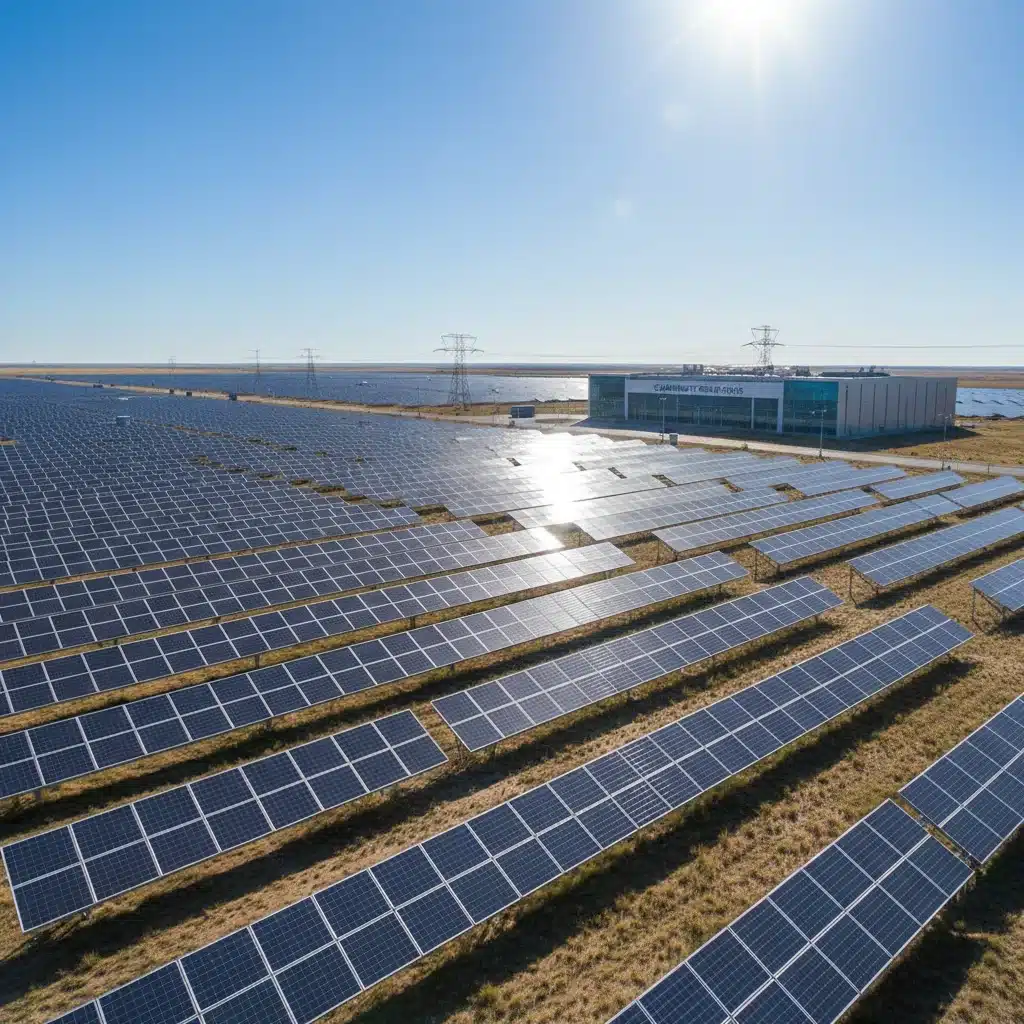
Before diving into the financial specifics, it’s essential to understand what commercial ground-mounted solar entails. Unlike rooftop installations, ground-mounted systems are installed on frames fixed to the ground, offering greater flexibility in terms of size, orientation, and tilt. This allows for optimal sunlight capture throughout the day and year, maximizing energy production. They are particularly well-suited for businesses with ample land, such as manufacturing facilities, agricultural operations, data centers, and large commercial complexes.
The components of a ground-mounted system typically include solar panels, inverters (to convert DC to AC electricity), racking and mounting structures, wiring, and a monitoring system. The scalability of these systems means they can be designed to meet a wide range of energy demands, from supplementing existing grid power to achieving complete energy independence. The durability and longevity of modern solar panels, often warrantied for 25 years or more, ensure that the investment continues to pay dividends long after the initial payback period.
Beyond the hardware, the design and engineering of a commercial solar project are crucial. Factors such as local irradiance levels, shading analysis, soil conditions, and interconnection requirements with the utility grid all play a significant role in determining the system’s efficiency and overall output. Engaging with experienced solar developers and installers is paramount to ensure that the system is optimally designed, installed, and maintained, thereby guaranteeing maximum energy harvest and a faster return on investment. The long-term performance of your commercial solar ROI hinges on a well-executed plan.
The Financial Blueprint: Achieving a 7-Year Payback
Achieving a 7-year payback period for a commercial ground-mounted solar system in the U.S. is an ambitious yet entirely attainable goal. This accelerated ROI is primarily driven by a combination of reduced upfront costs, significant operational savings, and a suite of powerful government incentives. Let’s break down the key financial drivers:
1. Declining Installation Costs
Over the past decade, the cost of solar photovoltaic (PV) technology has plummeted dramatically. Advances in manufacturing processes, increased economies of scale, and fierce competition in the solar industry have made solar power more affordable than ever before. While the initial investment for a commercial ground-mounted system can still be substantial, the per-watt cost has decreased significantly, making the overall project more viable and shortening the payback period. This trend is expected to continue, further enhancing the attractiveness of commercial solar ROI.
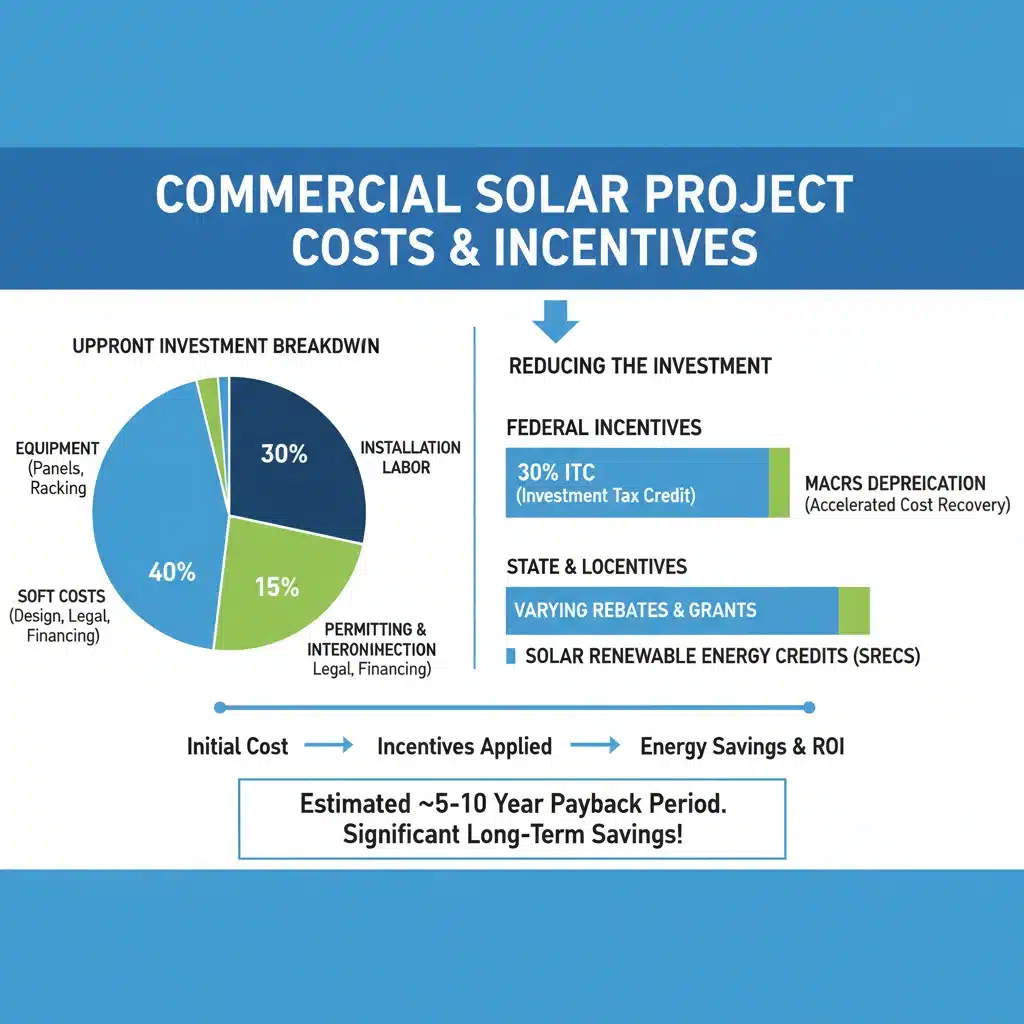
2. Federal Investment Tax Credit (ITC)
The cornerstone of federal solar incentives in the U.S. is the Investment Tax Credit (ITC), often referred to as the solar tax credit. For commercial solar projects, the ITC offers a significant percentage of the system’s cost as a tax credit. The Inflation Reduction Act (IRA) of 2022 extended the ITC at 30% for projects that begin construction before 2033. This direct reduction in tax liability is a game-changer, effectively reducing the net cost of the system by a substantial margin and directly accelerating the commercial solar ROI.
Furthermore, the IRA introduced additional ‘bonus’ credits for projects meeting specific criteria, such as using domestically manufactured content, being located in energy communities, or benefiting low-income communities. These adders can increase the ITC to as much as 50% or more of the project cost, making the financial case for commercial solar even stronger.
3. Accelerated Depreciation (MACRS)
Businesses that own their solar systems can also benefit from Modified Accelerated Cost Recovery System (MACRS) depreciation. This allows businesses to depreciate a significant portion of the solar system’s cost over a shorter period (typically five years) than its actual lifespan. This accelerated depreciation reduces taxable income, leading to further tax savings and improving cash flow in the initial years of the project. Combined with the ITC, MACRS significantly enhances the commercial solar ROI by front-loading financial benefits.
The financial details of achieving a 7-year payback period are crucial for businesses considering commercial ground-mounted solar. Understanding the various incentives and how they contribute to a faster return on investment is key. For a visual explanation of these financial mechanisms and to see real-world examples, watch the video below:
4. State and Local Incentives
Beyond federal programs, many states, counties, and municipalities offer their own incentives for commercial solar adoption. These can include additional tax credits, rebates, grants, property tax exemptions, and sales tax exemptions. The availability and generosity of these incentives vary widely by location, making it crucial for businesses to research the specific programs available in their operating area. For example, some states have robust Renewable Energy Credits (RECs) or Solar Renewable Energy Credits (SRECs) markets, where businesses can sell the environmental attributes of their solar generation, creating an additional revenue stream.
5. Energy Cost Savings
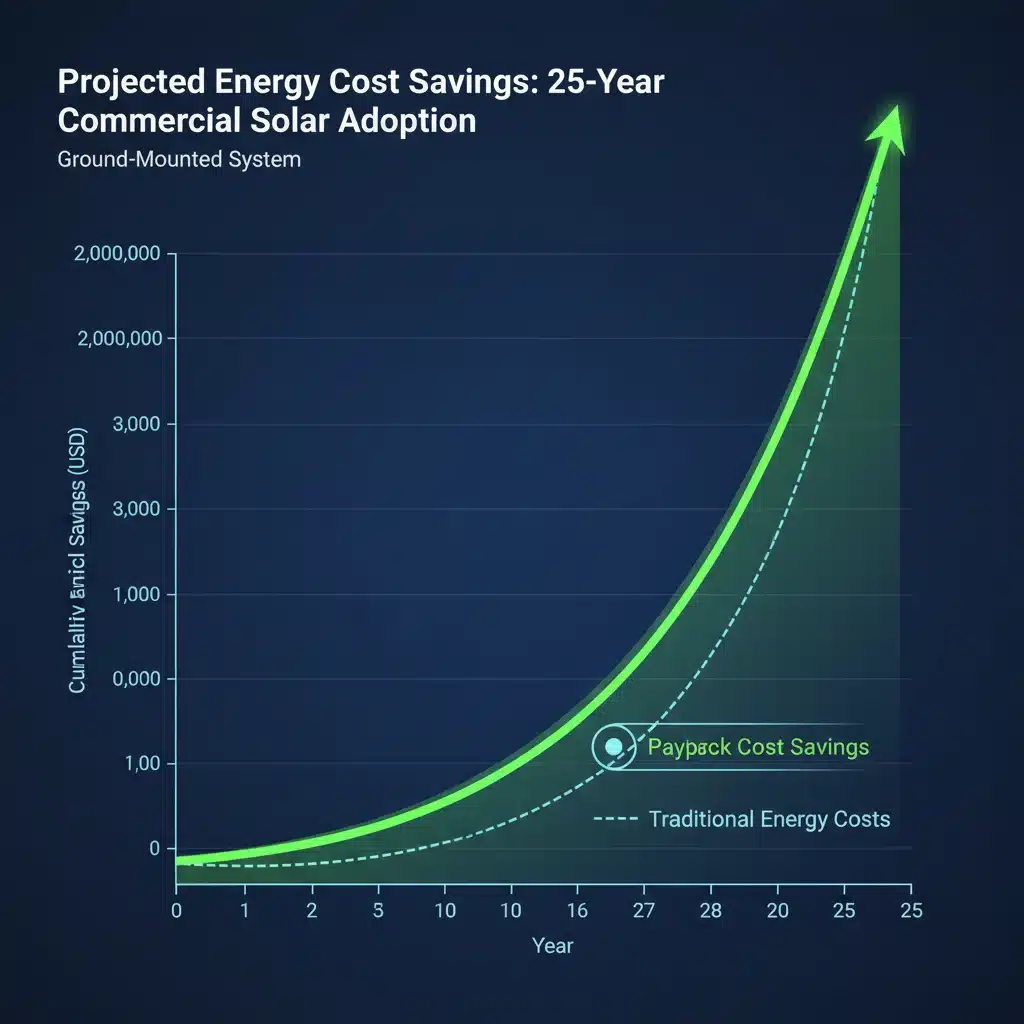
Perhaps the most straightforward and consistent financial benefit of commercial ground-mounted solar is the reduction in electricity bills. By generating your own power, you reduce your reliance on utility companies and insulate your business from rising electricity rates. This creates predictable energy costs for decades, allowing for more accurate budgeting and improved financial planning. For businesses operating in areas with high electricity rates, the savings can be substantial, directly contributing to a faster commercial solar ROI.
The savings are not just about avoiding peak demand charges; they also encompass reducing overall consumption from the grid. Over the lifespan of a solar system, these cumulative savings can amount to millions of dollars, far exceeding the initial investment. The ability to lock in a low, stable energy cost is a significant competitive advantage in today’s volatile energy market.
Calculating Your Commercial Solar ROI
To determine a precise payback period, a detailed financial analysis is required. This involves assessing the total installed cost of the system, factoring in all available federal, state, and local incentives, projecting annual energy production, and estimating future electricity rates. A simplified calculation might look like this:
Payback Period = (Total System Cost - Incentives) / (Annual Energy Savings + Other Revenue Streams)
Let’s consider a hypothetical example for a U.S. business:
- System Size: 1 MW (1,000 kW) ground-mounted
- Initial Installed Cost: $1.50/watt (after some initial cost reductions) = $1,500,000
- Federal ITC (30%): $450,000
- Net Cost After ITC: $1,050,000
- Annual Energy Production: 1,500,000 kWh (depending on location and system efficiency)
- Average Electricity Rate: $0.15/kWh
- Annual Energy Savings: 1,500,000 kWh * $0.15/kWh = $225,000
- Additional Revenue (e.g., SRECs): $15,000 (highly variable)
- Total Annual Benefits: $225,000 + $15,000 = $240,000
Using these simplified figures:
Payback Period = $1,050,000 / $240,000 ≈ 4.375 years
This simplified example already demonstrates a very aggressive payback. When factoring in accelerated depreciation (MACRS), which provides significant tax savings in the early years, and potentially higher electricity rate escalation, achieving a 7-year payback period becomes very realistic, even for projects with slightly higher initial costs or lower incentive structures. The key is to run a comprehensive financial model tailored to your specific business and location to accurately predict your commercial solar ROI.
Financing Options for Commercial Solar
The upfront cost of a commercial ground-mounted solar system can be a barrier for some businesses. Fortunately, a variety of financing options are available to help mitigate this initial investment and make solar more accessible, further streamlining the path to a positive commercial solar ROI:
1. Direct Ownership (Cash Purchase or Loan)
This is the most common approach, where the business purchases the system outright or finances it through a commercial loan. Direct ownership allows the business to claim all available tax credits, depreciation benefits, and energy savings. While it requires significant capital or access to financing, it offers the highest long-term ROI.
2. Power Purchase Agreements (PPAs)
In a PPA, a third-party developer owns, installs, and maintains the solar system on your property. The business then purchases the electricity generated by the system at a fixed, often lower, rate than grid electricity. This eliminates the upfront cost for the business and provides immediate energy savings. While the business doesn’t claim the tax incentives, it benefits from predictable, lower energy costs.
3. Solar Leases
Similar to a PPA, a solar lease allows a business to use a solar system without owning it. The business pays a fixed monthly lease payment for the use of the system, and the developer retains ownership and claims the incentives. Leases also offer immediate savings without upfront capital expenditure.
4. Commercial Property Assessed Clean Energy (C-PACE)
C-PACE financing allows businesses to fund energy efficiency, renewable energy, and water conservation projects through a voluntary assessment on their property tax bill. This mechanism provides long-term, fixed-rate financing that is repaid through property taxes, often over terms as long as 20-30 years, making large projects more affordable and aligning the repayment with the useful life of the asset. C-PACE is available in a growing number of states and localities.
Choosing the right financing option depends on your business’s financial health, tax appetite, and long-term goals. Each option has its advantages and disadvantages concerning upfront costs, tax benefits, and ultimate commercial solar ROI.
Beyond Financials: The Broader Benefits of Commercial Solar
While the 7-year payback period and compelling commercial solar ROI are powerful motivators, the benefits of adopting commercial ground-mounted solar extend far beyond the financial:
1. Environmental Stewardship and Brand Image
Investing in solar power demonstrates a strong commitment to environmental sustainability. This can significantly enhance your brand image, attract environmentally conscious customers and employees, and improve your standing within the community. In today’s market, corporate social responsibility is not just a buzzword; it’s a competitive differentiator.
2. Energy Independence and Security
Generating your own electricity reduces your vulnerability to grid outages, natural disasters, and geopolitical events that can disrupt traditional energy supplies. It provides a measure of energy independence and security, ensuring business continuity even when the grid is compromised.
3. Reduced Carbon Footprint
Solar energy is a clean, renewable resource that produces no greenhouse gas emissions during operation. By switching to solar, businesses significantly reduce their carbon footprint, contributing to global efforts to combat climate change and meet sustainability targets.
4. Employee Attraction and Retention
Many employees, particularly younger generations, are drawn to companies that prioritize sustainability. An investment in solar can help attract and retain top talent, fostering a positive workplace culture and aligning with employee values.
5. Property Value Enhancement
A well-designed and installed solar system can increase the value of your commercial property. It’s an asset that generates revenue (through energy savings) and reduces operating costs, making the property more attractive to potential buyers or tenants in the future. This long-term asset appreciation further contributes to the overall commercial solar ROI.
Challenges and Considerations
While the benefits are clear, businesses should also be aware of potential challenges and considerations:
1. Land Availability and Site Suitability
Ground-mounted systems require significant land area. Businesses must assess if they have sufficient unshaded land that is suitable for solar development. Factors like soil stability, access for maintenance, and proximity to electrical infrastructure are crucial.
2. Permitting and Interconnection
Navigating local permitting processes and utility interconnection agreements can be complex and time-consuming. Experienced solar developers can help streamline this process, but it’s an important factor to consider in project timelines.
3. Maintenance and Monitoring
While solar systems are generally low-maintenance, regular cleaning of panels and monitoring of performance are necessary to ensure optimal energy production. Most commercial solar providers offer comprehensive operations and maintenance (O&M) packages.
4. Policy and Incentive Changes
Government incentives can change over time. While the current outlook for federal incentives is stable, businesses should stay informed about potential shifts in state and local policies that could impact future projects or the long-term commercial solar ROI.
The Future is Bright for Commercial Solar ROI
The convergence of technological advancements, favorable government policies, and an undeniable economic case has positioned commercial ground-mounted solar as an indispensable investment for U.S. businesses. The ability to achieve a 7-year payback period is a testament to the maturity and efficacy of solar technology as a robust financial solution.
For businesses looking to reduce operating costs, enhance sustainability, and gain a competitive edge, exploring commercial ground-mounted solar is no longer an option but a strategic imperative. By partnering with reputable solar providers, thoroughly analyzing financial models, and leveraging all available incentives, your business can embark on a journey towards energy independence and a highly profitable commercial solar ROI.
The time to invest in your energy future is now. Embrace the power of the sun to not only power your operations but also to significantly boost your bottom line, securing a sustainable and prosperous future for your enterprise. The long-term financial stability and environmental benefits far outweigh the initial considerations, making commercial ground-mounted solar a wise and forward-thinking decision for any U.S. business.
Consider the lasting impact: reduced operational costs for decades, a positive public image as an environmental leader, and insulation from the volatility of traditional energy markets. These benefits collectively underscore why the pursuit of a rapid commercial solar ROI is a strategic move that will continue to yield dividends long after the initial investment is recouped. The commitment to renewable energy is a commitment to a resilient and profitable future.