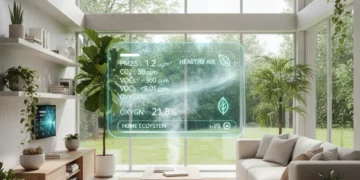
Advanced Commercial Ventilation: Cut Energy Costs 20%
In the dynamic world of commercial real estate and facility management, the quest for operational efficiency and sustainability is ceaseless. One area that frequently presents significant opportunities for improvement, yet is often overlooked, is commercial ventilation. Beyond merely circulating air, advanced commercial ventilation systems are now pivotal in achieving substantial energy savings, with the potential to cut energy consumption by up to 20%. This isn’t just about reducing utility bills; it’s about creating healthier, more productive environments while contributing to a greener future. This comprehensive guide delves into the ‘insider knowledge’ necessary to harness the full potential of these sophisticated systems.
The imperative to optimize energy usage in commercial buildings has never been more pressing. Escalating energy costs, stringent environmental regulations, and a growing corporate commitment to sustainability are driving a paradigm shift in how we design, operate, and maintain our buildings. HVAC (Heating, Ventilation, and Air Conditioning) systems are notoriously energy-intensive, often accounting for a significant portion of a building’s total energy expenditure. Within HVAC, ventilation plays a critical, yet often inefficient, role. Traditional ventilation approaches, which primarily rely on brute-force air exchange, can lead to considerable energy waste by expelling conditioned air and replacing it with unconditioned outdoor air, thus forcing HVAC systems to work harder.
However, the landscape of commercial ventilation is evolving rapidly. Innovations in technology, materials, and control strategies are transforming ventilation from a necessary evil into a strategic asset for energy conservation. By embracing advanced commercial ventilation systems, businesses can not only achieve impressive energy savings but also enhance indoor air quality (IAQ), improve occupant comfort, and boost overall building performance. This article will explore the core principles, key technologies, and strategic implementation approaches that enable these remarkable efficiencies.
The Silent Energy Drain: Understanding Traditional Ventilation Inefficiencies
Before we delve into solutions, it’s crucial to understand the problem. Conventional commercial ventilation systems often operate on a ‘one-size-fits-all’ principle, exchanging air at a fixed rate regardless of actual occupancy levels or indoor air quality requirements. This approach leads to several inefficiencies:
- Over-ventilation: Pumping in more fresh air than necessary, especially during off-peak hours or in sparsely populated areas, wastes energy by conditioning air that isn’t truly needed.
- Heat Loss/Gain: Expelling conditioned indoor air (heated in winter, cooled in summer) and replacing it with unconditioned outdoor air directly impacts the heating and cooling loads, forcing HVAC systems to consume more energy to maintain desired indoor temperatures.
- Fan Energy Consumption: Fans are a major component of ventilation systems and consume significant amounts of electricity. Inefficient fan design or operation contributes directly to higher energy bills.
- Lack of Zonal Control: Many older systems lack the ability to ventilate different zones or rooms independently, leading to uniform ventilation rates even where they are not required.
These inefficiencies accumulate, resulting in substantial energy waste and inflated operational costs. The good news is that modern commercial ventilation technologies are specifically designed to address these shortcomings, turning ventilation into a powerful tool for energy management.
Key Technologies Driving Commercial Ventilation Energy Savings
The 20% energy savings benchmark isn’t a pipe dream; it’s a tangible outcome achievable through the strategic adoption of several advanced commercial ventilation technologies. Let’s explore some of the most impactful:
1. Heat Recovery Ventilators (HRVs) and Energy Recovery Ventilators (ERVs)
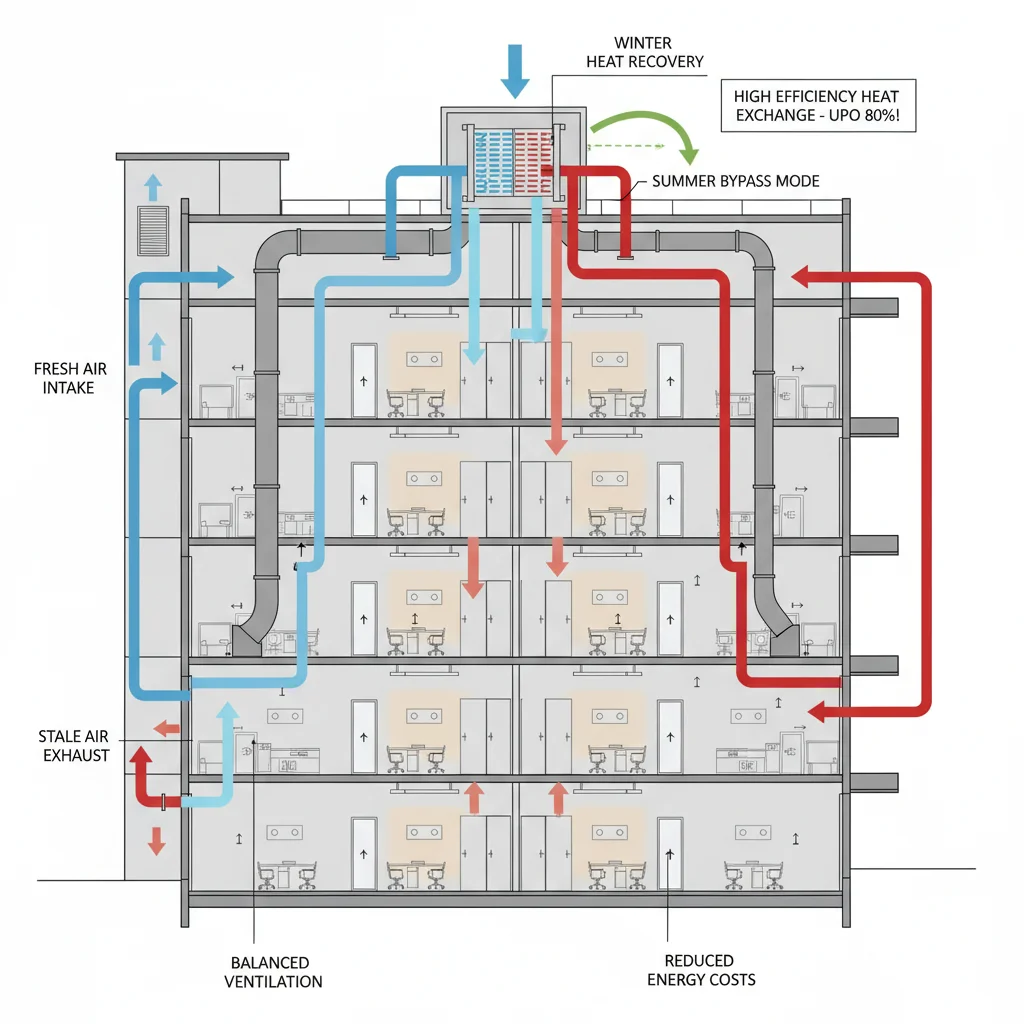
HRVs and ERVs are cornerstones of energy-efficient commercial ventilation. Instead of simply exhausting conditioned indoor air, these systems capture a significant portion of the heat (and sometimes moisture) from the outgoing stale air and transfer it to the incoming fresh air. This pre-conditions the incoming air, reducing the load on the HVAC system.
- HRVs (Heat Recovery Ventilators): Primarily transfer sensible heat (temperature). Ideal for colder climates where the primary goal is to retain indoor heat during winter.
- ERVs (Energy Recovery Ventilators): Transfer both sensible and latent heat (temperature and humidity). More versatile and beneficial in climates with both heating and cooling seasons, as they help manage indoor humidity levels.
By recovering energy that would otherwise be lost, HRVs and ERVs dramatically reduce the energy required for heating and cooling, making them a critical component for achieving significant commercial ventilation energy savings.
2. Demand-Controlled Ventilation (DCV)
DCV systems move away from fixed ventilation rates to a dynamic approach, adjusting ventilation based on actual indoor conditions. This is typically achieved through sensors that monitor key indoor air quality parameters, such as carbon dioxide (CO2) levels, volatile organic compounds (VOCs), or occupancy. When CO2 levels rise (indicating more occupants), the system increases fresh air intake. When levels drop, ventilation is reduced.
The benefits of DCV are multifold:
- Optimized Air Exchange: Ensures adequate fresh air without over-ventilating, preventing unnecessary energy consumption.
- Improved IAQ: Maintains healthy indoor environments by responding directly to pollutant levels.
- Significant Energy Savings: By only ventilating as much as needed, DCV systems can lead to substantial reductions in heating, cooling, and fan energy.
3. Variable Air Volume (VAV) Systems
While not exclusively a ventilation technology, VAV systems are integral to efficient commercial ventilation. Unlike Constant Air Volume (CAV) systems that deliver a fixed airflow, VAV systems vary the airflow rate to different zones based on their heating and cooling demands. When integrated with DCV, VAV systems can precisely deliver the required amount of fresh air to specific zones, further enhancing energy efficiency.
4. High-Efficiency Fans and Motors
Fans are the workhorses of any ventilation system. Upgrading to high-efficiency fans and motors, particularly those with electronically commutated (EC) motors, can yield immediate and significant energy savings. EC motors are more efficient across a wider range of speeds compared to traditional AC motors, especially at partial loads, which is common in variable airflow systems.
5. Advanced Filtration Systems
While primarily focused on IAQ, advanced filtration systems contribute to energy efficiency by maintaining cleaner coils in HVAC units, which improves heat exchange efficiency. Furthermore, some modern filters are designed to have lower static pressure drops, meaning fans don’t have to work as hard, thus saving energy.
6. Natural and Hybrid Ventilation
Where climate and building design permit, incorporating natural ventilation strategies can drastically reduce reliance on mechanical systems. This includes strategically placed operable windows, vents, and atria that facilitate passive airflow. Hybrid systems combine natural ventilation with mechanical assistance, leveraging natural forces whenever possible and engaging mechanical systems only when necessary, offering a balanced approach to commercial ventilation energy savings.
Implementing Advanced Commercial Ventilation: An Insider’s Guide
Achieving up to 20% energy reduction isn’t simply about installing new equipment; it requires a strategic, holistic approach. Here’s how to implement advanced commercial ventilation effectively:
1. Comprehensive Building Assessment and Energy Audit
The first step is to understand your current building’s performance. A detailed energy audit will identify existing inefficiencies, pinpoint areas of significant energy waste, and establish a baseline for comparison. This audit should specifically analyze your current ventilation system’s operation, airflow rates, fan energy consumption, and indoor air quality metrics. Consider engaging an experienced energy consultant for this crucial phase.
2. Design and System Integration
Advanced ventilation systems work best when integrated seamlessly with other building systems, particularly the Building Management System (BMS). A well-designed system considers:
- Building Envelope: A well-sealed and insulated building reduces infiltration and exfiltration, making ventilation systems more effective and less energy-intensive.
- Zoning: Dividing the building into appropriate ventilation zones allows for precise control based on occupancy and usage patterns.
- Sensor Placement: Accurate placement of CO2, temperature, and humidity sensors is critical for effective DCV operation.
- System Sizing: Proper sizing of HRVs/ERVs, fans, and ductwork ensures optimal performance without oversizing (which wastes energy) or undersizing (which compromises IAQ).
3. Smart Controls and Building Management Systems (BMS)
The ‘brains’ behind advanced commercial ventilation are smart controls and robust BMS. These systems enable:
- Automated Scheduling: Program ventilation based on occupancy schedules, reducing operation during unoccupied hours.
- Real-time Monitoring: Continuously track IAQ, energy consumption, and system performance.
- Fault Detection and Diagnostics: Identify and alert facility managers to potential issues, allowing for proactive maintenance and preventing performance degradation.
- Data Analytics: Leverage collected data to identify trends, optimize settings, and further refine energy-saving strategies.
A sophisticated BMS allows for fine-tuning of ventilation parameters, ensuring that the system operates at peak efficiency while maintaining desired indoor conditions.
4. Commissioning and Ongoing Optimization
Proper commissioning is vital to ensure that all components of the advanced commercial ventilation system are installed correctly and operating as intended. This involves testing, adjusting, and balancing the system to meet design specifications. However, commissioning is not a one-time event. Ongoing optimization, driven by performance monitoring and data analysis, is crucial for sustained energy savings. Buildings evolve, occupancy changes, and equipment can drift from optimal settings. Regular re-commissioning or continuous commissioning practices ensure long-term efficiency.
5. Maintenance and Filter Management
Neglecting maintenance can quickly erode any energy savings gained from advanced systems. Regular maintenance schedules should include:
- Filter Replacement: Clogged filters restrict airflow, forcing fans to work harder and consume more energy. Regular replacement or cleaning is essential.
- Coil Cleaning: Dirty coils reduce heat transfer efficiency in HRVs/ERVs and HVAC units.
- Sensor Calibration: Ensure CO2 and other IAQ sensors are accurately calibrated for effective DCV operation.
- Ductwork Inspection: Check for leaks or obstructions in ductwork that can lead to air loss and reduced efficiency.
Benefits Beyond Energy Savings: The Holistic Impact
While commercial ventilation energy savings are a primary driver for adopting advanced systems, the benefits extend much further, creating a compelling business case for investment:
1. Enhanced Indoor Air Quality (IAQ)
Advanced systems, particularly those with DCV and superior filtration, ensure a constant supply of fresh, clean air, free from pollutants. Good IAQ is linked to:
- Improved Health: Reduced incidence of respiratory issues, allergies, and ‘sick building syndrome’.
- Increased Productivity: Studies show a direct correlation between fresh air and cognitive function, leading to higher productivity and fewer errors.
- Reduced Absenteeism: Healthier employees are less likely to take sick days.
2. Improved Occupant Comfort
By precisely controlling temperature, humidity, and airflow, advanced systems create more comfortable indoor environments. This leads to higher occupant satisfaction and fewer complaints, fostering a positive atmosphere for employees and visitors alike.
3. Extended Equipment Lifespan
When HVAC and ventilation systems operate more efficiently, they experience less wear and tear. This can extend the lifespan of equipment, reducing capital expenditure on replacements and maintenance costs over time.
4. Compliance and Sustainability
Many building codes and green building certifications (e.g., LEED, BREEAM) increasingly mandate or incentivize energy-efficient ventilation. Adopting advanced systems helps buildings achieve compliance and demonstrate a commitment to environmental stewardship, enhancing corporate reputation.
5. Higher Property Value
Energy-efficient buildings with superior IAQ are more attractive to tenants and buyers. They command higher rents, have lower vacancy rates, and are generally seen as more valuable assets in the long term.
Case Studies and Real-World Impact
The theoretical benefits of commercial ventilation energy savings are consistently validated by real-world applications. Numerous commercial buildings across various sectors have reported significant reductions in energy consumption after implementing advanced ventilation strategies.
- Office Buildings: A large corporate office implemented a DCV system with CO2 sensors and integrated ERVs. They reported a 15% reduction in overall HVAC energy consumption and a noticeable improvement in employee comfort and reported air quality.
- Retail Spaces: A shopping mall upgraded its constant volume ventilation systems to VAV with high-efficiency fans. This resulted in a 18% decrease in fan energy usage alone, contributing to overall operational cost savings.
- Educational Institutions: A university campus retrofitted several buildings with HRVs and smart controls. Their energy bills for heating and cooling saw a 22% reduction, alongside improved student and faculty satisfaction with the learning environment.
These examples underscore the tangible and substantial impact that a well-planned and executed advanced commercial ventilation strategy can have on a building’s energy footprint and overall operational efficiency.
Overcoming Challenges in Implementation
While the benefits are clear, implementing advanced commercial ventilation systems can present challenges. These often include:
- Upfront Investment: New technologies can require a significant initial capital outlay. However, the long-term energy savings and other benefits typically provide a strong return on investment (ROI), often within a few years.
- Complexity: Integrating sophisticated systems requires specialized knowledge and skilled professionals for design, installation, and maintenance.
- Existing Infrastructure: Retrofitting older buildings can be more complex than new construction, requiring careful planning and potentially more extensive modifications.
To overcome these, it’s crucial to:
- Conduct a thorough cost-benefit analysis: Quantify the ROI to justify the investment.
- Engage experienced professionals: Work with engineers and contractors specializing in advanced HVAC and BMS.
- Explore incentives: Many governments and utility companies offer rebates, grants, or tax incentives for energy-efficient upgrades.
The Future of Commercial Ventilation
The evolution of commercial ventilation is far from over. Future trends will likely include:
- Further Integration with AI and Machine Learning: Predictive analytics will allow systems to anticipate occupancy and environmental changes, optimizing ventilation even more effectively.
- Personalized Ventilation: Technologies that provide individual control over airflow and temperature at workstations.
- Advanced Sensor Technology: More granular and accurate sensing of a wider range of indoor pollutants.
- Biophilic Design Integration: Greater emphasis on natural ventilation and connection to the outdoors, supported by smart mechanical systems.
These advancements promise even greater commercial ventilation energy savings and healthier indoor environments, solidifying the role of ventilation as a critical component of high-performance buildings.
Conclusion: A Breath of Fresh, Energy-Efficient Air
The pursuit of energy efficiency in commercial buildings is no longer an option but a necessity. Advanced commercial ventilation systems stand out as a powerful, yet often underestimated, solution for achieving significant energy savings, with reductions of up to 20% being a realistic and achievable target. By understanding the inefficiencies of traditional approaches and embracing innovative technologies like HRVs/ERVs, DCV, and smart controls, building owners and facility managers can transform their operational costs and environmental footprint.
Beyond the impressive commercial ventilation energy savings, these systems deliver a cascade of benefits: improved indoor air quality, enhanced occupant comfort, extended equipment lifespan, and strengthened sustainability credentials. The investment in advanced ventilation is an investment in the long-term health, productivity, and value of your commercial assets. It’s time to leverage this ‘insider knowledge’ and breathe new life, and efficiency, into your buildings.