Commercial Solar PPA Structures: Trends & 10-Year Agreements
Understanding Commercial Solar PPA Structures: Current Trends and 10-Year Agreements
In today’s rapidly evolving energy landscape, businesses are continually seeking innovative solutions to manage costs, reduce their carbon footprint, and secure reliable power sources. Among the most compelling options gaining traction is the commercial solar Power Purchase Agreement (PPA). A commercial solar PPA offers a pathway for businesses to harness the power of solar energy without the burden of upfront capital investment, making it an increasingly attractive proposition for companies of all sizes. This comprehensive guide will delve into the intricacies of commercial solar PPA structures, explore current market trends, and specifically examine the growing popularity and benefits of 10-year agreements.
The transition to renewable energy is no longer a distant ideal but a present-day imperative. Companies are facing mounting pressure from consumers, investors, and regulatory bodies to adopt sustainable practices. Solar energy, with its decreasing costs and technological advancements, stands out as a leading renewable energy source. However, the initial investment required for a commercial solar installation can be substantial, often posing a significant barrier for many businesses. This is precisely where the commercial solar PPA steps in, democratizing access to solar power and enabling a broader range of businesses to participate in the clean energy revolution.
What is a Commercial Solar PPA?
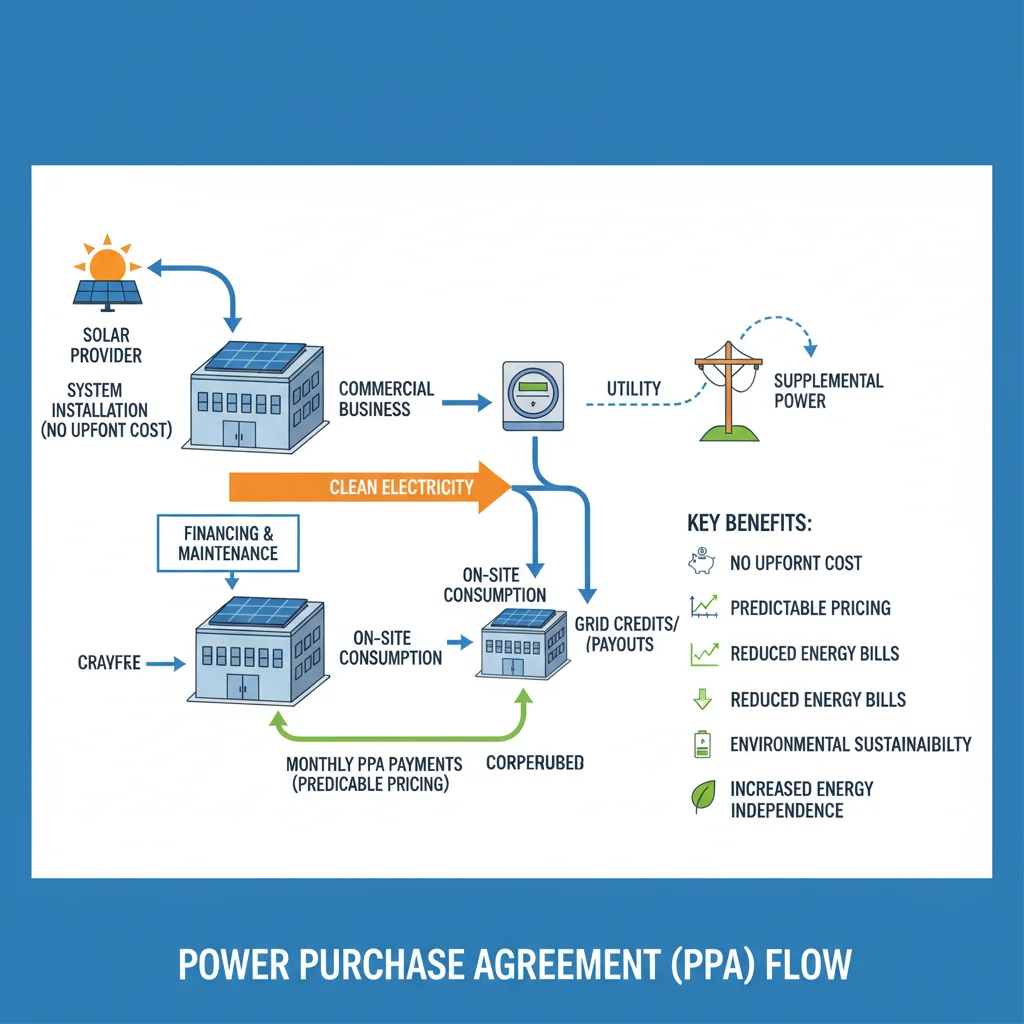
At its core, a commercial solar PPA is a financial arrangement where a third-party developer owns, operates, and maintains a solar energy system on a customer’s property. The customer, in turn, agrees to purchase the electricity generated by the system at a predetermined rate, typically lower than the prevailing utility rate. This arrangement effectively transfers the risks and responsibilities associated with solar system ownership and operation from the business to the PPA provider.
The structure of a commercial solar PPA is designed to be mutually beneficial. For the business (offtaker), it means access to clean, affordable electricity with predictable pricing, often for the duration of the agreement. For the PPA provider, it represents a long-term revenue stream from the sale of electricity and often includes access to various tax incentives and renewable energy credits. This symbiotic relationship has fueled the widespread adoption of commercial solar PPA models across diverse industries.
Key components of a typical commercial solar PPA include:
- No Upfront Cost: Businesses avoid the significant capital outlay required to purchase and install a solar system.
- Predictable Energy Costs: The PPA rate is fixed or escalates at a predefined, manageable rate, shielding businesses from volatile utility price fluctuations.
- System Ownership and Maintenance: The PPA provider is responsible for all aspects of the solar system, including design, installation, monitoring, maintenance, and repairs.
- Environmental Benefits: Businesses reduce their carbon footprint and demonstrate a commitment to sustainability without the operational complexities.
- Potential for Savings: The PPA rate is often set below the grid electricity price, leading to immediate and long-term cost savings.
Understanding these fundamental aspects is crucial for any business considering a commercial solar PPA. It’s not just about installing solar panels; it’s about entering into a strategic partnership that redefines a company’s energy procurement strategy.
Current Trends Shaping Commercial Solar PPA Landscape
The commercial solar PPA market is dynamic, constantly evolving with technological advancements, policy changes, and shifting economic conditions. Several key trends are currently shaping its trajectory:
Falling Solar Costs and Increased Efficiency
The cost of solar photovoltaic (PV) technology has plummeted over the past decade, making solar power increasingly competitive with traditional energy sources. This cost reduction directly translates to more attractive PPA rates for businesses. Simultaneously, advancements in solar panel efficiency mean that more electricity can be generated from smaller footprints, making solar viable for a wider range of commercial properties.
Growing Corporate Sustainability Goals
Environmental, Social, and Governance (ESG) criteria are no longer niche concerns; they are central to corporate strategy. Businesses are setting ambitious sustainability targets, and adopting solar energy through PPAs is a straightforward way to achieve renewable energy goals, enhance brand reputation, and appeal to environmentally conscious stakeholders.
Innovation in PPA Structures and Financing
While the core PPA model remains consistent, providers are offering more flexible and tailored agreements. This includes options for various contract lengths, different escalation rates, and even hybrid models that combine PPA elements with other financing mechanisms. The financial instruments supporting PPAs are also becoming more sophisticated, attracting a wider pool of investors and further stabilizing the market.
Technological Integration: Storage and Smart Grids
The integration of battery storage solutions with commercial solar PPA projects is becoming more common. This allows businesses to store excess solar energy for use during peak demand hours or when solar generation is low, further enhancing energy independence and resilience. Furthermore, the rise of smart grid technologies is enabling more efficient management of distributed solar resources, including those under PPA agreements.
Policy and Regulatory Support
Government incentives, tax credits (like the Investment Tax Credit in the US), and renewable energy mandates continue to play a significant role in driving commercial solar PPA adoption. While policies can shift, the overall global trend leans towards supporting clean energy transitions, providing a stable foundation for the PPA market.
These trends collectively indicate a robust and growing market for commercial solar PPA, offering businesses an opportune moment to explore these agreements.
The Mechanics of a Commercial Solar PPA
Understanding the operational and financial mechanics of a commercial solar PPA is key to appreciating its value. While specific terms can vary, the general process typically involves several stages:
1. Site Assessment and System Design
The PPA provider conducts a thorough assessment of the business’s property to determine its solar potential. This includes analyzing roof space, sun exposure, shading, and structural integrity. Based on this, a custom solar energy system is designed to meet the business’s energy consumption needs.
2. PPA Negotiation and Agreement
Once the system design is finalized, the PPA provider and the business negotiate the terms of the Power Purchase Agreement. Key elements include the PPA rate (cents per kilowatt-hour), the escalation rate (if any), the contract term (e.g., 10, 15, or 20 years), performance guarantees, and termination clauses. Transparency and clarity in these negotiations are paramount.
3. Financing and Permitting
The PPA provider secures the necessary financing for the solar project. They also handle all permitting, interconnection agreements with the utility, and regulatory compliance, significantly reducing the administrative burden on the business.
4. Installation and Commissioning
The solar system is installed by qualified professionals. Once installed, it undergoes rigorous testing and commissioning to ensure it operates efficiently and safely, meeting all technical specifications and regulatory requirements.
5. Operation, Maintenance, and Monitoring
Throughout the PPA term, the provider is responsible for the ongoing operation, maintenance, and monitoring of the solar system. This includes routine inspections, cleaning, repairs, and performance tracking. The business simply consumes the solar electricity and pays the agreed-upon rate, enjoying hassle-free clean energy.
6. End-of-Term Options
At the end of the PPA term, businesses typically have several options: extending the agreement, purchasing the solar system at fair market value, or having the system removed by the provider. These options provide flexibility for future energy planning.
This structured approach ensures that businesses can seamlessly integrate solar energy into their operations with minimal disruption and maximum benefit.
The Rising Appeal of 10-Year Commercial Solar PPA Agreements
While longer-term PPAs (15-25 years) have historically been common, there’s a growing trend towards shorter, more flexible agreements, particularly 10-year commercial solar PPA structures. This shift is driven by several factors that align with modern business needs and market dynamics.
Increased Flexibility and Adaptability
Businesses operate in rapidly changing environments. A 10-year commercial solar PPA offers greater flexibility compared to longer terms. It allows companies to adapt to future technological advancements (e.g., more efficient panels, advanced storage), potential changes in their energy consumption patterns, or shifts in their business strategy without being locked into a very long-term commitment.
Reduced Long-Term Risk Perception
For some businesses, a 20-year commitment might feel too long, introducing uncertainties about future energy markets, their own operational footprint, or even the longevity of the PPA provider. A 10-year commercial solar PPA mitigates some of these perceived long-term risks, making the decision to go solar more palatable for risk-averse organizations.
Alignment with Business Planning Cycles
Many corporate strategic planning and capital expenditure cycles operate on a 5- to 10-year horizon. A 10-year commercial solar PPA often aligns better with these internal planning frameworks, simplifying financial forecasting and decision-making processes.
Quicker Path to Potential Ownership
If a business ultimately aims to own its solar asset, a 10-year commercial solar PPA provides a quicker path to achieving that goal. After a decade, the option to purchase the system at a depreciated value becomes more attractive, allowing the business to fully capitalize on the long-term benefits of solar ownership.
Attractive Pricing in a Mature Market
As the solar industry matures and costs continue to fall, PPA providers can offer competitive rates even for shorter terms. The stability of the market and the reduced risk associated with a 10-year agreement can sometimes translate into more favorable terms for the off-taker.
It’s important to note that while 10-year agreements offer distinct advantages, the optimal PPA term ultimately depends on a business’s specific goals, financial situation, and long-term energy strategy. A thorough analysis of these factors is crucial before committing to any commercial solar PPA.

Benefits of a Commercial Solar PPA for Businesses
Beyond the fundamental advantages of predictable costs and no upfront investment, commercial solar PPA offers a myriad of benefits that can significantly impact a business’s bottom line and public image.
Immediate Cost Savings
One of the most compelling benefits is the potential for immediate and significant savings on electricity bills. PPA rates are often set below the current utility rates, providing instant relief from high energy costs. Over the long term, these savings can accumulate into substantial financial advantages, especially as utility rates tend to rise.
Budget Certainty and Risk Mitigation
Energy costs can be a significant and unpredictable line item in a business’s budget. A commercial solar PPA provides budget certainty by locking in electricity rates for the duration of the agreement. This hedges against market volatility and protects businesses from unexpected spikes in energy prices, allowing for more accurate financial planning.
Enhanced Corporate Social Responsibility (CSR)
Adopting solar energy through a PPA demonstrates a strong commitment to environmental sustainability. This enhances a company’s brand image, resonates with environmentally conscious consumers and employees, and can be a powerful tool for attracting and retaining talent. It also helps meet growing ESG reporting requirements.
Operational Simplicity
With the PPA provider handling all aspects of design, installation, operation, and maintenance, businesses can focus on their core competencies without diverting resources to managing a solar energy system. This operational simplicity is a major draw for companies that want the benefits of solar without the associated complexities.
Access to Advanced Technology
PPA providers typically utilize the latest and most efficient solar technology. Businesses benefit from this cutting-edge equipment without the need for direct investment, ensuring they receive the highest possible energy generation and system reliability.
Positive Environmental Impact
Reducing reliance on fossil fuels and generating clean, renewable energy directly contributes to mitigating climate change. A commercial solar PPA allows businesses to significantly reduce their carbon footprint, contributing to a healthier planet and a more sustainable future.
Potential for Increased Property Value
While the PPA provider owns the system, having a solar installation on site can increase the perceived value of the commercial property, especially if the PPA can be transferred to a new owner upon sale, offering continued energy savings.
Considerations When Entering a Commercial Solar PPA
While the benefits are numerous, businesses should carefully consider several factors before entering into a commercial solar PPA:
- PPA Rate and Escalation: Understand the initial rate and any annual escalation clauses. Ensure these terms are competitive and predictable.
- Contract Length: Evaluate whether a 10-year, 15-year, or 20-year term best suits your business’s long-term strategy and risk tolerance.
- Performance Guarantees: Verify that the PPA includes clear performance guarantees from the provider, outlining expected energy output and remedies for underperformance.
- Maintenance and Monitoring: Clarify the scope of maintenance and monitoring services included in the agreement.
- Termination Clauses: Understand the conditions under which the agreement can be terminated by either party, and any associated penalties.
- End-of-Term Options: Be clear about your options at the end of the PPA term, including purchase, extension, or removal.
- Provider Reputation: Choose a reputable and experienced PPA provider with a strong track record and financial stability.
- Site Suitability: Ensure your property is genuinely suitable for solar installation to maximize generation and avoid potential issues.
- Legal Review: Always have legal counsel review the PPA agreement before signing to ensure all terms are understood and favorable.
A diligent approach to these considerations will ensure a successful and beneficial commercial solar PPA experience.
The Future of Commercial Solar PPAs
The outlook for commercial solar PPA structures remains exceptionally bright. As energy markets continue to evolve, the demand for predictable, affordable, and sustainable energy solutions will only grow. We can anticipate further innovations in PPA models, potentially incorporating more sophisticated energy management systems, demand response capabilities, and even community solar components.
The increasing focus on decarbonization across all sectors will continue to drive businesses towards renewable energy adoption. Commercial solar PPA, particularly flexible options like the 10-year agreement, will play a pivotal role in enabling this transition, allowing businesses to remain competitive, environmentally responsible, and financially resilient in an ever-changing world.
For businesses looking to make a meaningful impact on their energy consumption and environmental footprint without the significant capital expenditure, exploring a commercial solar PPA is not just an option—it’s a strategic imperative. The benefits of cost savings, budget certainty, and enhanced sustainability are too significant to ignore, making now an ideal time to consider this powerful energy solution.
Conclusion
The commercial solar PPA represents a transformative approach to energy procurement for businesses. By offering a no-upfront-cost pathway to solar energy, it removes traditional barriers and empowers companies to embrace sustainability while simultaneously achieving significant financial benefits. Current trends, including falling solar costs and increased corporate sustainability commitments, are driving robust growth in the PPA market.
Within this landscape, the 10-year commercial solar PPA is emerging as a particularly attractive option, balancing long-term savings with greater flexibility and reduced risk. As businesses navigate the complexities of modern energy markets, understanding and leveraging the power of commercial solar PPA structures will be crucial for maintaining competitiveness, fostering environmental stewardship, and securing a resilient energy future. Engaging with experienced PPA providers and conducting thorough due diligence will ensure that businesses can fully capitalize on the immense potential that solar PPAs offer.