Commercial Solar Storage: Achieve 90% Energy Independence in the U.S.
The Latest in Commercial Solar Storage Solutions: Achieving 90% Energy Independence for U.S. Enterprises This Year
In an era defined by fluctuating energy prices, increasing environmental concerns, and a global push towards sustainability, U.S. enterprises are at a pivotal moment. The promise of achieving significant energy independence is no longer a distant dream but a tangible goal, largely thanks to advancements in commercial solar storage solutions. This comprehensive guide delves into how businesses can leverage these cutting-edge technologies to reach up to 90% energy independence within the current year, exploring the benefits, challenges, and strategic pathways to a more resilient and sustainable energy future.
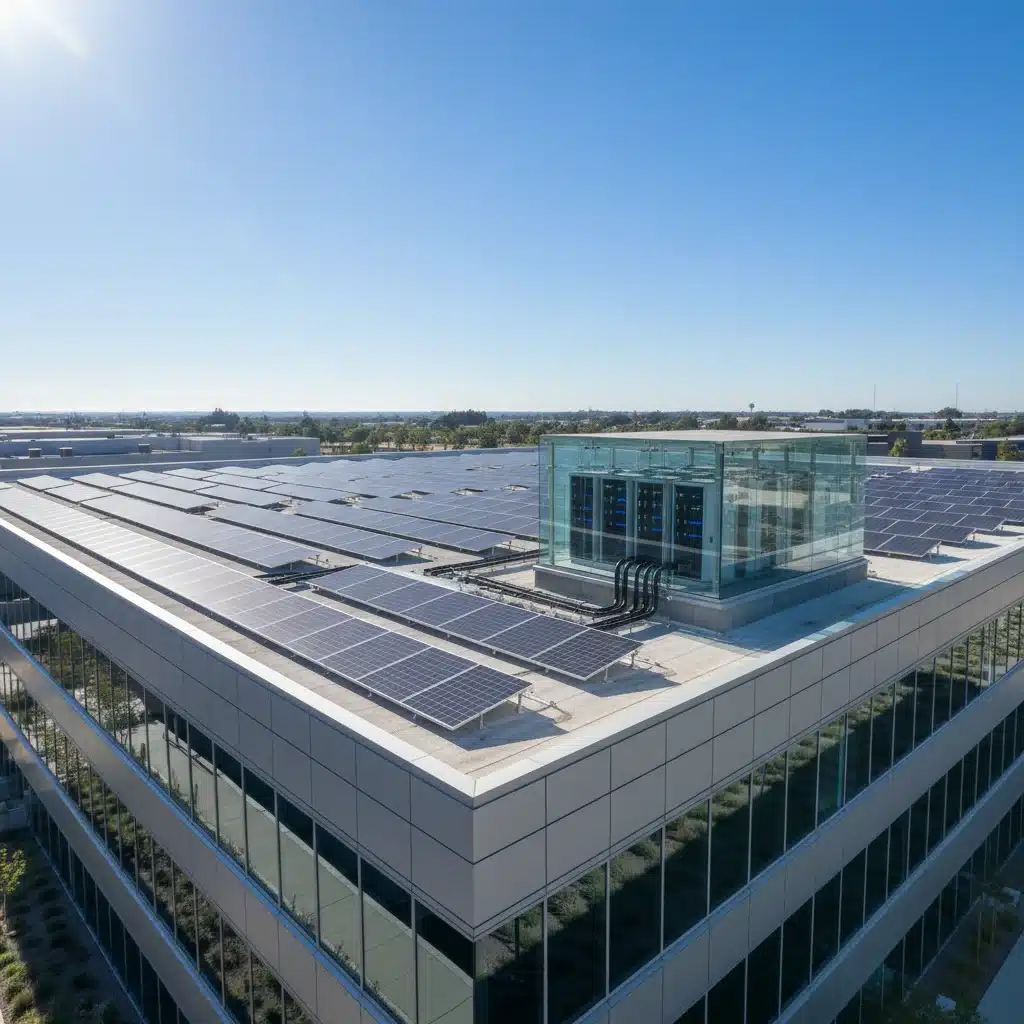
The journey towards energy independence for businesses is multifaceted, involving not just the generation of renewable energy but also its efficient storage and intelligent management. While solar panels have become a common sight on commercial rooftops, the true game-changer lies in coupling these photovoltaic (PV) systems with robust battery storage. This synergy allows businesses to capture solar energy during peak production hours and deploy it when the sun isn’t shining, during peak demand times, or even during grid outages. The implications for operational efficiency, cost savings, and environmental stewardship are profound.
For U.S. enterprises, the drive to achieve 90% energy independence is motivated by several compelling factors. Firstly, it offers a shield against the volatility of electricity prices, providing budget predictability and long-term savings. Secondly, it enhances operational resilience, ensuring continuous power supply even when the grid experiences disruptions. Thirdly, it significantly boosts a company’s sustainability profile, appealing to environmentally conscious consumers and investors alike. Finally, it positions businesses at the forefront of the clean energy transition, demonstrating leadership and innovation.
This article will dissect the core components of modern commercial solar storage systems, examine the latest technological innovations, outline the financial incentives available, and provide a roadmap for businesses aiming for substantial energy independence. We will also address common misconceptions and challenges, offering practical solutions and expert insights to help enterprises navigate this exciting landscape.
Understanding Commercial Solar Storage: The Foundation of Energy Independence
At its heart, commercial solar storage involves integrating battery systems with solar power installations to store excess electricity generated by solar panels. This stored energy can then be used later, rather than being immediately consumed or fed back into the grid. This capability transforms solar from an intermittent energy source into a reliable, dispatchable power supply, making genuine energy independence a reality.
Key Components of a Commercial Solar Storage System:
- Solar Photovoltaic (PV) Array: The primary source of renewable energy, converting sunlight into electricity.
- Inverter: Converts the direct current (DC) electricity generated by solar panels into alternating current (AC) electricity, which is usable by commercial buildings and the grid. Hybrid inverters are increasingly common, managing both solar generation and battery charging/discharging.
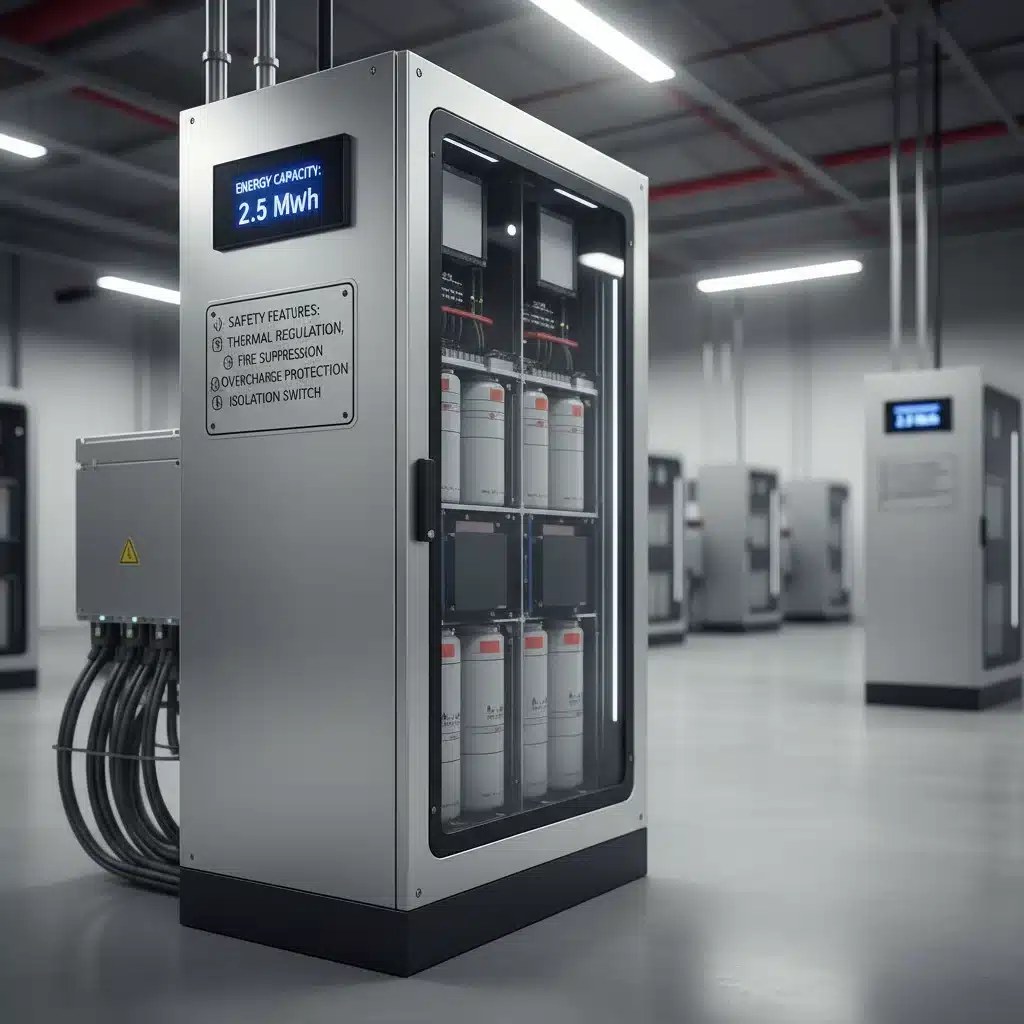
- Battery Energy Storage System (BESS): Comprises battery cells, a battery management system (BMS), and often thermal management. This is where the magic of storage happens.
- Energy Management System (EMS): The brain of the operation, an advanced software platform that monitors, controls, and optimizes the flow of energy between the solar array, batteries, building loads, and the grid. It makes intelligent decisions based on energy prices, demand forecasts, and battery state of charge.
- Metering and Monitoring Equipment: Essential for tracking performance, energy consumption, and savings.
The evolution of battery technology, particularly in lithium-ion chemistry, has been central to the rapid advancement of commercial solar storage. These batteries offer high energy density, long cycle life, and improved safety features, making them ideal for demanding commercial applications. Beyond lithium-ion, emerging technologies like flow batteries and solid-state batteries promise even greater efficiencies and potentially lower costs in the future, further solidifying the case for widespread adoption.
The Economic Imperative: Why U.S. Enterprises are Investing in Commercial Solar Storage
The decision to invest in commercial solar storage is not merely an environmental one; it’s a sound business strategy with significant financial benefits. For U.S. enterprises, the economic advantages are compelling and multifaceted.
1. Demand Charge Reduction:
Many commercial electricity bills include demand charges, which are based on the highest electricity usage spike during a billing cycle. Battery storage systems can be programmed to discharge during these peak demand periods, effectively shaving off the highest consumption spikes and significantly reducing demand charges. This is one of the most immediate and impactful financial benefits for businesses.
2. Time-of-Use (TOU) Optimization:
Electricity prices often vary throughout the day, with higher rates during peak hours. With commercial solar storage, businesses can store solar energy generated during low-cost periods (or when solar production is high) and use it during high-cost peak hours, maximizing savings by avoiding expensive grid electricity.
3. Enhanced Energy Resilience and Blackout Protection:
Grid outages, whether due to severe weather, infrastructure failures, or other disruptions, can be incredibly costly for businesses. A robust solar-plus-storage system provides backup power, ensuring critical operations continue uninterrupted. This resilience translates directly into avoided losses from downtime, spoiled goods, or lost productivity.
4. Significant ESG Benefits and Brand Enhancement:
Investing in renewable energy and storage solutions demonstrates a strong commitment to Environmental, Social, and Governance (ESG) principles. This not only appeals to increasingly environmentally conscious consumers and employees but also attracts investors who prioritize sustainable businesses. A strong ESG profile can lead to better access to capital, improved public relations, and a more resilient brand image.
5. Federal and State Incentives:
The U.S. government and various state authorities offer a suite of incentives to encourage the adoption of commercial solar storage. These include:
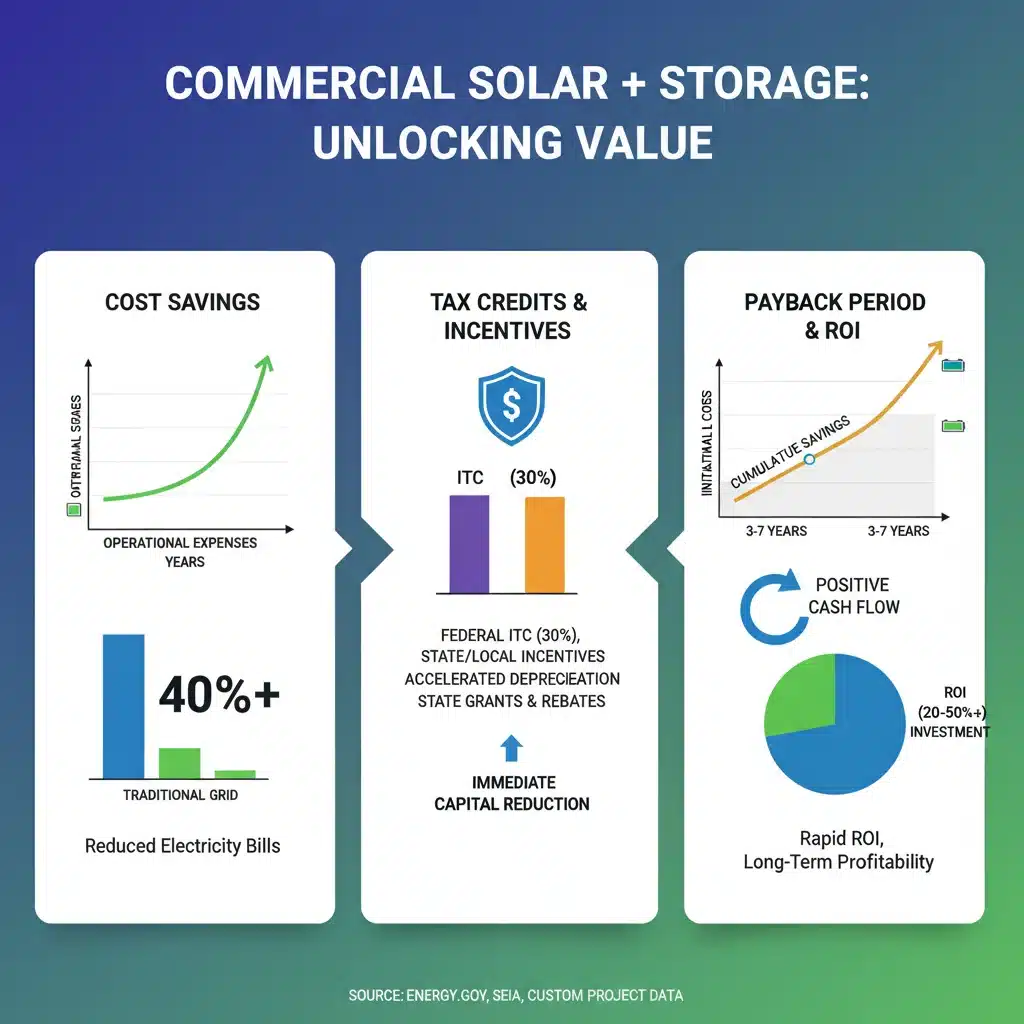
- Investment Tax Credit (ITC): The federal ITC offers a significant tax credit (currently 30% for projects meeting certain criteria) for solar PV systems and standalone energy storage. This is a powerful driver for upfront cost reduction.
- Accelerated Depreciation (MACRS): Businesses can depreciate a significant portion of their solar and storage assets over a shorter period, providing substantial tax savings.
- State and Local Incentives: Many states, municipalities, and utilities offer additional rebates, grants, property tax exemptions, and performance-based incentives (like SRECs – Solar Renewable Energy Credits) that further enhance the financial viability of these projects.
Navigating these incentives requires expertise, but the cumulative effect can dramatically improve the return on investment (ROI) for commercial solar storage systems, making the path to 90% energy independence even more attractive.
Technological Advancements Driving 90% Energy Independence
The rapid pace of innovation in battery technology and energy management systems is what makes achieving such high levels of energy independence feasible for U.S. enterprises today. These advancements are not just about raw capacity but also about intelligence, efficiency, and safety.
1. Evolution of Battery Chemistries:
Lithium-ion batteries, particularly NMC (Nickel Manganese Cobalt) and LFP (Lithium Iron Phosphate) chemistries, dominate the commercial storage market. LFP batteries are gaining traction due to their enhanced safety, longer cycle life, and lower cost, making them increasingly suitable for stationary commercial applications. Research into next-generation batteries, such as solid-state batteries and various flow battery technologies, promises even greater safety, longevity, and reduced environmental impact.
2. Advanced Battery Management Systems (BMS):
Modern BMS are crucial for optimizing battery performance, extending lifespan, and ensuring safety. They monitor individual cell voltage, temperature, and current, balancing charge and discharge cycles to prevent overcharging or deep discharging. Intelligent BMS can predict battery behavior, allowing for proactive maintenance and more efficient energy deployment.
3. Sophisticated Energy Management Systems (EMS):
The true intelligence behind commercial solar storage lies in the EMS. These platforms use artificial intelligence (AI) and machine learning (ML) to:
- Predict Energy Demand: Analyzing historical data and real-time inputs to forecast a building’s energy needs.
- Optimize Solar Production: Maximizing self-consumption of solar energy based on weather forecasts and operational schedules.
- Respond to Grid Signals: Automatically charging batteries during low-cost periods and discharging during high-cost or high-demand periods.
- Participate in Grid Services: Enabling businesses to potentially earn revenue by providing grid services like frequency regulation or demand response, further enhancing ROI.
- Seamless Integration: Connecting solar, storage, building loads, and potentially electric vehicle (EV) charging infrastructure into a unified, intelligent system.
4. Modular and Scalable Designs:
Modern commercial solar storage systems are designed to be modular, allowing businesses to scale their capacity as their energy needs evolve. This flexibility reduces initial capital expenditure and allows for future expansion without overhauling the entire system.
Strategies for Achieving 90% Energy Independence
Reaching a high level of energy independence requires a strategic approach that integrates technology, financial planning, and operational adjustments.
1. Comprehensive Energy Audit and Load Analysis:
Before investing in any system, a detailed understanding of current energy consumption patterns is paramount. An energy audit will identify peak demand periods, overall energy usage, and opportunities for efficiency improvements. This data is critical for accurately sizing the solar PV array and battery storage system to meet 90% of the enterprise’s needs.
2. Right-Sizing Your Solar and Storage System:
Over- or under-sizing can lead to suboptimal performance and higher costs. Expert consultation is essential to design a system that precisely matches the enterprise’s energy profile, factoring in future growth and potential changes in energy demand. The goal is to maximize self-consumption of solar energy and minimize reliance on grid power.
3. Integrating with Existing Infrastructure:
Successful commercial solar storage deployment involves seamless integration with a building’s existing electrical infrastructure, HVAC systems, and potentially other smart building technologies. This ensures efficient energy flow and optimized performance.
4. Leveraging Financial Incentives and Financing Options:
Actively pursue all available federal, state, and local incentives. Work with experienced solar and storage providers who can help navigate the complexities of tax credits, rebates, and depreciation schedules. Explore various financing models, such as Power Purchase Agreements (PPAs), leases, or direct ownership, to find the most financially advantageous path for your business.
5. Ongoing Monitoring and Optimization:
Achieving and maintaining 90% energy independence is an ongoing process. Regular monitoring of system performance, energy consumption, and grid conditions allows for continuous optimization. The intelligent EMS plays a crucial role here, continually learning and adapting to ensure maximum efficiency and savings.
6. Employee Engagement and Cultural Shift:
While technology is central, a cultural shift within the organization is also important. Educating employees about the benefits of renewable energy and encouraging energy-efficient practices can further contribute to the overall goal of energy independence.
Overcoming Challenges in Commercial Solar Storage Adoption
While the benefits are clear, U.S. enterprises may encounter several challenges on their path to 90% energy independence. Understanding and addressing these proactively is key to successful implementation.
1. Upfront Capital Costs:
The initial investment for a comprehensive commercial solar storage system can be substantial. However, the combination of declining equipment costs, robust financial incentives (like the ITC), and long-term operational savings significantly mitigates this challenge. Various financing options also help spread the cost over time.
2. Regulatory and Permitting Complexities:
Navigating local, state, and federal regulations, as well as obtaining necessary permits, can be complex and time-consuming. Partnering with experienced developers and installers who are familiar with the regulatory landscape can streamline this process.
3. System Sizing and Design:
Accurately sizing a system for 90% energy independence requires sophisticated analysis of energy demand, solar irradiance, and battery characteristics. Mistakes in design can lead to underperformance or unnecessary expense. Professional engineering and design services are indispensable.
4. Space Requirements:
Battery storage systems require dedicated space, which can be a concern for businesses with limited footprints. However, modular designs and increasingly compact battery solutions are helping to address this issue. Rooftop installations and outdoor enclosures are common solutions.
5. Technology Evolution and Obsolescence:
The rapid pace of technological advancement can lead to concerns about future obsolescence. However, reputable manufacturers offer long warranties, and the foundational principles of solar and storage remain consistent. Investing in systems with upgrade paths and robust software ensures long-term viability.
6. Grid Interconnection:
Interconnecting a significant solar-plus-storage system with the existing utility grid involves specific technical requirements and approval processes. Early engagement with the local utility provider is crucial to ensure a smooth and timely interconnection.
The Future of Commercial Solar Storage and Energy Independence
The trajectory for commercial solar storage in the U.S. is one of accelerated growth and increasing sophistication. As technology continues to advance and costs decline, achieving 90% energy independence will become even more accessible and commonplace for a wider range of enterprises.
Future trends to watch include:
- Greater Grid Integration and Microgrids: Commercial solar storage systems will play a pivotal role in the development of localized microgrids, offering enhanced energy resilience for business parks, campuses, and industrial facilities.
- Vehicle-to-Grid (V2G) Integration: The convergence of EV charging infrastructure with building energy management systems could see electric vehicle fleets contributing to a building’s energy storage capacity, further blurring the lines between transportation and stationary energy.
- Advanced AI and Predictive Analytics: Even more sophisticated AI will enable hyper-optimized energy management, anticipating demand and supply fluctuations with greater accuracy and responding in real-time to dynamic energy markets.
- New Battery Chemistries: Continued research and development in alternative battery technologies will lead to even safer, more sustainable, and lower-cost storage solutions.
For U.S. enterprises, the opportunity to transition towards a highly energy-independent future is not just about reducing utility bills; it’s about building a more resilient, sustainable, and competitive business. The proactive adoption of commercial solar storage solutions positions companies at the forefront of the clean energy revolution, ready to thrive in an evolving global economy.
Conclusion: Powering U.S. Enterprises Towards a Brighter, Independent Future
The ambition of achieving 90% energy independence for U.S. enterprises this year through commercial solar storage is not just a lofty goal; it’s a strategic imperative fueled by technological innovation, economic advantages, and a global commitment to sustainability. Businesses that embrace these advanced solutions stand to gain significant competitive advantages, from substantial cost savings and enhanced operational resilience to a strengthened brand image and compliance with evolving ESG standards.
The path forward requires careful planning, expert partnership, and a willingness to invest in the future. However, with the right strategy, the robust financial incentives, and the continuous evolution of solar and storage technologies, U.S. enterprises are well-equipped to unlock unprecedented levels of energy independence. By making the switch to intelligent commercial solar storage, businesses can secure their energy future, contribute positively to the environment, and set a new benchmark for corporate sustainability in the 21st century.
The time to act is now. The sun is shining, and the batteries are ready to store the power for a more independent and sustainable tomorrow for U.S. businesses.