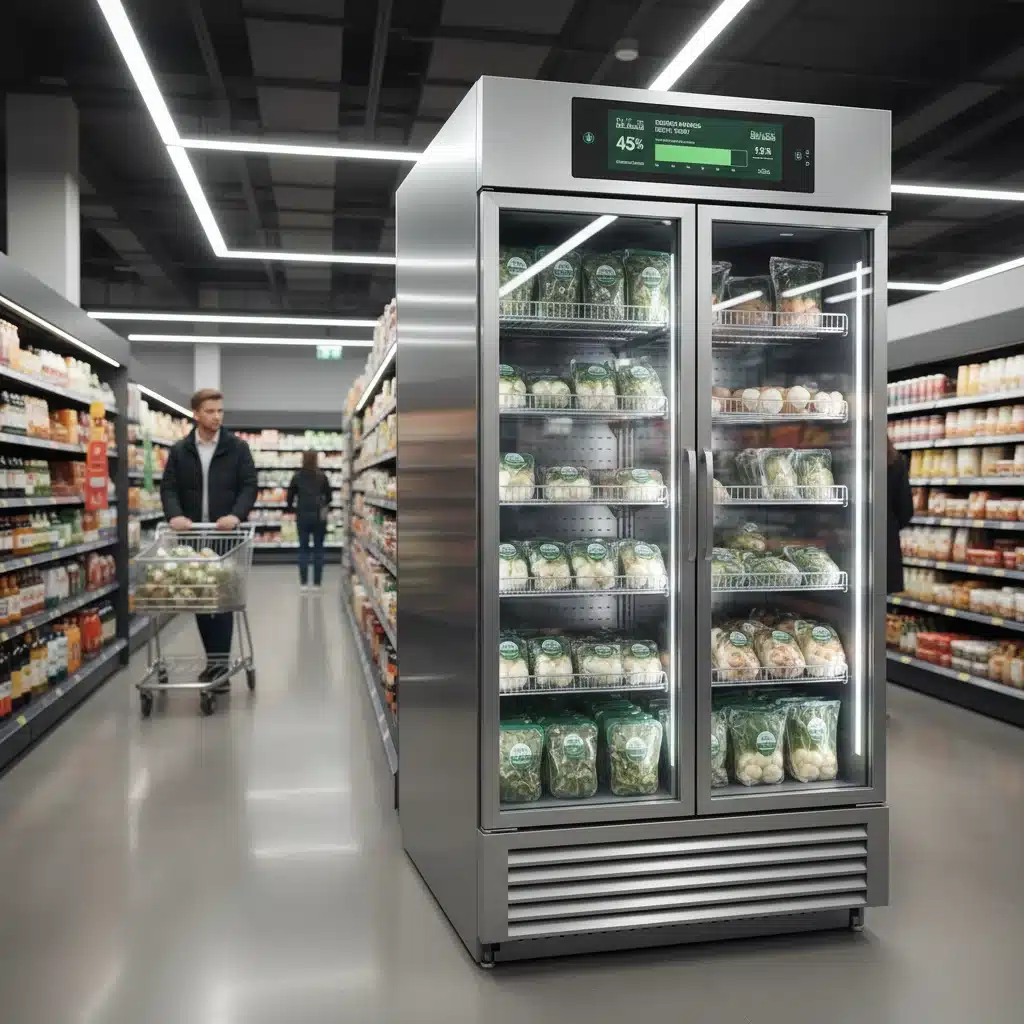
In the dynamic and competitive world of commercial business, operational costs can often make or break profitability. Among these, energy consumption stands out as a significant expenditure, particularly for sectors reliant on refrigeration. From supermarkets and restaurants to cold storage facilities and pharmaceutical companies, the hum of refrigeration units represents a continuous drain on resources. However, this challenge also presents a monumental opportunity. By focusing on commercial refrigeration optimization, businesses can not only slash their energy bills but also contribute to a more sustainable future. Our ambitious goal? To guide businesses towards a remarkable 22% reduction in commercial refrigeration energy use by 2026.
This article delves deep into the strategies, technologies, and best practices that will empower you to achieve this significant reduction. We’ll explore everything from foundational principles to cutting-edge innovations, ensuring you have a comprehensive roadmap for enhancing efficiency and sustainability.
The Urgency of Commercial Refrigeration Optimization
Why is commercial refrigeration optimization so critical right now? The answer lies in a confluence of economic pressures, environmental imperatives, and technological advancements. Energy prices are volatile and generally on an upward trend, making every kilowatt-hour saved a direct boost to your bottom line. Simultaneously, growing consumer awareness and stricter regulatory frameworks are pushing businesses towards greener operations. Embracing energy efficiency in refrigeration isn’t just about compliance; it’s about competitive advantage, brand reputation, and long-term viability.
Refrigeration systems are often among the largest energy consumers in commercial settings, sometimes accounting for 50% or more of a facility’s total electricity use. This high energy demand means that even small improvements in efficiency can lead to substantial savings. The 22% target by 2026 is ambitious but entirely achievable with a strategic, multi-faceted approach. It requires a commitment to understanding current consumption, investing in upgrades, and implementing smarter operational practices.
Understanding Your Current Refrigeration Energy Footprint
Before you can optimize, you must first understand. The initial step in any successful commercial refrigeration optimization strategy is a thorough assessment of your current energy consumption. This involves more than just looking at your electricity bill; it requires detailed monitoring and analysis.
Energy Audits: The Foundation of Optimization
A professional energy audit is invaluable. It involves experts evaluating your existing refrigeration equipment, identifying inefficiencies, and pinpointing areas for improvement. This audit should cover:
- Equipment Age and Condition: Older units are inherently less efficient.
- Refrigerant Type: Some refrigerants have higher global warming potentials and may be less efficient.
- Insulation Integrity: Gaps or degradation in insulation lead to energy loss.
- Door Seals and Closures: Faulty seals allow cold air to escape.
- Temperature Setpoints: Are they appropriate for the stored products?
- Defrost Cycles: Are they optimized or occurring too frequently/infrequently?
- Condenser and Evaporator Coil Cleanliness: Dirty coils severely impede heat exchange.
- System Sizing: Is the equipment appropriately sized for the load? Oversized or undersized systems are inefficient.
Metering and Monitoring Systems
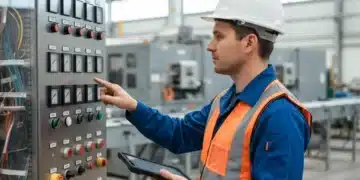
Beyond a one-time audit, continuous monitoring is key. Installing sub-meters on your refrigeration units allows you to track real-time energy consumption. This data, when analyzed, can reveal patterns of inefficiency, identify malfunctioning equipment, and validate the impact of your optimization efforts. Smart monitoring systems can even alert you to anomalies, enabling proactive maintenance rather than reactive repairs.
Pillars of Commercial Refrigeration Optimization
Achieving a 22% reduction requires a holistic approach, touching upon several key areas. These pillars of commercial refrigeration optimization include preventative maintenance, technological upgrades, smart controls, and operational best practices.
Pillar 1: Rigorous Preventative Maintenance
Often overlooked, preventative maintenance is perhaps the most cost-effective strategy for improving refrigeration efficiency. A well-maintained system runs more efficiently, lasts longer, and is less prone to costly breakdowns.
Key Maintenance Practices:
- Coil Cleaning: Condenser and evaporator coils accumulate dirt, dust, and debris, which act as insulators, reducing heat transfer efficiency. Regular cleaning (monthly or quarterly, depending on the environment) can significantly improve performance.
- Refrigerant Charge Checks: An incorrect refrigerant charge (either too high or too low) can drastically reduce efficiency and increase energy consumption. Regular checks and leak detection are crucial.
- Lubrication: Moving parts, especially in compressors and fans, require proper lubrication to reduce friction and energy use.
- Door Seal and Gasket Inspection: Worn or damaged door seals allow cold air to escape, forcing the system to work harder. Regular inspection and replacement are essential.
- Fan Motor Checks: Ensure fan motors are running smoothly and efficiently. Worn bearings or unbalanced blades can increase energy consumption.
- Defrost Cycle Optimization: Adjust defrost cycles to prevent excessive ice buildup without wasting energy on unnecessary defrosts. Modern systems often have adaptive defrost features.
- Temperature Calibration: Regularly calibrate thermostats and temperature sensors to ensure accurate readings and prevent over-cooling.
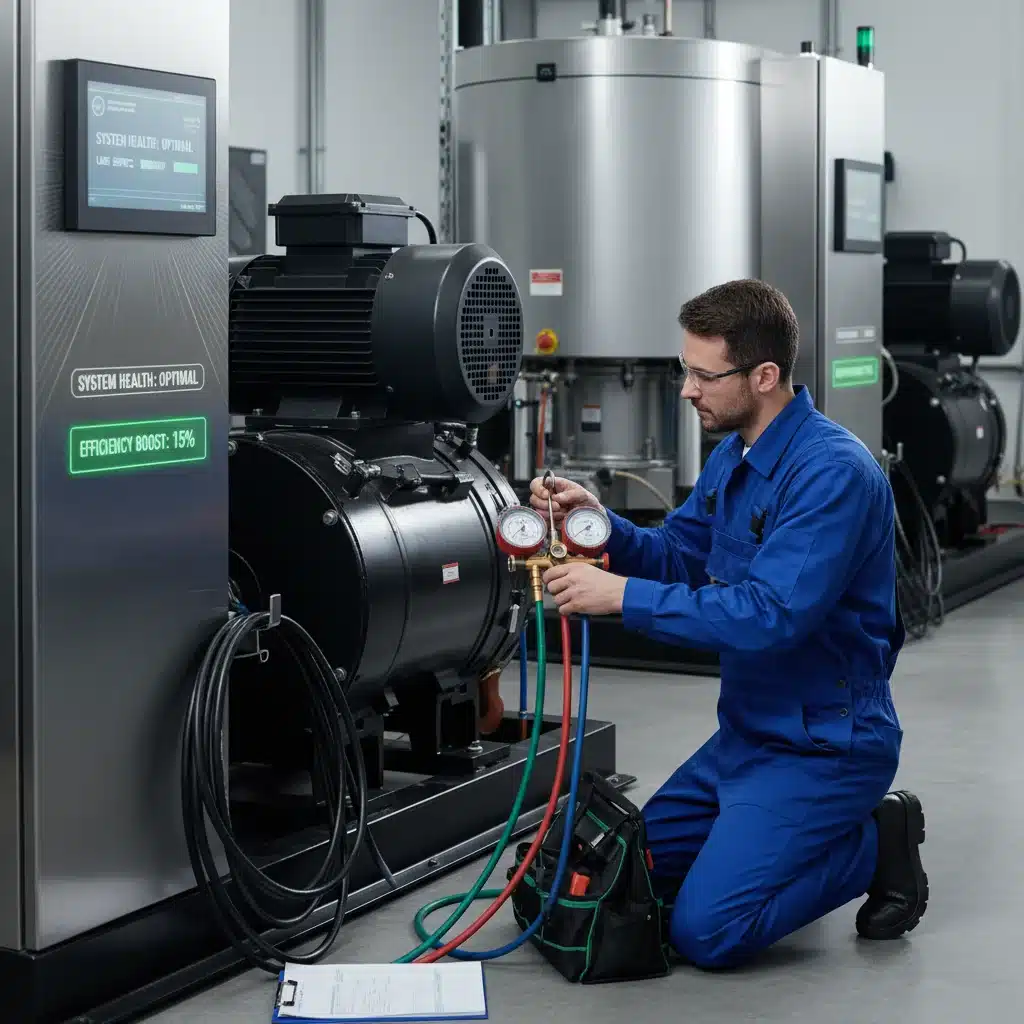
By adhering to a strict preventative maintenance schedule, businesses can prevent minor issues from escalating into major inefficiencies, directly contributing to energy savings.
Pillar 2: Strategic Technological Upgrades
While maintenance keeps existing systems running well, technological upgrades offer the biggest leaps in efficiency. The refrigeration industry is constantly evolving, with new innovations designed to reduce energy consumption.
High-Impact Upgrades:
- Energy-Efficient Compressors: Variable speed drive (VSD) compressors adjust their output to match demand, significantly reducing energy use compared to traditional on/off compressors.
- EC Motors for Fans: Electronically commutated (EC) motors are far more efficient than older shaded-pole or permanent split capacitor (PSC) motors, especially in evaporator and condenser fans.
- LED Lighting: Replacing traditional fluorescent lighting inside refrigerated display cases with LEDs not only saves energy directly but also reduces the heat load inside the case, further lowering refrigeration demand.
- Anti-Sweat Heater Controls: Anti-sweat heaters prevent condensation on glass doors but can be a huge energy drain. Installing controls that activate them only when necessary (e.g., based on ambient humidity) can save considerable energy.
- Evaporator Fan Controllers: These devices optimize fan speed based on demand, reducing energy use and improving temperature control.
- Advanced Refrigerants: Transitioning to low-GWP (Global Warming Potential) refrigerants can improve efficiency and reduce environmental impact. While the primary driver is environmental, many newer refrigerants are also more energy-efficient.
- Waste Heat Recovery: In some commercial settings, waste heat from refrigeration systems can be captured and reused for water heating or space heating, providing a dual benefit.
- Insulation Upgrades: Improving wall, ceiling, and floor insulation in cold rooms and freezers can dramatically reduce heat gain and the energy required to maintain temperatures.
Investing in these upgrades often comes with attractive payback periods, making them financially viable in the medium to long term. Government incentives and rebates may also be available to offset initial costs.
Pillar 3: Smart Controls and IoT Integration
The advent of the Internet of Things (IoT) and advanced control systems has revolutionized commercial refrigeration optimization. These technologies enable precise control, real-time data analysis, and remote management, leading to unprecedented efficiency gains.
Smart Control Solutions:
- Centralized Building Management Systems (BMS): Integrating refrigeration into a BMS allows for holistic control, optimizing its operation in conjunction with other building systems like HVAC and lighting.
- Adaptive Defrost Systems: These systems monitor coil conditions and ambient factors to initiate defrost cycles only when necessary, saving energy compared to time-based defrosts.
- Demand-Controlled Refrigeration: Utilizing sensors to monitor product load, door openings, and ambient conditions, these systems adjust compressor and fan speeds to match real-time demand, avoiding unnecessary energy consumption.
- Remote Monitoring and Diagnostics: IoT-enabled sensors can transmit performance data to a central platform, allowing facility managers to monitor system health, detect anomalies, and even troubleshoot remotely. This proactive approach minimizes downtime and optimizes performance.
- Predictive Maintenance: By analyzing data trends, smart systems can predict potential equipment failures before they occur, allowing for scheduled maintenance rather than emergency repairs, which are often more costly and disruptive.
- Energy Management Systems (EMS): These systems collect, analyze, and report energy consumption data, providing actionable insights for continuous optimization.
The power of smart controls lies in their ability to fine-tune operations, respond dynamically to changing conditions, and provide the data needed for informed decision-making. This level of precision is critical for achieving significant energy reductions.
Pillar 4: Operational Best Practices and Staff Training
Even with the most advanced equipment and controls, human behavior plays a crucial role in energy efficiency. Implementing sound operational practices and ensuring staff are well-trained is paramount for sustainable commercial refrigeration optimization.
Key Operational Strategies:
- Door Management: This is deceptively simple but incredibly effective. Minimize door openings and ensure doors are closed quickly and completely. Install self-closing doors, strip curtains, or air curtains where appropriate.
- Proper Loading: Do not overload refrigeration units, as this impedes air circulation and forces the system to work harder. Ensure products are loaded to allow for proper airflow.
- Temperature Setpoint Management: Set temperatures no lower than necessary for product safety. Even a one-degree adjustment can lead to significant energy savings. Regular checks ensure setpoints are maintained.
- Hot Food Loading: Never place hot food directly into a refrigerator or freezer. Allow it to cool to room temperature first to avoid unnecessary heat load on the system.
- Regular Cleaning: Beyond coil cleaning, ensure the areas around refrigeration units are clear of obstructions to allow for proper airflow to condensers.
- Staff Training: Educate employees on the importance of energy efficiency, proper door management, loading procedures, and how to report issues promptly. Empowering staff to be part of the solution can yield significant results.
- Planned Defrosting: For manual defrost freezers, ensure defrosting is done regularly before ice buildup becomes excessive, which severely impacts efficiency.
- Strategic Placement: Ensure refrigeration units are not placed near heat sources (e.g., ovens, direct sunlight) as this increases their workload.
These practices, when consistently applied, can complement technological investments and deliver sustained energy savings.
The Role of Sustainable Refrigeration Solutions
Beyond direct energy savings, commercial refrigeration optimization increasingly involves a move towards more sustainable and environmentally friendly solutions. This includes exploring natural refrigerants and adopting circular economy principles.
Natural Refrigerants: A Greener Future
Traditional refrigerants like HFCs (hydrofluorocarbons) are powerful greenhouse gases. The industry is rapidly transitioning towards natural refrigerants such as CO2 (R-744), ammonia (R-717), and hydrocarbons (e.g., propane R-290, isobutane R-600a). These refrigerants have significantly lower Global Warming Potential (GWP) and often offer superior thermodynamic properties, leading to higher energy efficiency.
- CO2 Systems: Increasingly popular in supermarkets, transcritical CO2 systems offer excellent efficiency and a very low environmental impact.
- Ammonia: A highly efficient refrigerant, primarily used in large industrial applications due to its toxicity, but with zero GWP and ODP (Ozone Depletion Potential).
- Hydrocarbons: Used in smaller commercial units, they are highly efficient and have extremely low GWP, though they are flammable and require specific safety considerations.
While the initial investment in natural refrigerant systems might be higher, the long-term environmental benefits, potential for energy savings, and future-proofing against regulatory changes make them a compelling choice.
Circular Economy Principles
Adopting circular economy principles in refrigeration means thinking about the entire lifecycle of equipment. This includes:
- Extended Equipment Lifespan: Through robust maintenance and strategic upgrades.
- Responsible Refrigerant Management: Preventing leaks, proper recovery, and recycling of refrigerants.
- Equipment Recycling: Ensuring old units are dismantled and materials are recycled responsibly at end-of-life.
Case Studies and Real-World Impact
The pursuit of commercial refrigeration optimization is not theoretical; it’s being successfully implemented by businesses worldwide. Consider the following examples:
- Major Supermarket Chains: Many large grocery retailers have invested in transcritical CO2 systems, VSD compressors, and advanced energy management systems. These initiatives have often resulted in 20-30% energy reductions in their refrigeration departments, along with significant cuts in refrigerant leakage and associated environmental impact.
- Restaurant Groups: Smaller businesses are also seeing benefits. A regional restaurant chain implemented smart controls on their walk-in coolers and freezers, alongside a rigorous preventative maintenance schedule. Within a year, they reported a 15% reduction in refrigeration energy costs across their locations.
- Cold Storage Warehouses: A large cold storage facility upgraded its insulation, installed high-efficiency EC fan motors, and integrated a predictive maintenance system. They achieved a 25% energy saving, coupled with a noticeable reduction in equipment downtime.
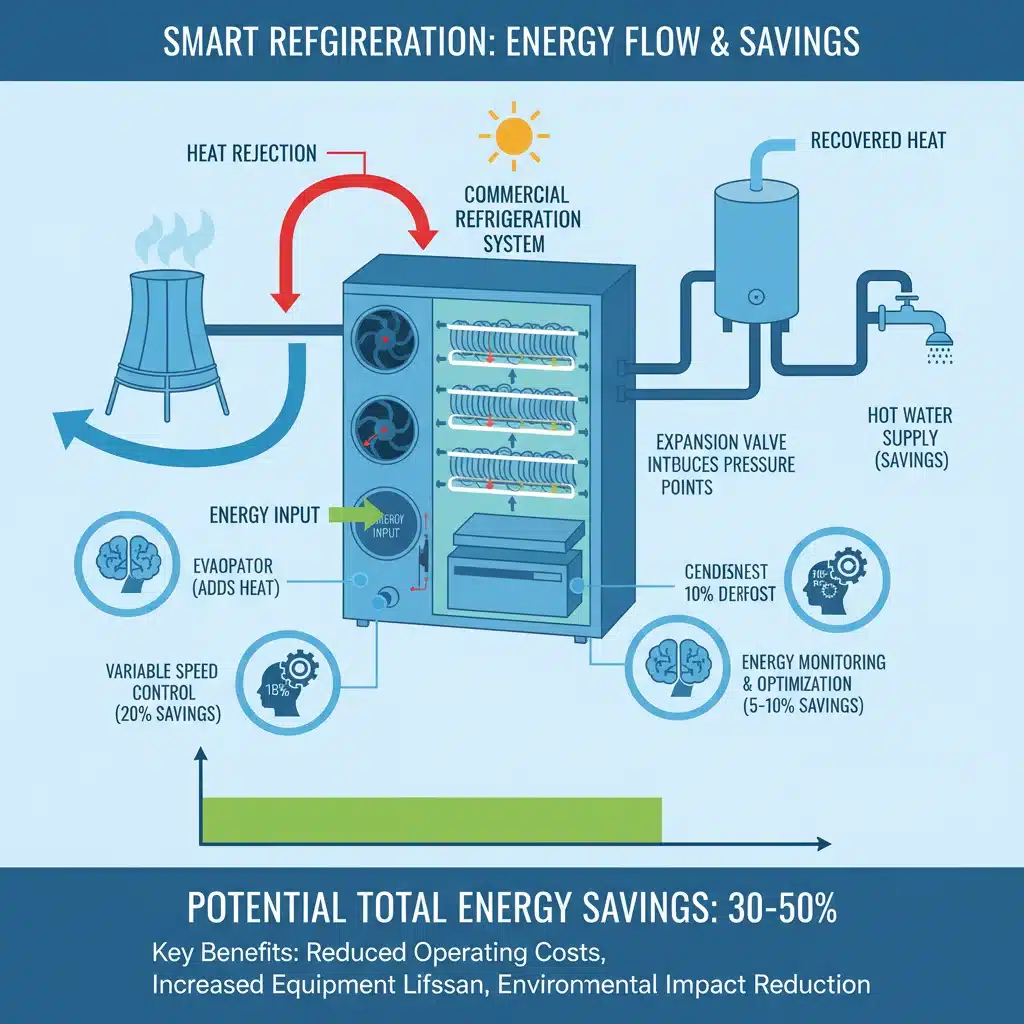
These examples underscore the tangible benefits and the feasibility of achieving our 22% reduction target. The key is a strategic, informed, and committed approach to optimization.
Overcoming Challenges in Commercial Refrigeration Optimization
While the benefits are clear, implementing comprehensive commercial refrigeration optimization can present challenges. These often include:
- Upfront Investment Costs: High-efficiency equipment and advanced controls can require significant initial capital. However, understanding the return on investment (ROI) and exploring financing options or incentives can mitigate this.
- Complexity of Systems: Modern refrigeration systems can be complex, requiring specialized knowledge for installation, maintenance, and troubleshooting. Partnering with experienced HVACR professionals is crucial.
- Disruption to Operations: Major upgrades might require temporary shutdowns or adjustments to business operations. Careful planning and phased implementation can minimize disruption.
- Lack of Awareness/Knowledge: Some businesses may not be fully aware of the extent of their energy waste or the solutions available. Education and access to expert advice are vital.
- Data Overload: While data is essential, interpreting it and turning it into actionable insights can be challenging without the right tools or expertise.
Addressing these challenges requires a proactive mindset, careful planning, and often, collaboration with external experts. The long-term rewards, however, far outweigh the initial hurdles.
A Roadmap to 22% Energy Reduction by 2026
To summarize, here’s a practical roadmap for achieving significant energy savings through commercial refrigeration optimization by 2026:
- Assess and Audit: Conduct a thorough energy audit of all refrigeration equipment. Install sub-metering for ongoing data collection.
- Prioritize Maintenance: Implement a rigorous preventative maintenance schedule, focusing on coil cleaning, refrigerant checks, and seal integrity.
- Strategic Upgrades: Identify and invest in high-impact technological upgrades such as VSD compressors, EC motors, and LED lighting, prioritizing those with the best ROI.
- Implement Smart Controls: Integrate advanced control systems (BMS, adaptive defrost, demand-controlled refrigeration) and remote monitoring for precise management.
- Optimize Operations: Train staff on best practices for door management, loading, and temperature settings.
- Explore Sustainable Solutions: Investigate the feasibility of natural refrigerants and waste heat recovery.
- Monitor and Evaluate: Continuously track energy consumption, analyze data, and evaluate the effectiveness of implemented strategies. Be prepared to adapt and refine your approach.
- Stay Informed: Keep abreast of new technologies, regulations, and best practices in the refrigeration industry.
By systematically addressing these areas, businesses can not only meet but potentially exceed the 22% energy reduction target. This journey towards enhanced efficiency is not just about cutting costs; it’s about building a more resilient, responsible, and profitable enterprise for the future.
Conclusion: The Future is Efficient and Sustainable
The drive for commercial refrigeration optimization is more than a fleeting trend; it’s a fundamental shift towards sustainable and economically sound business practices. The goal of reducing energy consumption by 22% by 2026 is ambitious, but with the right strategies, technologies, and commitment, it is entirely within reach. Businesses that embrace this challenge will not only realize substantial financial savings but also bolster their environmental credentials, enhance operational reliability, and gain a significant competitive edge in an increasingly conscious marketplace.
Start your optimization journey today. The future of commercial refrigeration is efficient, smart, and sustainable, and your business can be at the forefront of this transformative change.