2026 Commercial Solar Supply Chain: 3-Month Project Outlook

The Impact of 2026 Supply Chain Shifts on Commercial Solar Project Timelines: 3-Month Outlook
The commercial solar industry is a dynamic and rapidly evolving sector, constantly influenced by technological advancements, policy changes, and, perhaps most critically, global supply chain dynamics. As we look ahead to 2026, anticipating and understanding these shifts in the 2026 solar supply chain becomes paramount for stakeholders aiming to maintain project timelines, manage costs, and ensure the successful deployment of large-scale solar installations. This comprehensive analysis will delve into the projected changes, their potential impact over a crucial three-month period, and offer actionable insights for navigating the complexities ahead.
The push for renewable energy continues unabated, fueled by global climate goals and increasing energy demands. Commercial solar projects, ranging from rooftop installations on warehouses to large ground-mounted arrays powering industrial complexes, are at the forefront of this transition. However, the intricate web of sourcing raw materials, manufacturing components, and transporting finished products across continents means that even minor disruptions in the 2026 solar supply chain can have significant ripple effects on project schedules and budgets. Our focus here is to provide a forward-looking perspective, examining what the next few months in 2026 might hold for commercial solar developers, EPCs, and investors.
Understanding the Current State of the Commercial Solar Supply Chain
Before peering into the future, it’s essential to grasp the current landscape. The commercial solar supply chain is characterized by its globalized nature, with key manufacturing hubs primarily located in Asia, particularly China. This concentration, while efficient in many respects, also introduces vulnerabilities. Recent years have seen unprecedented challenges, including:
- Geopolitical Tensions: Trade disputes, tariffs, and evolving international relations can directly impact the cost and availability of solar components.
- Logistical Bottlenecks: Port congestion, shipping container shortages, and fluctuating freight costs have become persistent issues, leading to extended lead times.
- Raw Material Volatility: The prices and availability of critical raw materials like polysilicon, silver, and copper can experience rapid fluctuations, affecting manufacturing costs.
- Labor Shortages: Both in manufacturing and in project installation, skilled labor shortages can impede progress.
- Energy Price Spikes: Higher energy costs in manufacturing regions translate to increased production expenses for solar components.
These factors have created a complex and often unpredictable environment for commercial solar project development. Developers and EPCs have had to adapt quickly, often absorbing higher costs or extending project timelines. The question for 2026 is not if these challenges will persist, but how they will evolve and what new dynamics will emerge to shape the 2026 solar supply chain.
Key Drivers of 2026 Solar Supply Chain Shifts
Several significant drivers are expected to influence the 2026 solar supply chain. Understanding these will be crucial for predicting potential impacts on commercial solar project timelines.
1. Policy and Regulatory Changes
Government policies, particularly in major markets like the US (e.g., Inflation Reduction Act – IRA), EU (e.g., Net-Zero Industry Act), and India (e.g., PLI scheme), are designed to incentivize domestic manufacturing and reduce reliance on single-source suppliers. By 2026, the effects of these policies are expected to become more pronounced:
- Increased Domestic Manufacturing Capacity: New factories for polysilicon, wafers, cells, and modules are coming online in various regions. While this aims to diversify the supply chain, the ramp-up phase can be slow and may initially face its own set of challenges, including labor training and raw material sourcing.
- Tariffs and Trade Barriers: The imposition or removal of tariffs on imported solar components will continue to be a significant factor. Changes here can rapidly alter the economic viability of certain sourcing strategies.
- Environmental Regulations: Stricter environmental standards in manufacturing countries could lead to temporary production slowdowns or increased compliance costs, impacting the overall supply.
2. Technological Advancements
The solar industry is characterized by continuous innovation. By 2026, the widespread adoption of new technologies could influence the supply chain:
- N-Type Modules: The transition from P-type to more efficient N-type solar modules (TOPCon, HJT) will continue. This shift requires different manufacturing processes and potentially new raw material specifications, which could create temporary supply constraints or require adjustments in existing supply lines.
- Battery Storage Integration: As more commercial solar projects integrate battery energy storage systems (BESS), the supply chain for batteries (lithium, nickel, cobalt) will increasingly intertwine with solar component logistics. Volatility in battery material markets can indirectly affect solar project timelines.
- Advanced Inverter Technology: Innovations in inverter technology, such as string inverters with higher power outputs or more sophisticated grid-integration capabilities, could also see increased demand, potentially straining specific component suppliers.
3. Geopolitical and Economic Instability
The global geopolitical landscape remains volatile, and its impact on the 2026 solar supply chain cannot be overstated:
- Regional Conflicts: Ongoing or new conflicts can disrupt shipping routes, increase insurance costs, and divert resources, leading to delays and price hikes.
- Inflation and Interest Rates: Persistent global inflation can drive up manufacturing and shipping costs. Higher interest rates can make financing projects more expensive, potentially slowing down development and demand.
- Energy Market Volatility: Fluctuations in global oil and gas prices can impact manufacturing energy costs and freight expenses, directly affecting the final price of solar components.
4. ESG (Environmental, Social, and Governance) Pressures
There’s growing pressure from investors, consumers, and regulators for greater transparency and ethical practices within supply chains. This includes concerns over forced labor, carbon footprint, and sustainable sourcing. By 2026, these pressures will likely lead to:
- Increased Scrutiny: Greater due diligence will be required from suppliers, potentially leading to some suppliers being deselected or needing to invest in compliance, which could affect their production capacity or costs.
- Demand for Green Logistics: A push for lower-carbon shipping methods and more localized manufacturing could alter traditional logistics routes and increase costs in the short term.
3-Month Outlook: Immediate Impacts on Commercial Solar Project Timelines
Given the drivers mentioned, what can commercial solar developers and EPCs expect to see over a three-month horizon in 2026? The short-term impact will largely be shaped by the interplay of existing backlogs, new policy implementations, and ongoing market adjustments.
Month 1: Initial Adjustments and Price Volatility
The first month of 2026 will likely see the industry reacting to any year-end policy announcements or market shifts. Here’s what to anticipate:
- Module Price Fluctuations: While overall module prices have seen a downward trend, short-term volatility is possible. New tariffs or the initial ramp-up of domestic manufacturing capacity could create temporary supply-demand imbalances, leading to price swings for specific module types or origins.
- Extended Lead Times for Niche Components: As the industry transitions to N-type modules and more integrated storage solutions, certain specialized components (e.g., advanced inverters, specific battery chemistries) might experience slightly longer lead times as manufacturers adjust production lines.
- Logistics Pressure Points: Persistent port congestion or seasonal shipping demands (e.g., around major holidays) could cause minor delays. Proactive booking and diversified shipping routes will remain crucial.
Month 2: Policy Clarity and Supply Chain Re-evaluation
The second month will likely bring more clarity on the practical implications of new policies and further adjustments in sourcing strategies.
- Sourcing Strategy Reviews: Companies will be actively re-evaluating their sourcing strategies to comply with new regulations (e.g., IRA domestic content requirements) and optimize costs. This could lead to a temporary shift in demand towards specific suppliers or regions.
- Increased Demand for Compliant Products: Products that meet domestic content rules or other policy incentives will see increased demand, potentially leading to slightly longer lead times or premium pricing for these specific items.
- Early Signs of Diversification: We might start to see the first tangible signs of supply chain diversification, with new regional suppliers beginning to make inroads, albeit on a smaller scale.
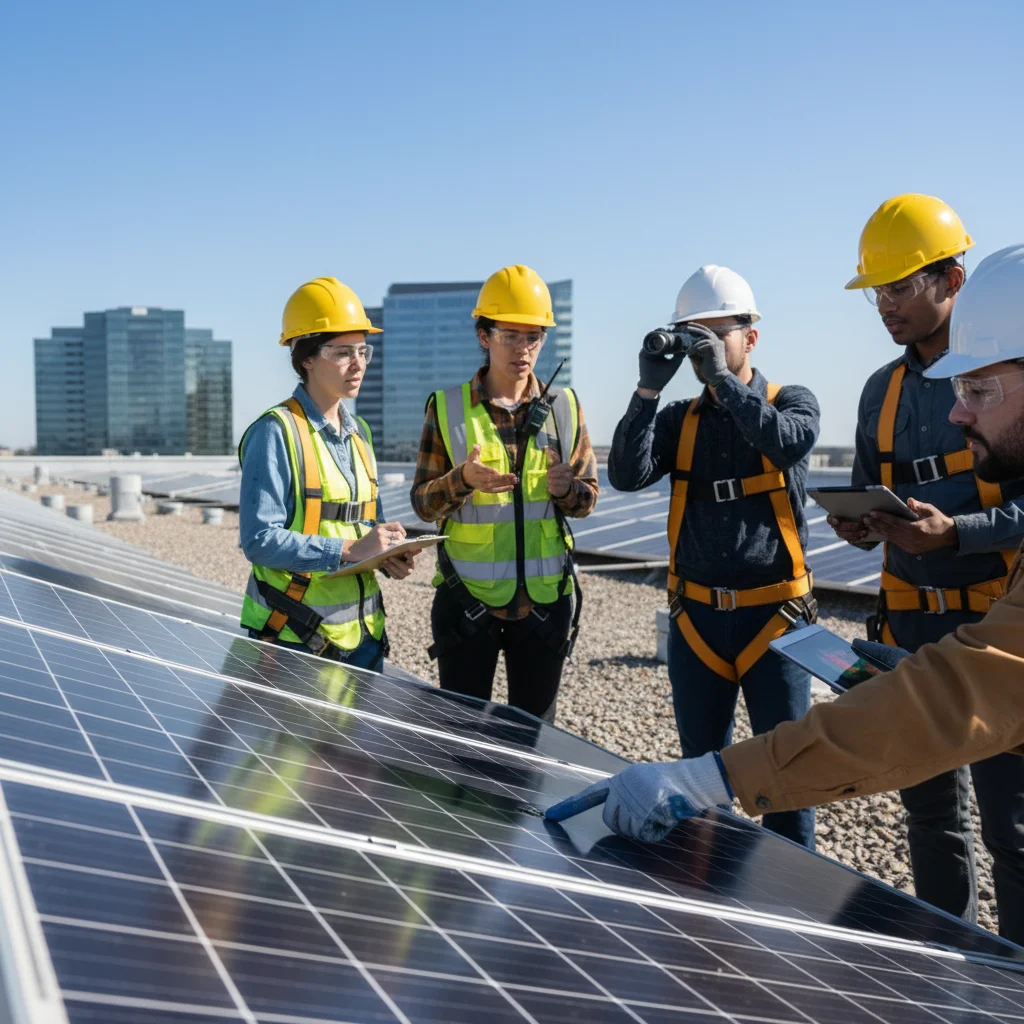
Month 3: Project Pipeline Adjustments and Strategic Planning
By the third month, the industry will have a clearer picture of the immediate 2026 solar supply chain landscape, leading to more concrete adjustments in project planning.
- Revised Project Timelines: Some commercial solar projects might see minor adjustments to their timelines, either due to slightly longer lead times for specific components or as developers align with new policy incentives.
- Focus on Inventory Management: Companies will be prioritizing robust inventory management and forecasting to mitigate risks. Strategic stockpiling of critical components might become a more common practice for larger developers.
- Strengthened Supplier Relationships: The emphasis will be on forging stronger, more resilient relationships with a diverse set of suppliers to ensure continuity and reduce reliance on single points of failure.
Mitigation Strategies for Commercial Solar Developers and EPCs
Navigating the anticipated shifts in the 2026 solar supply chain requires proactive and strategic planning. Here are key mitigation strategies:
1. Diversify Your Supplier Base
Reliance on a single region or a limited number of suppliers is a major vulnerability. Actively seek out and qualify new suppliers from different geographical locations. This ‘multi-sourcing’ approach can cushion the impact of disruptions in any one area. Explore suppliers in emerging manufacturing hubs, or those with established presence in regions less prone to geopolitical risks.
2. Enhance Supply Chain Visibility and Transparency
Implement robust supply chain management systems that provide real-time visibility into inventory levels, shipping statuses, and potential bottlenecks. This includes tracking raw materials, work-in-progress, and finished goods. Greater transparency allows for quicker identification of issues and more agile responses. Leveraging digital tools and platforms for end-to-end tracking is becoming indispensable.
3. Strategic Inventory Management
While holding excessive inventory can be costly, a ‘just-in-time’ approach might be too risky in a volatile supply chain. Consider a ‘just-in-case’ strategy for critical components, maintaining buffer stocks to absorb short-term disruptions. This requires careful forecasting and balancing inventory costs against the risk of project delays.
4. Long-Term Contracts and Partnerships
Establish long-term contracts with key suppliers to secure pricing and guaranteed supply volumes. These partnerships can foster greater trust and collaboration, leading to more favorable terms and priority during times of scarcity. Exploring joint ventures or strategic alliances can also provide a competitive edge.
5. Focus on Domestic Content and Regional Sourcing
For markets with incentives for domestic content (e.g., IRA in the US), prioritize sourcing components from within the country or region. This not only helps qualify for incentives but also reduces exposure to international shipping risks and geopolitical issues. While domestic sourcing might initially come at a higher cost, the long-term benefits in terms of stability and incentives can outweigh the premium.
6. Scenario Planning and Risk Assessment
Regularly conduct scenario planning exercises to anticipate potential disruptions and develop contingency plans. This involves identifying critical choke points, assessing the likelihood and impact of various risks (e.g., natural disasters, trade wars, new tariffs), and preparing alternative courses of action. A robust risk management framework is essential.
7. Invest in Technology and Automation
Leverage technology to streamline logistics, improve forecasting accuracy, and automate routine tasks. This includes AI-powered demand forecasting, robotic process automation (RPA) for administrative tasks, and advanced analytics for identifying supply chain vulnerabilities. Digitalization can significantly enhance resilience.
8. Collaboration and Information Sharing
Engage in industry forums, share best practices, and collaborate with peers to gain insights into emerging supply chain trends and challenges. Collective intelligence can provide a broader perspective and help identify solutions more quickly. Work closely with logistics providers to understand their capacities and limitations.
Longer-Term Projections Beyond 3 Months
While our immediate focus is the 3-month outlook for the 2026 solar supply chain, it’s important to consider the longer-term trajectory. Beyond this initial period, we can anticipate several trends solidifying:
- Regionalization of Manufacturing: The trend towards regionalizing solar manufacturing will continue to accelerate, driven by policy incentives and the desire for greater supply chain security. This could lead to more balanced global production, reducing over-reliance on a single geographic area.
- Increased Vertical Integration: Some larger solar companies may pursue greater vertical integration, controlling more aspects of their supply chain from raw material processing to module assembly, to gain more control and reduce external dependencies.
- Circular Economy Principles: The focus on sustainability will drive greater adoption of circular economy principles, including recycling of solar panels and components, which will create new supply chains for recovered materials.
- Digital Transformation: The use of AI, blockchain, and IoT for enhanced supply chain visibility, predictive analytics, and ethical sourcing verification will become standard practice.
These long-term shifts will fundamentally reshape how commercial solar projects are developed and executed, emphasizing resilience, sustainability, and efficiency across the entire value chain.

Conclusion: Navigating the Evolving 2026 Solar Supply Chain
The 2026 solar supply chain is poised for significant evolution, driven by a confluence of policy, technological, economic, and geopolitical factors. For commercial solar project developers and EPCs, the next three months will be a critical period of adjustment, strategic re-evaluation, and proactive planning.
While challenges such as price volatility, lead time fluctuations, and logistical pressures will persist, those who embrace diversification, enhance supply chain visibility, and foster robust supplier relationships will be best positioned to succeed. The emphasis will shift from merely securing components to building resilient, transparent, and ethically sound supply chains that can withstand future shocks and capitalize on emerging opportunities.
By understanding the immediate 3-month outlook and preparing for the longer-term trends, the commercial solar industry can continue its rapid growth trajectory, ensuring that clean, renewable energy reaches more businesses and communities efficiently and reliably. The future of commercial solar hinges not just on innovative technology, but on the strength and adaptability of its underlying supply chain.