Rainwater Harvesting U.S. Homes: Sustainable Future 2026

The quest for sustainability has never been more urgent, and within this global endeavor, the role of rainwater harvesting homes in the U.S. is rapidly gaining prominence. As we look towards 2026, the integration of eco-friendly practices into residential architecture is not merely a trend but a necessity. Water scarcity, increasing utility costs, and a heightened environmental consciousness are compelling homeowners and builders alike to reconsider traditional water consumption models. Rainwater harvesting offers a compelling solution, transforming homes into more self-sufficient and resilient entities. This comprehensive guide will delve into the multifaceted aspects of rainwater harvesting, exploring its benefits, technological advancements, regulatory landscape, and the exciting future it holds for sustainable living in the United States.
The Imperative for Rainwater Harvesting in the U.S.
The United States, despite its vast geographical expanse, faces significant water challenges. Droughts are becoming more frequent and severe in many regions, particularly in the West and Southwest. Aging infrastructure leads to considerable water loss, and the energy required to treat and transport water contributes to carbon emissions. In this context, rainwater harvesting homes emerge as a vital strategy for water conservation and sustainable development. By capturing and utilizing rainwater, homeowners can reduce their reliance on municipal water supplies, lessen the strain on local ecosystems, and actively participate in a more sustainable future.
The environmental benefits are substantial. Reduced runoff helps mitigate storm water pollution, preventing contaminants from entering natural waterways. It also recharges groundwater tables, contributing to overall hydrological health. Economically, harvesting rainwater can lead to significant savings on water bills, especially in areas with high water rates or restrictions. Furthermore, the aesthetic appeal of a self-sufficient home, often equipped with lush, water-efficient landscaping, adds to its market value and desirability.
The shift towards sustainable living is not just about individual actions; it’s about collective impact. As more homes adopt rainwater harvesting systems, the cumulative effect on water conservation and environmental protection becomes profound. This momentum is building, driven by a combination of technological innovation, supportive policies, and a growing public understanding of water’s precious value.
Understanding Rainwater Harvesting Systems for Homes
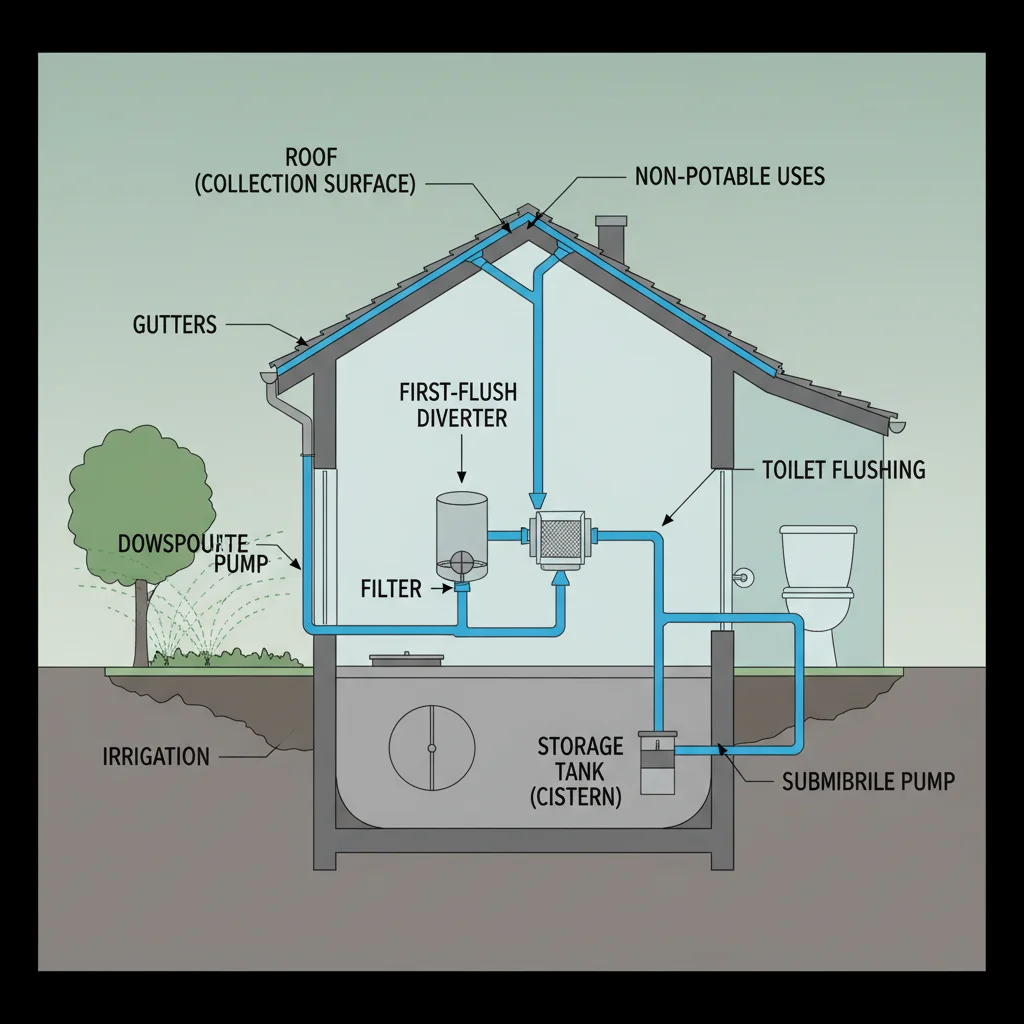
A basic rainwater harvesting system for a home consists of several key components, each playing a crucial role in collecting, filtering, storing, and distributing water. Understanding these elements is fundamental to appreciating the efficiency and versatility of rainwater harvesting homes.
Collection Surface: The Roof
The roof of a house serves as the primary collection surface. Most roofing materials, including metal, tile, and asphalt shingles, are suitable for collecting rainwater. However, certain materials like cedar shakes or roofs treated with toxic chemicals should be avoided if the water is intended for potable uses. The larger the roof area, the more water can be collected. The quality of the collected water is directly influenced by the cleanliness of the roof, emphasizing the importance of regular maintenance.
Conveyance System: Gutters and Downspouts
Once rainwater hits the roof, it flows into gutters, which then channel the water into downspouts. These components are essential for directing water efficiently from the roof to the storage system. Proper sizing and installation of gutters and downspouts are critical to prevent overflow during heavy rainfall and ensure maximum collection.
Filtration and Pre-treatment: Keeping Water Clean
Before water enters the storage tank, several pre-treatment steps are typically employed to remove debris and improve water quality. A ‘first-flush diverter’ is a common device that diverts the initial flow of rainwater, which often contains accumulated dust, leaves, and other contaminants from the roof, away from the storage tank. Leaf screens or gutter guards prevent larger debris from entering the system. Further filtration, such as mesh screens or sediment filters, can be installed before the storage tank to enhance water purity.
Storage: Cisterns and Tanks
The collected and pre-treated rainwater is stored in cisterns or tanks. These can vary significantly in size, material, and placement. Underground tanks are popular for aesthetic reasons and to maintain cooler water temperatures, while above-ground tanks are often more cost-effective and easier to install. Materials typically include polyethylene, fiberglass, or concrete. The capacity of the tank is determined by factors such as roof size, local rainfall patterns, and the intended use of the water.
Distribution System: Pumps and Plumbing
Depending on the intended use, a pump may be necessary to distribute the harvested rainwater. For non-potable uses like irrigation or toilet flushing, a simple pump connected to a separate plumbing system is sufficient. For potable uses, more advanced filtration and disinfection systems (e.g., UV sterilization or chlorination) are required, along with a pressure tank to ensure consistent water pressure throughout the home. It is crucial to maintain a strict separation between potable rainwater systems and municipal water lines to prevent cross-contamination.
Benefits of Rainwater Harvesting for U.S. Homes by 2026
The advantages of integrating rainwater harvesting into residential properties are numerous and extend beyond mere water conservation. By 2026, these benefits will likely become even more pronounced as environmental pressures intensify and the cost of conventional water sources continues to rise. The adoption of rainwater harvesting homes represents a strategic investment in both environmental stewardship and economic prudence.
Reduced Water Bills and Resource Independence
One of the most immediate and tangible benefits for homeowners is the reduction in water utility bills. By supplementing or even replacing municipal water for non-potable uses, households can significantly cut down on their monthly expenses. In regions prone to drought or with escalating water costs, this financial relief can be substantial. Moreover, rainwater harvesting fosters a sense of resource independence, making homes less vulnerable to public water supply disruptions or restrictions.
Environmental Stewardship and Reduced Ecological Footprint
Harvesting rainwater is a powerful act of environmental stewardship. It reduces the demand on stressed freshwater ecosystems, allowing rivers, lakes, and aquifers to replenish naturally. By capturing stormwater on-site, it also minimizes runoff, which often carries pollutants from urban areas into natural waterways, thus improving water quality in local environments. This contributes directly to a smaller ecological footprint for the home and its occupants, aligning with broader sustainability goals.
Stormwater Management and Flood Mitigation
Urbanization often leads to increased impervious surfaces, which exacerbate stormwater runoff problems, contributing to localized flooding and overloading municipal drainage systems. Rainwater harvesting systems effectively capture a portion of this runoff, thereby reducing the volume and velocity of stormwater discharged into public infrastructure. This not only alleviates pressure on storm drains but also helps prevent erosion and pollution caused by excessive runoff, making it a valuable tool for urban stormwater management.
Superior Water Quality for Specific Uses
Rainwater, when properly collected and filtered, is naturally soft and free of the chlorine, fluoride, and other chemicals often found in treated municipal water. This makes it ideal for certain applications. For gardening and landscaping, rainwater is superior because it lacks salts and chemicals that can be detrimental to plant health. For laundry, its softness reduces the need for detergents and fabric softeners, potentially extending the life of clothing and appliances. Even for flushing toilets, its chemical-free nature is an advantage.
Contribution to Green Building Certifications and Property Value
The integration of rainwater harvesting systems can significantly contribute to a home’s eligibility for green building certifications like LEED (Leadership in Energy and Environmental Design) or other local sustainable building programs. These certifications not only validate a home’s environmental performance but can also enhance its market value and appeal to environmentally conscious buyers. As sustainability becomes a more prominent factor in real estate, homes equipped with such systems are likely to command a premium.
Challenges and Considerations for Widespread Adoption
While the benefits of rainwater harvesting homes are clear, several challenges and considerations need to be addressed for its widespread adoption across the U.S. These range from regulatory hurdles to initial investment costs and public perception.
Regulatory Landscape and Permitting
One of the primary obstacles has historically been the varied and sometimes restrictive regulatory environment. While many states and municipalities now encourage or even mandate rainwater harvesting, others still have outdated laws or complex permitting processes. Some regions, particularly in the arid West, have historically viewed rainwater as part of a larger water rights system, leading to restrictions on collection. However, a trend towards more supportive legislation is emerging, recognizing the benefits of decentralized water management. Homeowners must research local ordinances and obtain necessary permits before installation.
Initial Investment Costs
The upfront cost of installing a comprehensive rainwater harvesting system can be a deterrent for some homeowners. This includes the cost of gutters, downspouts, first-flush diverters, filters, storage tanks, pumps, and potentially additional plumbing. While the long-term savings on water bills can offset these costs, the initial outlay requires careful financial planning. However, declining technology costs, coupled with potential rebates, tax incentives, and financing options, are making systems more accessible.
Maintenance Requirements
Rainwater harvesting systems are not entirely maintenance-free. Regular cleaning of gutters, inspection of screens and filters, and occasional cleaning of the storage tank are necessary to ensure optimal performance and water quality. Neglecting maintenance can lead to reduced efficiency, contamination, or system damage. Educating homeowners about proper maintenance procedures is crucial for the long-term success of these systems.
Public Perception and Education
Despite growing awareness, some misconceptions about rainwater harvesting persist. Concerns about water quality, mosquito breeding in storage tanks, or the complexity of the systems can deter potential adopters. Effective public education campaigns are vital to dispelling these myths, highlighting the safety and efficiency of modern systems, and promoting the environmental and economic benefits. Showcasing successful community projects and providing clear, accessible information can significantly influence public perception.
Sizing and Design Considerations
Properly sizing a rainwater harvesting system is critical. It involves calculating the roof area, considering local rainfall patterns, and estimating household water demand for various uses. An undersized system may not meet water needs, while an oversized system represents an unnecessary expense. Professional consultation is often recommended to design a system that is efficient, cost-effective, and tailored to the specific needs of the household and local climate.
Technological Advancements and Future Trends by 2026
The field of rainwater harvesting is not static; it is continually evolving with new technologies and innovative approaches. By 2026, we can expect to see even more sophisticated and integrated solutions that make rainwater harvesting homes more efficient, user-friendly, and cost-effective.
Smart Rainwater Management Systems
The integration of smart home technology is a significant trend. Smart rainwater harvesting systems can monitor tank levels, predict rainfall based on weather forecasts, and automatically manage water distribution to optimize usage. These systems can also alert homeowners to maintenance needs or potential issues, enhancing efficiency and convenience. Imagine a system that automatically diverts water to irrigation only when soil moisture levels are low and rainfall isn’t imminent.
Advanced Filtration and Purification
While basic filtration is common, advancements in membrane filtration, UV sterilization, and other purification technologies are making potable rainwater more accessible and reliable. These innovations are crucial for expanding the use of harvested water beyond non-potable applications, potentially reducing reliance on municipal drinking water supplies in many areas. Expect more compact, energy-efficient, and effective purification units.
Modular and Aesthetic Storage Solutions
Traditional bulky tanks can sometimes be an aesthetic challenge. Future trends include more modular, customizable, and aesthetically pleasing storage solutions that can be integrated seamlessly into building designs or landscaping. Underground tanks will become more common, as will decorative above-ground options that blend with architectural styles, making rainwater harvesting less conspicuous and more desirable.
Integrated Water Management Systems
The future of sustainable homes lies in holistic water management. This means integrating rainwater harvesting with other water-saving technologies such as greywater recycling systems, low-flow fixtures, and water-efficient landscaping. These integrated systems create a closed-loop approach to water usage, maximizing conservation and minimizing waste. Homes will become micro-utilities, managing their own water cycles efficiently.
Policy and Incentive Expansion
As the benefits become more widely recognized, it is highly probable that government policies and incentives will expand. This could include more widespread tax credits, rebates, low-interest loans, and streamlined permitting processes at both state and federal levels. Such support will play a crucial role in accelerating the adoption of rainwater harvesting technologies and making them more financially viable for a broader demographic of homeowners.

Case Studies and Success Stories: Real-World Impact
The growing success of rainwater harvesting homes across the U.S. is not just theoretical; it’s evident in numerous real-world applications. These examples showcase the versatility and effectiveness of these systems in diverse climates and for various purposes.
Austin, Texas: A Leader in Rainwater Harvesting
Austin has long been a proponent of water conservation, offering robust incentives for rainwater harvesting. Many homes in the city have installed systems to supplement their irrigation needs, significantly reducing reliance on the municipal supply during dry periods. The city’s comprehensive guidelines and educational programs have made it a model for other municipalities looking to encourage sustainable water practices.
Pacific Northwest: Managing Abundant Rainfall
While often associated with arid regions, rainwater harvesting is also highly beneficial in areas with abundant rainfall, like the Pacific Northwest. Here, systems are used not only for water supply but also for stormwater management. By capturing and slowly releasing or using rainwater, homeowners and communities help prevent localized flooding and reduce the burden on stormwater infrastructure, demonstrating its dual benefit.
California: Drought Resilience Through Innovation
Facing persistent droughts, California has seen a surge in interest and adoption of rainwater harvesting. From residential properties in urban centers to agricultural operations in rural areas, Californians are increasingly turning to rainwater collection to enhance water security. State-level incentives and educational initiatives have played a critical role in promoting these practices, turning homes into bastions of drought resilience.
Off-Grid Homes: Achieving Water Independence
For those seeking complete independence from public utilities, rainwater harvesting is an indispensable component of off-grid living. Many off-grid homes across the country rely solely on harvested rainwater for all their water needs, including potable uses, through advanced filtration and purification systems. These homes serve as powerful examples of what is possible with dedicated design and technology.
Implementing Rainwater Harvesting: A Step-by-Step Guide for Homeowners
For homeowners considering the transition to rainwater harvesting homes, a structured approach can simplify the process and ensure a successful installation. Here’s a general guide to get started:
1. Assess Your Needs and Potential
Begin by evaluating your water consumption habits and identifying where harvested rainwater could be most effectively used (e.g., irrigation, toilet flushing, laundry). Then, assess your roof area, local rainfall data, and available space for a storage tank. This initial assessment will help determine the appropriate system size and complexity.
2. Research Local Regulations and Incentives
Crucially, investigate your local and state regulations regarding rainwater harvesting. Understand what permits are required, if any, and explore available incentives such as rebates, tax credits, or grant programs. This step can significantly impact the feasibility and cost-effectiveness of your project.
3. Design Your System
Based on your assessment and regulatory findings, design your system. This might involve calculating the required tank size, choosing appropriate filtration methods, and planning the plumbing layout. For complex systems or potable water applications, consulting with a professional rainwater harvesting specialist is highly recommended.
4. Select Components and Install
Purchase high-quality components that are durable and suitable for your climate. Installation can be a DIY project for simpler systems, but for larger or more intricate setups, hiring experienced contractors is often the best choice. Ensure all connections are secure and leak-free.
5. Maintain Your System
Once installed, establish a regular maintenance schedule. This includes cleaning gutters and filters, inspecting the tank for sediment buildup, and checking pumps and plumbing for proper function. Consistent maintenance ensures the longevity and efficiency of your system and the quality of your harvested water.
6. Monitor and Optimize
Consider installing monitoring devices to track water levels and usage. This data can help you optimize your system’s performance, identify areas for improvement, and better understand your water consumption patterns. Adjust usage habits or system settings as needed to maximize water savings.
The Future is Bright for Rainwater Harvesting Homes
As we approach 2026, the trajectory for rainwater harvesting homes in the U.S. is unequivocally upward. The confluence of environmental necessity, economic advantages, and technological innovation is creating a powerful impetus for change. Homeowners are increasingly empowered to take control of their water resources, contributing to both personal and planetary well-being.
The vision of a sustainable home is one where every drop counts, and rainwater harvesting is a cornerstone of that vision. It represents a tangible step towards greater resilience in the face of climate change, a commitment to conserving precious natural resources, and a smart investment in the future. As awareness grows and technology advances, rainwater harvesting will transition from an alternative practice to a standard feature in sustainable residential development across the United States. The future is wet, abundant, and self-sufficient for those who embrace the power of the rain.