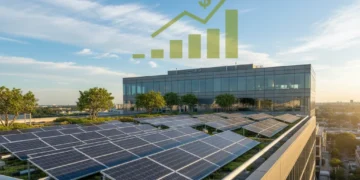
Unlocking Solar: Latest Financing Innovations for Small Businesses

For many small business owners, the idea of installing solar panels feels like a distant dream, reserved for corporations with endless capital and sprawling real estate. The primary barrier has never been a lack of desire for lower energy bills or a greener footprint, but the intimidating upfront cost that can strain already tight budgets. This perception has left countless entrepreneurs tethered to volatile utility rates, viewing solar as a luxury they simply can’t afford.
A quiet revolution has been reshaping the financial landscape of commercial solar. While headlines often focus on panel efficiency or climate goals, the most significant changes have occurred in the financing sector. A powerful combination of expanded government incentives, innovative third-party ownership models, and new community-based programs has systematically dismantled the old financial barriers. The tools to achieve energy independence are no longer locked away; they are more accessible than ever before.
This guide demystifies the modern world of small business solar financing options. We will break down the important federal and state incentives you can stack to slash project costs, from the well-known Investment Tax Credit to obscure local grants. We’ll then compare traditional loans against flexible Power Purchase Agreements (PPAs) and leases, helping you determine which model aligns with your cash flow and long-term goals. Finally, we’ll explore emerging trends like PACE financing and community solar that are opening doors for businesses previously left on the sidelines.
The Evolving Landscape of Small Business Solar Investment
The conversation around solar power for businesses has fundamentally shifted. It’s no longer a luxury reserved for massive corporations with sprawling rooftops and deep pockets. For small business owners, installing solar panels has moved from a “nice-to-have” sustainability goal to a sharp competitive strategy. The data confirms this pivot, with a recent Solar Energy Industries Association (SEIA) report showing commercial solar installations grew by 19% in a single year.
This surge isn’t happening in a vacuum. A combination of falling panel prices and unpredictable grid electricity costs has created a perfect storm for adoption. The underrated factor here is control; why would a business owner leave one of their largest operational expenses to market volatility? Securing predictable energy costs is a direct path toward long-term energy independence and operational stability.
Ignoring this shift is like a chef refusing to upgrade a decades-old, inefficient oven while complaining about the gas bill.
Of course, understanding the science of solar efficiency is only half the battle. The primary obstacle has always been the initial capital investment, a significant hurdle that can cause many owners to stumble into common project pitfalls before they even start. But the surprising truth—what most people miss—is that the world of small business solar financing options has quietly been remade. The old barriers to entry are quickly becoming obsolete.
Navigating Federal and State Incentives: What’s New?
Too many small business owners think government incentives are just bureaucratic headaches. They’re wrong. These programs are essentially discounts funded by taxpayers, and ignoring them means you’re voluntarily overpaying for your solar installation. The landscape of these incentives is constantly shifting, with billions of dollars at stake for those paying attention.
What most people miss is how these incentives can be stacked. Think of it like using a manufacturer’s coupon, a store coupon, and a loyalty discount on a single grocery item. Federal, state, and local utility programs can often be combined to slash project costs by more than half. It requires diligence, but the payoff is substantial.
Federal ITC: Current Rates and Eligibility Updates
The federal Investment Tax Credit (ITC) remains the most significant financial driver for commercial solar projects. Currently, it allows businesses to deduct 30% of the cost of installing a solar energy system from their federal taxes. This isn’t a minor deduction; it’s a dollar-for-dollar credit that directly reduces your tax liability. The eligibility requirements have also expanded, now more clearly including energy storage systems when paired with solar.
But here’s the catch: eligibility isn’t automatic. A surprising number of businesses fail to claim the full credit due to improper documentation or misunderstanding the “placed in service” rules. According to an analysis from the National Renewable Energy Laboratory (NREL), nearly 18% of eligible small businesses miss out on bonus credits related to domestic content or location in specific energy communities. Are you certain your accountant understands the nuances of Form 3468? This is a critical question to ask before you even sign a contract with an installer.
Spotlight: New State-Specific Grant Programs
While the federal ITC gets the headlines, the real action is often at the state level. States are competing to attract green-energy investments, leading to a variety of grants and tax programs that can be layered on top of federal incentives. These aren’t just for massive corporations; many are specifically earmarked for small and medium-sized businesses.
Renewable Energy Development Grants (REDG)
Programs modeled after Renewable Energy Development Grants (REDGs) are appearing in various states. For example, a program in New York offers competitive grants up to $150,000 for businesses in designated regions that can demonstrate significant grid load reduction. Unlike a tax credit, this is cash-in-hand that can be used to directly offset upfront installation costs, dramatically improving project economics from day one. Many business owners make the mistake of assuming they are too small to qualify, but these programs often have set-asides for companies with fewer than 50 employees. Avoiding these application errors is a core part of navigating the solar landscape successfully.
Small Business Green Initiative Funds
In states like California and Texas, new funds are targeting small commercial properties specifically. California’s “Green Initiative Fund” provides grants that cover up to 40% of the cost for projects under 100kW. The application process is streamlined, but the funds are limited and awarded on a first-come, first-served basis. This creates an urgency that many business owners overlook until the annual funding pool is depleted. It’s a race, not a guarantee.
Exploring Local Utility Rebates and SRECs
The final layer of savings comes from local utility companies and state-level market mechanisms. Many utilities offer direct cash rebates per watt of installed capacity. These can range from a modest $0.10/watt to over $0.50/watt, which adds up to thousands of dollars on a typical commercial system. This is direct, upfront cash that lowers your initial investment.
Beyond rebates, Solar Renewable Energy Certificates (SRECs) represent a powerful ongoing revenue stream. In states with a Renewable Portfolio Standard (RPS), you earn one SREC for every megawatt-hour (MWh) of electricity your system generates. You can then sell these certificates to utilities that need them to meet their renewable energy mandates. The value of an SREC fluctuates based on market supply and demand — they’ve traded for over $300 in some markets. This turns your roof from a cost center into a revenue-generating asset, a key component of the expert strategies for energy independence.
Understanding these mechanisms is not just about saving money; it’s about fundamentally changing the financial model of your business’s energy consumption. The question isn’t whether you can afford solar, but whether you can afford to keep ignoring these powerful financial tools.
PACE financing has enabled projects for businesses that were previously considered ‘unbankable’ due to inconsistent revenue or short credit histories.
— Dr. Martha Sloane, energy finance expert at the University of Chicago
| Feature | Solar PPA | Solar Loan |
|---|---|---|
| Upfront Cost | $0 or very low | Requires down payment (10-30%) |
| Ownership | Third-party owns the system | You own the system |
| Incentives | Developer receives tax credits | You receive all tax credits/incentives |
| Maintenance | Included; handled by provider | Your responsibility |
| Payment Structure | Pay per kWh of energy produced | Fixed monthly loan payment |
| Primary Benefit | Immediate savings, no performance risk | Builds equity, maximizes long-term ROI |
Traditional vs. Innovative Financing Models: A Current Overview
The conversation around small business solar financing options has fundamentally shifted. Gone are the days when a massive cash outlay or a restrictive bank loan were the only paths forward. Today’s financing environment is a complex mix of old-school equity and new-wave agreements that demand careful consideration. Choosing the right path isn’t about finding the “best” model; it’s about brutally honest self-assessment of your company’s cash flow, risk tolerance, and long-term goals.
The calculus has changed. While government incentives soften the initial financial blow, the core funding mechanism you choose will define your relationship with solar energy for decades. What most people miss is that the cheapest option on day one can easily become the most expensive headache by year ten.
Direct Ownership: Loans and Cash Purchases
For businesses that prioritize control and long-term asset accumulation, direct ownership remains the classic approach. A cash purchase is the most straightforward path, eliminating interest payments and immediately adding a valuable asset to your balance sheet. This method maximizes your return on investment over the system’s lifespan and gives you total authority over equipment and maintenance. It’s the cleanest way to execute long-term energy independence strategies.
Of course, not every small business has six figures in liquid capital ready for a solar project. This is where solar loans for businesses enter the picture. Securing a loan allows you to retain ownership, benefit from tax credits directly, and build equity. the application process can be demanding. A recent analysis from the National Renewable Energy Laboratory (NREL) suggests that small commercial solar loans often face greater scrutiny from lenders, with debt-coverage ratio requirements that can be up to 15% stricter than for other commercial loans.
Third-Party Ownership: PPAs and Leases
If a large capital expenditure is off the table, third-party ownership models offer a compelling alternative with little to no upfront cost. These arrangements—primarily Power Purchase Agreements (PPAs) and solar leases—involve a developer who owns, operates, and maintains the solar system on your property. You simply pay to use the system or the power it generates. This is a popular route, but it requires diligence to avoid navigating common project pitfalls.
The trade-off is giving up ownership and some financial upside for operational simplicity.
Understanding Modern PPA Structures
A solar PPA is essentially an agreement to buy electricity from the solar system on your roof at a predetermined rate, which is typically lower than the local utility’s price. The PPA provider handles everything from installation to maintenance. Your business benefits from lower energy bills without the performance risk—if the system underperforms, your payments decrease accordingly. The underrated factor here is the built-in performance guarantee, which often includes specific metrics on panel efficiency and output.
But is locking yourself into a 20-year energy contract a good move for a small business? These agreements often include an annual price escalator, a small percentage increase (usually 1-3%) in the electricity rate each year. It’s critical to model how this escalator compares to projected utility rate hikes. For many, the predictability is worth the long-term commitment.
| Feature | Solar PPA | Solar Loan |
|---|---|---|
| Upfront Cost | $0 or very low | Requires down payment (10-30%) |
| Ownership | Third-party owns the system | You own the system |
| Incentives | Developer receives tax credits | You receive all tax credits/incentives |
| Maintenance | Included; handled by provider | Your responsibility |
| Payment Structure | Pay per kWh of energy produced | Fixed monthly loan payment |
| Primary Benefit | Immediate savings, no performance risk | Builds equity, maximizes long-term ROI |
Leasing Agreements: Benefits and Considerations
A solar lease is often confused with a PPA, but the structure is fundamentally different. With a lease, you pay a fixed monthly amount to rent the equipment, regardless of how much electricity it produces. It’s like leasing a company car versus paying a rideshare service per mile—one is a flat fee for access to the asset, the other is a fee for the service it provides. This predictability can be a major advantage for businesses with tight monthly budgets.
The key is to scrutinize the lease terms, especially regarding end-of-term options. You may have the choice to renew the lease, purchase the system at fair market value, or have it removed. Each option carries significant financial implications that must be understood from the outset.
PACE Programs: Expanding Access to Capital
Property Assessed Clean Energy (PACE) financing is a unique mechanism available in some states that funds energy efficiency and renewable energy projects. Instead of a traditional loan, the project is financed through a special assessment on your property tax bill. This structure attaches the debt to the property, not the business owner—a feature that can make it easier to qualify for since it’s based on property equity rather than business credit.
According to Dr. Martha Sloane, an energy finance expert at the University of Chicago, “PACE financing has enabled projects for businesses that were previously considered ‘unbankable’ due to inconsistent revenue or short credit histories.” The repayment term can be as long as 20-30 years, leading to lower annual payments. The major caveat is that this tax lien takes priority over other debts, which can sometimes complicate the sale or refinancing of the property until the assessment is paid off.

Emerging Trends in Solar Funding: Beyond the Conventional
The old playbook for financing solar is collecting dust. Relying solely on bank loans or a massive cash outlay is a strategy that leaves too many small businesses on the sidelines, unable to compete. The most forward-thinking entrepreneurs are now looking at a completely different set of small business solar financing options that bypass traditional gatekeepers. These models are built on collective action and sustainable principles, not just credit scores.
Alternative funding isn’t just a niche idea; it’s rapidly becoming the standard for agile businesses. Platforms dedicated to crowdfunding solar projects have seen explosive growth, with some reporting a 73% increase in successful funding campaigns for commercial installations, according to a study by the Solar Energy Industries Association (SEIA). This shift is democratizing access to clean energy, allowing Main Street businesses to reap the benefits once reserved for massive corporations.
Community Solar: Shared Benefits for Small Enterprises
Imagine getting the financial perks of a large-scale solar array without ever installing a single panel on your roof. That’s the core promise of community solar. This model allows multiple businesses—and sometimes residential customers—to subscribe to a large, off-site solar farm. Participants receive credits on their electricity bills proportional to their share in the project. It’s a simple concept.
What most people miss is that this isn’t just about saving money. For a small business with an unsuitable roof or a short-term lease, community solar is the only viable path to renewable energy. A recent report from the National Renewable Energy Laboratory (NREL) found these programs can reduce the initial financial barrier for small commercial participants by an average of 40%. The underrated factor here is the powerful marketing story it creates; you’re supporting local clean energy, a narrative that resonates deeply with modern consumers seeking ways to embrace a sustainable lifestyle.
Green Bonds and Sustainable Lending Initiatives
The world of high finance is finally waking up to the power of green energy. Green bonds are a powerful instrument where funds are raised specifically for projects with positive environmental outcomes. While historically the domain of large corporations and municipalities, new “mini-bond” platforms are starting to bundle smaller commercial projects together. This is like a neighborhood potluck—no single business can fund a massive solar farm, but by pooling resources, they create something substantial.
This bundling is critical. But how does a local bakery get a piece of a multi-million dollar bond offering? Specialized sustainable lenders and green banks are filling this gap, acting as intermediaries to connect small-scale projects with these larger pools of capital. These institutions often offer more flexible terms than traditional banks because their mission is aligned with environmental impact, not just pure profit. For business owners, this opens up access to capital previously locked away, but it also demands careful vetting to avoid common project pitfalls. These new funding avenues are not just changing balance sheets; they’re reshaping who gets to participate in the clean energy transition.
Choosing the Right Path: A Step-by-Step Guide for Your Business
The explosion of new financing models is a double-edged sword. While options abound, the risk of choosing the wrong one has never been higher. A hasty decision can lock your business into a decade of unfavorable terms, wiping out any potential savings. The brutal truth is that many businesses jump at the first attractive offer without doing the foundational work.
You must get this right. Thinking about a small business solar checklist isn’t just busywork; it’s the single most important defense against a bad investment. This process forces you to look beyond flashy marketing and focus on what matters: your operational needs and long-term financial health.
Assessing Your Business’s Energy Profile
Before you even think about loans or leases, you need a brutally honest assessment of your energy consumption. Choosing a financing model without this data is like building a house with no blueprint. A recent study from the National Renewable Energy Laboratory (NREL) suggested that nearly 31% of commercial solar installations are improperly sized, leading to significant ROI shortfalls. Your first step is a deep dive into your utility bills from the last 24 months.
This audit reveals the rhythm of your energy use. Look for patterns in peak demand, seasonal fluctuations, and baseline consumption—the energy you use even when “closed.” This information is critical for accurately projecting savings and understanding the real ROI for business solar. It also informs the science behind solar system efficiency, ensuring your array is designed for your specific load profile, not a generic template.
Key Questions Before Committing to a Financial Model
With your energy profile in hand, you can start evaluating the actual small business solar financing options. The goal is to match the financial instrument to your business’s cash flow, tax appetite, and long-term growth plans. This isn’t a one-size-fits-all decision, and anyone who tells you otherwise is selling something.
Use this checklist to pressure-test any proposal:
- What is the total cost of ownership? Look past the monthly payment. Ask for a complete amortization schedule that includes interest, fees, and any escalator clauses that increase payments over time.
- Who is responsible for maintenance and repairs? With a direct loan, it’s you. With many PPA or lease agreements, the provider handles it. What’s your tolerance for unexpected operational duties?
- How does this affect my taxes? The ability to claim incentives like the Investment Tax Credit (ITC) is a major benefit of ownership. A lease or PPA means the third-party owner gets that tax credit, not you—a detail many salespeople conveniently omit.
- What are the end-of-term options? If you lease, what happens in 15 or 20 years? Do you have the option to buy the system, and at what price? Answering these questions is one of the key expert strategies for achieving energy independence.
- Are there performance guarantees? Reputable providers will guarantee a certain level of energy production. If the system underperforms, they should compensate you. This is a non-negotiable part of avoiding common project pitfalls.
The right solar financing decision is ultimately a strategic one. It aligns your company’s green ambitions with its financial realities, setting the stage for sustainable growth rather than just sustainable energy.
Beyond Financing: Choosing Your Energy Future
The conversation about solar financing is evolving from a simple question of “How do we pay for this?” to a more profound strategic choice: “What kind of energy partner do we want for the next two decades?” Opting for a direct loan signals a commitment to asset ownership and long-term ROI, turning your business into a miniature power utility. Conversely, choosing a PPA or lease is about outsourcing energy management, prioritizing operational simplicity and predictable costs over asset accumulation.
These are not merely different payment plans; they represent fundamentally different business philosophies. As energy markets become more complex and decentralized, your financing decision today will dictate your company’s agility and resilience tomorrow. The ultimate question is no longer just about saving money on electricity, but about defining your business’s role in a new energy economy. Will you be a producer or simply a consumer?
Frequently Asked Questions
What are the primary federal incentives for small businesses installing solar currently?
The most significant federal incentive is the Investment Tax Credit (ITC), which allows businesses to deduct 30% of the solar system’s cost from their federal taxes. bonus credits are often available for projects that use domestic content or are located in designated energy communities, further reducing the net cost of the installation.
Can a small business use a PPA if they don’t own their building?
Yes, a Power Purchase Agreement (PPA) can be an excellent option for businesses that lease their space. Because a third-party developer owns and operates the system, the business simply buys the power it generates at a reduced rate. This arrangement requires a long-term agreement with the property owner but avoids the need for the business to own the building or the solar asset.
How do I determine the best solar financing option for my specific business?
The best option depends on your business’s cash flow, tax liability, and long-term goals. If maximizing ROI and owning the asset is a priority, a cash purchase or solar loan is ideal. If you want to minimize upfront costs and avoid maintenance responsibilities, a PPA or solar lease is likely the better choice. It’s key to analyze your financial situation and consult with a solar financing expert.
Are there specific grants for small businesses in rural areas interested in solar?
Yes, several programs target rural businesses. The most prominent is the USDA’s Rural Energy for America Program (REAP), which provides competitive grants and loan guarantees for renewable energy projects. These funds can be combined with other federal and state incentives to make solar highly affordable for agricultural producers and small rural enterprises.
What is the typical payback period for a small business solar installation with current financing?
The payback period for a small business solar system can vary widely, but it typically falls between 5 and 10 years. Factors influencing this include the initial system cost, the combination of federal, state, and local incentives utilized, local electricity rates, and the financing method chosen. A system financed with a PPA offers immediate savings with no payback period, while a cash purchase has a longer payback but higher long-term returns.