Commercial Solar Financing 2026: PACE vs. C-PACE Programs
Commercial Solar Financing Options for 2026: Comparing PACE and C-PACE Programs
As businesses globally strive for greater sustainability and operational efficiency, the adoption of solar energy continues its rapid ascent. The year 2026 promises to be a pivotal point, with evolving technologies, policy incentives, and innovative financing mechanisms making commercial solar installations more accessible than ever. For many commercial property owners, the initial capital outlay remains a significant hurdle. This is where specialized financing solutions, particularly Property Assessed Clean Energy (PACE) and Commercial Property Assessed Clean Energy (C-PACE) programs, emerge as game-changers. Understanding these options is crucial for any business looking to harness the power of the sun and secure a greener, more cost-effective future.
The Growing Imperative for Commercial Solar Energy
The shift towards renewable energy isn’t just an environmental directive; it’s a sound business strategy. Commercial entities are increasingly recognizing the multifaceted benefits of integrating solar power into their operations. Beyond the undeniable positive environmental impact, solar energy offers substantial long-term cost savings through reduced electricity bills, protection against volatile energy prices, and enhanced corporate image. Moreover, in many regions, government incentives, tax credits, and depreciation benefits further sweeten the deal, making the return on investment (ROI) for commercial solar projects highly attractive.
However, the upfront costs associated with large-scale commercial solar installations can be substantial, often running into hundreds of thousands or even millions of dollars. Traditional financing methods, such as conventional bank loans or lines of credit, may not always be suitable. They can require significant collateral, impact a company’s balance sheet, and may not offer the long repayment terms necessary to align with the project’s energy savings. This is precisely why innovative financing structures like PACE and C-PACE have gained such prominence, specifically designed to overcome these financial barriers and accelerate the adoption of clean energy technologies in the commercial sector.
Understanding PACE and C-PACE: A Foundation for Commercial Solar Financing
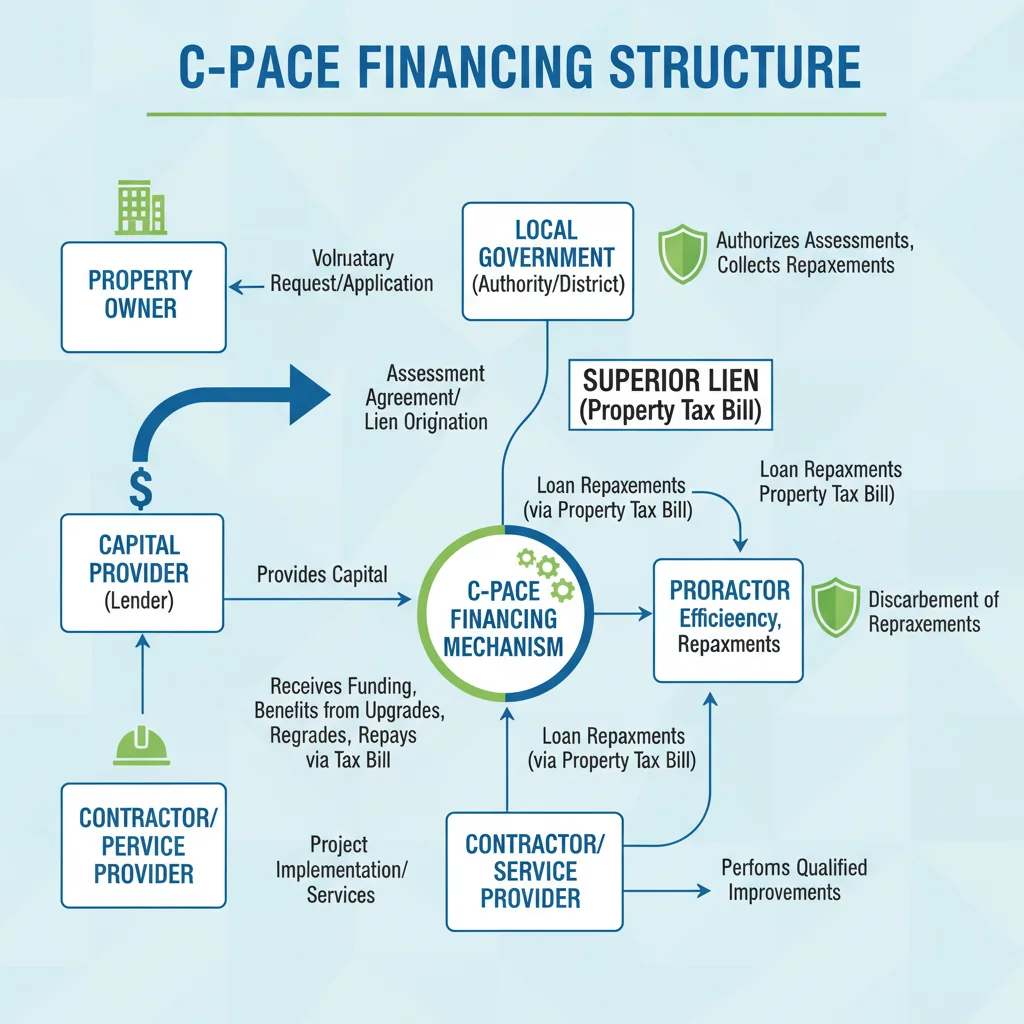
Before delving into the specifics of commercial solar financing through PACE and C-PACE, it’s essential to grasp the fundamental concept behind these programs. PACE (Property Assessed Clean Energy) is a mechanism that allows property owners to finance energy efficiency, renewable energy, and water conservation improvements through a voluntary assessment on their property tax bill. This assessment is repaid over an extended period, typically 10 to 25 years, providing long-term affordability.
The key differentiator of PACE financing is that the repayment obligation is tied to the property, not the individual or entity that owns it. This means if the property is sold, the remaining PACE assessment typically transfers to the new owner. This unique structure provides significant advantages, particularly for commercial projects, as it reduces perceived risk for lenders and can facilitate longer repayment terms.
What is C-PACE?
C-PACE, or Commercial Property Assessed Clean Energy, is simply the commercial application of the broader PACE framework. It is specifically designed for commercial, industrial, agricultural, and multi-family residential properties. C-PACE programs enable owners of eligible commercial properties to obtain upfront funding for qualifying energy efficiency, renewable energy, and water conservation projects. The financing is then repaid through an annual charge on the property’s tax bill, similar to other property assessments.
The beauty of C-PACE for commercial solar financing is its ability to fund 100% of project costs, including development, construction, and often soft costs. This eliminates the need for significant upfront capital from the business owner, making large-scale solar installations feasible for a wider range of companies. The long repayment terms, often matching the useful life of the installed equipment, ensure that the annual energy savings can often exceed the annual C-PACE assessment, leading to immediate positive cash flow.
Key Features and Benefits of C-PACE for Commercial Solar Financing
C-PACE offers a compelling array of features that make it an attractive option for businesses considering solar energy projects in 2026. Understanding these benefits is crucial for making an informed financing decision.
1. No Upfront Capital Required
One of the most significant barriers to commercial solar adoption is the initial investment. C-PACE programs typically finance 100% of eligible project costs, meaning businesses don’t need to dip into their capital reserves or take on traditional debt. This preserves working capital for other business operations and growth initiatives.
2. Long Repayment Terms
C-PACE assessments are repaid over extended periods, often 15, 20, or even 25 years. These long terms align the repayment schedule with the expected lifespan of the solar equipment, ensuring that the annual energy savings often outweigh the annual assessment payment. This creates a positive cash flow from day one, enhancing the project’s financial viability.
3. Property-Attached Assessment
Unlike traditional loans tied to the business entity, C-PACE financing is secured by an assessment on the property. This means the obligation transfers with the property upon sale, making it an attractive option for property owners who might not intend to hold the asset for the entire repayment term. This feature also makes it easier for lenders to provide financing, as the risk is tied to a tangible asset.
4. Improved Cash Flow
Because the annual energy savings from a solar installation often exceed the annual C-PACE assessment, businesses can experience immediate positive cash flow. This not only covers the cost of the solar system but can also free up additional funds that can be reinvested into the business or used for other operational needs.
5. Non-Recourse Financing
In many C-PACE programs, the financing is non-recourse, meaning the lender cannot pursue the individual business owner’s personal assets in the event of default. This significantly reduces the personal financial risk for business owners and encourages investment in energy-saving projects.
6. Enhanced Property Value
Installing a commercial solar system, especially when financed through C-PACE, can significantly increase the value of a commercial property. Energy-efficient buildings with lower operating costs are more attractive to tenants and buyers, leading to higher occupancy rates and potential resale value.
7. Stackable with Other Incentives
C-PACE financing can often be combined with other federal, state, and local incentives, such as the Investment Tax Credit (ITC), accelerated depreciation (MACRS), and various state-specific rebates. This stacking of incentives further improves the overall financial performance of a commercial solar project, making the ROI even more compelling.
Challenges and Considerations for C-PACE Financing
While C-PACE offers numerous advantages, it’s not without its considerations. Businesses exploring this option for commercial solar financing in 2026 should be aware of potential challenges.
1. Availability and State/Local Programs
C-PACE programs are enabled by state legislation, but their implementation varies significantly at the local level (county or city). Not all states have C-PACE legislation, and even in states that do, not all municipalities have opted into a program. Businesses must first verify if C-PACE is available in their specific jurisdiction.
2. Lender Consent
Because the C-PACE assessment creates a lien on the property, senior mortgage lenders typically need to consent to the C-PACE financing. This is often a condition for approval, as the C-PACE lien usually takes a senior position to existing mortgages. While many lenders are becoming more familiar and comfortable with C-PACE, obtaining consent can sometimes be a lengthy process.
3. Transaction Costs and Fees
Like any financing mechanism, C-PACE comes with associated transaction costs, including origination fees, legal fees, and administrative charges. While these are often rolled into the total financed amount, property owners should be aware of these costs and factor them into their financial projections.
4. Project Eligibility Requirements
C-PACE programs have specific eligibility criteria for projects. While commercial solar installations are generally eligible, the specific types of systems, efficiency ratings, and other project details may need to meet certain standards to qualify for financing. It’s crucial to work with experienced developers and C-PACE providers to ensure project compliance.
5. Property Type Restrictions
While C-PACE is designed for commercial properties, some programs may have restrictions on certain property types or sizes. Multi-family residential properties, for instance, are often included, but it’s essential to confirm eligibility for your specific asset.
The PACE vs. C-PACE Distinction: Why It Matters for Commercial Solar
While the terms PACE and C-PACE are often used interchangeably, particularly in casual conversation, it’s important to reiterate their distinct applications. PACE, in its broadest sense, refers to the legislative framework that allows for property-assessed financing for clean energy and efficiency upgrades. C-PACE specifically refers to the application of this framework to commercial, industrial, agricultural, and multi-family properties. There is also R-PACE (Residential PACE) which applies to single-family homes, but our focus here is squarely on the commercial sector.
For businesses seeking commercial solar financing, it is exclusively C-PACE programs that will be relevant. Understanding this distinction helps in navigating the correct legal and administrative channels when seeking funding. The regulatory landscape, eligible project types, and financing terms can differ significantly between residential and commercial PACE programs, even within the same state.
The Role of C-PACE in Driving the 2026 Commercial Solar Market
Looking ahead to 2026, C-PACE is poised to play an even more critical role in accelerating the adoption of commercial solar. Several factors contribute to this growing influence:
1. Increasing Climate Mandates and ESG Goals
As climate change concerns intensify, more jurisdictions are implementing stringent energy efficiency standards and renewable energy mandates for commercial buildings. Concurrently, Environmental, Social, and Governance (ESG) factors are becoming paramount for investors and stakeholders. C-PACE provides a practical and financially viable pathway for businesses to meet these evolving requirements and enhance their ESG profile.
2. Technological Advancements in Solar
The efficiency and cost-effectiveness of solar photovoltaic (PV) technology continue to improve. As panel costs decrease and energy output increases, the ROI for commercial solar projects becomes even more attractive. C-PACE financing helps businesses capitalize on these advancements without the burden of high upfront costs.
3. Expanding Program Availability
The number of states and municipalities adopting and expanding C-PACE programs is steadily growing. As more jurisdictions recognize the economic and environmental benefits, the accessibility of this financing option for commercial solar financing will broaden, opening doors for more businesses.
4. Greater Lender Familiarity
Initially, senior mortgage lender consent was a significant hurdle. However, as C-PACE programs mature and demonstrate a strong track record, more traditional lenders are becoming familiar with and comfortable providing consent. This increased understanding streamlines the financing process and reduces approval times.
Steps to Secure Commercial Solar Financing with C-PACE
If C-PACE appears to be a viable option for your business’s solar project in 2026, here’s a general outline of the steps involved:
1. Determine Eligibility
First, confirm if C-PACE is available in your property’s jurisdiction and if your property type and proposed solar project meet the program’s eligibility criteria. A C-PACE program administrator or a qualified C-PACE provider can assist with this.
2. Project Assessment and Proposal
Engage with reputable solar developers and contractors to conduct a comprehensive energy assessment of your property. They will design a suitable solar system, estimate energy savings, and provide a detailed project proposal, including costs.
3. Obtain C-PACE Financing Quotes
Work with C-PACE capital providers to obtain financing quotes. These providers specialize in C-PACE funding and can guide you through the application process. They will assess your project’s financial viability and the property’s creditworthiness.
4. Secure Lender Consent
If your property has an existing mortgage, you will need to obtain consent from your senior mortgage lender. This is a critical step, and it’s advisable to initiate this conversation early in the process.
5. Project Approval and Funding
Once all documentation is submitted, reviewed, and approved by the C-PACE program administrator and the capital provider, financing is secured. Funds are typically disbursed directly to the contractors as project milestones are met.
6. Installation and Repayment
The solar system is installed, and your business begins to enjoy the benefits of clean energy and reduced utility bills. Repayment of the C-PACE assessment occurs via your property tax bill, usually in semi-annual installments.

Beyond C-PACE: Other Commercial Solar Financing Options for 2026
While C-PACE is a powerful tool for commercial solar financing, it’s important to remember that it’s one of several options. Depending on your business’s financial situation, risk tolerance, and strategic goals, other financing models might also be suitable:
1. Cash Purchase
For businesses with ample capital, an outright cash purchase offers the highest ROI as it avoids interest payments and allows full access to all tax credits and depreciation benefits immediately. This option provides complete ownership and control over the solar asset.
2. Solar Loans (Traditional Debt)
Conventional bank loans or specialized solar loans can be an option for businesses with strong credit. These typically involve shorter repayment terms than C-PACE and require collateral, but they offer direct ownership of the system.
3. Power Purchase Agreements (PPAs)
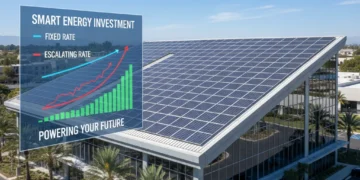
Under a PPA, a third-party developer owns, operates, and maintains the solar system on your property. Your business simply purchases the electricity generated at a fixed or escalating rate, often lower than utility rates. This option requires no upfront capital from the business and transfers all operational risk to the developer.
4. Solar Leases
Similar to a PPA, a solar lease involves a third party owning the system, but instead of buying the power, you pay a fixed monthly lease payment for the use of the solar equipment. This also requires no upfront capital and provides predictable energy costs.
5. PACE vs. PPA/Lease
The choice between C-PACE and a PPA/lease often comes down to ownership and balance sheet considerations. C-PACE allows the business to own the asset, benefiting from depreciation and tax credits, and adds an assessment to the property tax bill. PPAs/leases keep the asset off the balance sheet and transfer all maintenance responsibilities, but the business doesn’t own the system or directly claim the tax benefits (though these savings are often passed through in lower electricity rates).
The Future of Commercial Solar Financing in 2026
The landscape of commercial solar financing is dynamic and continues to evolve. In 2026, we can expect further innovation and refinement in existing programs, alongside the emergence of new solutions. The increasing focus on decarbonization and energy independence will only amplify the demand for accessible and efficient financing mechanisms. C-PACE, with its unique property-attached structure and ability to fund 100% of project costs, is well-positioned to remain a cornerstone of this financial ecosystem.
Businesses that strategically explore and leverage options like C-PACE will be better equipped to meet their sustainability goals, reduce operating expenses, and enhance their competitive edge. The move to solar is no longer a niche environmental choice; it’s a mainstream economic imperative, and the right financing can make all the difference.
Conclusion: Powering Your Business with Smart Solar Financing
For commercial property owners and businesses aiming to adopt solar energy in 2026, understanding the nuances of financing options is paramount. While various avenues exist, C-PACE programs stand out as a particularly powerful and increasingly popular mechanism for commercial solar financing. By eliminating upfront capital requirements, offering long repayment terms, and attaching the assessment to the property, C-PACE effectively de-risks and de-burdens the transition to solar for many enterprises.
As the drive for sustainability intensifies and the economic benefits of solar become undeniable, leveraging programs like C-PACE will be key to unlocking a greener, more resilient, and more profitable future for commercial operations. Engage with experts, assess your eligibility, and take the proactive steps necessary to power your business with the sun, secured by smart financing solutions.