Federal Solar Grants 2026: Up to $500,000 for Commercial Projects
In an era increasingly defined by the urgent need for sustainable energy solutions, businesses across the United States are looking towards renewable sources to power their operations, reduce costs, and contribute positively to environmental stewardship. Among the most promising avenues for achieving these goals is the adoption of solar energy. However, the initial capital investment for commercial solar projects can be substantial, often posing a significant barrier for many enterprises. This is where federal grant opportunities become a game-changer, offering crucial financial support to propel businesses into a greener future. Specifically, for 2026, the landscape of federal grants for commercial solar projects is poised to offer significant incentives, with potential awards reaching up to $500,000 for eligible businesses.
This comprehensive guide delves into the world of federal commercial solar grants for 2026, providing an in-depth look at what’s available, who’s eligible, and how to navigate the application process successfully. Understanding these opportunities is not just about securing funding; it’s about strategically positioning your business for long-term sustainability, energy independence, and enhanced public image. As the federal government continues to prioritize renewable energy development, the resources available for businesses committed to solar power are only growing. This article will serve as your essential roadmap to unlocking these valuable funding streams.
Understanding the Landscape of Federal Commercial Solar Grants in 2026
The commitment of the United States federal government to renewable energy is unwavering, driven by objectives ranging from combating climate change and fostering energy independence to stimulating economic growth and creating green jobs. This commitment translates into a variety of funding mechanisms, including direct grants, tax credits, loan programs, and other incentives designed to encourage the widespread adoption of solar energy, particularly within the commercial sector. For 2026, several key programs are expected to continue or be introduced, offering substantial financial assistance for businesses looking to invest in solar installations.
Federal commercial solar grants are non-repayable funds disbursed by government agencies to support projects that align with specific national priorities. Unlike loans, grants do not need to be paid back, making them an incredibly attractive funding option. The primary goal of these grants is often to mitigate the upfront costs associated with solar panel installation, making renewable energy more accessible and economically viable for businesses of all sizes, from small enterprises to large corporations.
Key Federal Agencies and Programs Offering Commercial Solar Grants
Several federal departments and agencies play pivotal roles in administering grants for commercial solar projects. Understanding which agencies are relevant to your business is the first step in identifying suitable funding opportunities.
1. U.S. Department of Energy (DOE)
The DOE is at the forefront of renewable energy research and development, and it frequently offers grants to advance solar technologies and deployment. Programs under the DOE often focus on innovative solar projects, grid integration, and projects that demonstrate significant energy savings or carbon reduction. Businesses engaged in cutting-edge solar applications or those looking to implement large-scale, impactful projects should closely monitor DOE announcements.
2. U.S. Department of Agriculture (USDA)
For rural businesses and agricultural producers, the USDA’s Rural Energy for America Program (REAP) is a cornerstone of federal funding for renewable energy systems. REAP offers grants and loan guarantees for eligible rural small businesses and agricultural producers to purchase, install, and construct renewable energy systems, including solar. This program is particularly vital for businesses located in areas where traditional energy infrastructure might be less robust or more expensive. The maximum grant amount under REAP can be substantial, often covering a significant percentage of eligible project costs, making it a prime target for commercial solar grants in rural settings.
3. U.S. Environmental Protection Agency (EPA)
The EPA often provides grants for projects that reduce greenhouse gas emissions and promote environmental sustainability. While not always directly solar-specific, many EPA grants can be leveraged by businesses implementing solar solutions as part of a broader strategy to improve air quality, reduce pollution, or enhance climate resilience. These grants often target projects with clear environmental benefits and community impact.
4. Small Business Administration (SBA)
While the SBA primarily offers loan programs, it also partners with other federal agencies and local organizations to provide resources and sometimes direct grants for small businesses pursuing sustainable practices, including solar energy adoption. The SBA’s role is often more about facilitating access to capital and providing educational resources, but keeping an eye on their announcements can lead to indirect grant opportunities or information on related federal programs.
Eligibility Criteria for Commercial Solar Grants
Securing federal commercial solar grants is a competitive process, and meeting the specific eligibility criteria is paramount. While criteria can vary significantly from one program to another, common requirements often include:
- Business Type and Size: Many grants target small businesses, rural businesses, or specific industry sectors. Definitions of ‘small business’ can vary, so it’s crucial to check the specific program guidelines.
- Project Scope and Impact: The proposed solar project must align with the grant’s objectives. This often means demonstrating significant energy savings, environmental benefits (e.g., CO2 reduction), job creation, or innovation.
- Financial Viability: Applicants usually need to demonstrate that their business is financially stable and capable of completing the project, often requiring matching funds or a clear business plan.
- Location: Some grants are geographically restricted, targeting specific states, regions, or rural areas.
- Technical Feasibility: The solar project must be technically sound and viable, often requiring detailed engineering plans and cost estimates.
- Compliance: Adherence to all federal, state, and local regulations, including environmental and labor laws, is a standard requirement.
It is essential for businesses to meticulously review the Request for Proposal (RFP) or Notice of Funding Opportunity (NOFO) for each grant they consider. These documents contain the definitive eligibility requirements and application instructions.
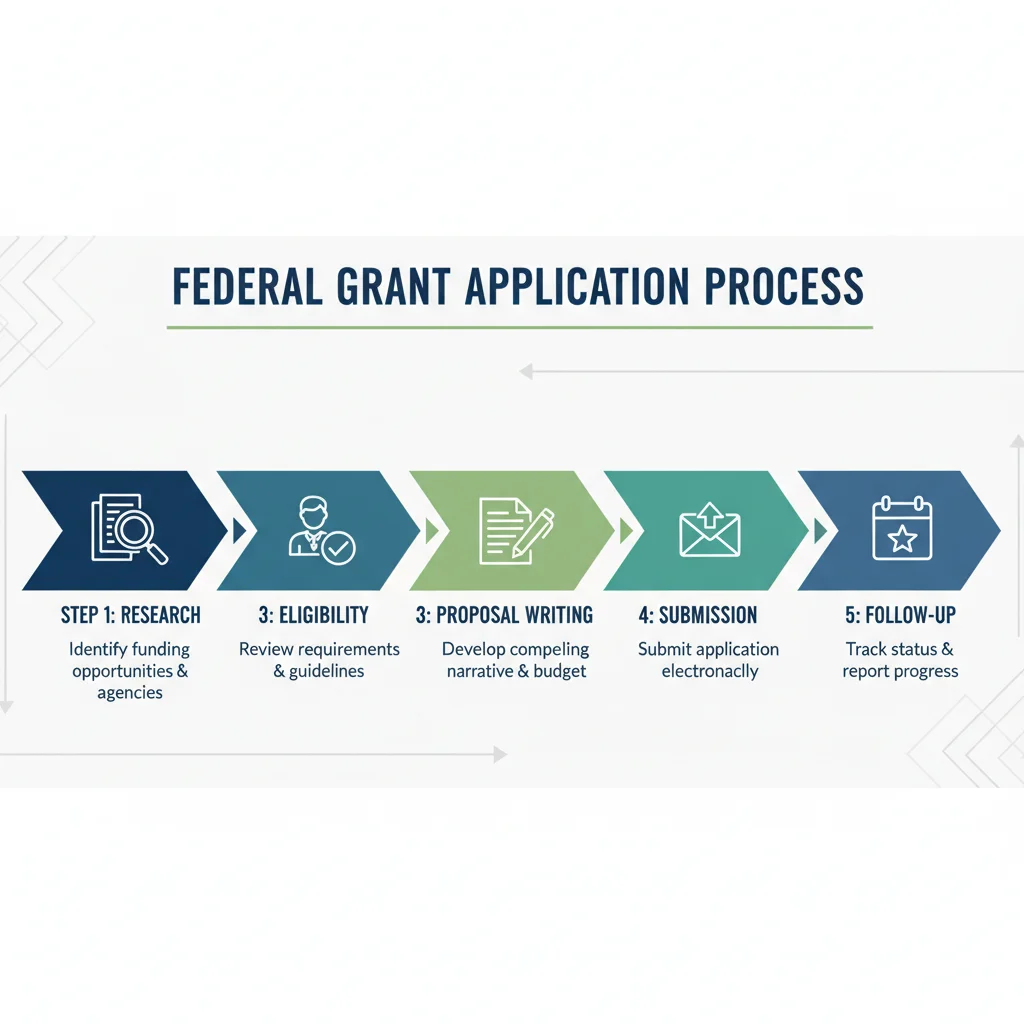
The Application Process: A Step-by-Step Guide to Securing Up to $500,000
Applying for federal commercial solar grants is a rigorous process that demands careful planning, attention to detail, and a thorough understanding of the grant-making agency’s expectations. Here’s a generalized step-by-step guide:
Step 1: Research and Identify Suitable Grants
Begin by thoroughly researching available grant programs. Utilize resources like Grants.gov, the official federal grants portal, which lists all discretionary grants from federal agencies. Filter by keywords such as ‘solar,’ ‘renewable energy,’ ‘energy efficiency,’ and ‘commercial.’ Pay close attention to the funding amounts, deadlines, and specific program objectives to ensure alignment with your project.
Step 2: Understand the Grant Guidelines (RFP/NOFO)
Once you’ve identified potential grants, download and meticulously read the full Request for Proposal (RFP) or Notice of Funding Opportunity (NOFO). These documents are your bible for the application process, detailing:
- Program objectives and priorities.
- Eligibility criteria for applicants and projects.
- Required application components and formats.
- Evaluation criteria and scoring mechanisms.
- Important dates and deadlines.
- Contact information for questions.
Step 3: Register Your Business
Federal grant applications typically require your business to be registered in several government systems. This usually includes:
- DUNS Number: A unique nine-digit identification number for businesses.
- SAM.gov Registration: Registration with the System for Award Management (SAM) is mandatory for all entities seeking federal awards. This process can take several weeks, so start early.
- Grants.gov Registration: Your organization must be registered with Grants.gov to submit applications.

Step 4: Develop Your Project Proposal
This is arguably the most critical step. Your proposal must be compelling, well-structured, and directly address all aspects of the RFP/NOFO. Key components typically include:
- Executive Summary: A concise overview of your project, its goals, and expected outcomes.
- Problem Statement: Clearly articulate the problem your project addresses and why solar energy is the optimal solution.
- Project Description: Detail the scope of work, activities, timeline, and deliverables. Be specific about the type of solar technology, system size, and installation plan.
- Goals and Objectives: Define measurable, achievable, relevant, and time-bound (SMART) goals and objectives for your project.
- Budget and Justification: Provide a detailed breakdown of all project costs, demonstrating how grant funds will be utilized. Include any matching funds or in-kind contributions. This section is vital for showing financial prudence and maximizing the impact of the commercial solar grants.
- Evaluation Plan: Explain how you will measure the success of your project against your stated objectives.
- Organizational Capacity: Highlight your business’s experience, expertise, and resources relevant to successfully executing the project.
- Environmental Impact: Detail the positive environmental outcomes, such as greenhouse gas reductions, energy savings, and sustainability benefits.
Step 5: Gather Supporting Documentation
Beyond the core proposal, you will likely need to submit various supporting documents, which may include:
- Letters of support or commitment from partners.
- Resumes of key personnel involved in the project.
- Financial statements or audits of your business.
- Permits or regulatory approvals (if applicable).
- Site surveys or energy audits.
- Environmental impact assessments.
Step 6: Review and Submit
Before submission, thoroughly review your entire application package. Check for:
- Completeness and accuracy.
- Adherence to all formatting and content requirements specified in the RFP/NOFO.
- Grammar, spelling, and clarity.
- Consistency between the narrative and budget.
Submit your application well in advance of the deadline to avoid any last-minute technical issues with the Grants.gov system.
Maximizing Your Chances of Securing Commercial Solar Grants
Given the competitive nature of federal grant programs, adopting strategic approaches can significantly increase your likelihood of success:
1. Start Early and Plan Meticulously
Grant writing is not a last-minute endeavor. Begin your research and planning months in advance. This allows ample time for registration, proposal development, securing partnerships, and internal reviews.
2. Align with Federal Priorities
Tailor your project and proposal to directly address the overarching goals and specific priorities of the grant program and the federal agency administering it. If the grant emphasizes rural development, highlight the rural impact of your solar project. If it’s about technological innovation, emphasize the novel aspects of your system.
3. Demonstrate Clear Impact and Measurable Outcomes
Federal agencies want to see a return on their investment. Clearly articulate the tangible benefits of your project, both in terms of energy savings and environmental impact. Use quantifiable metrics whenever possible (e.g., ‘reduce electricity consumption by 30%,’ ‘offset X tons of CO2 emissions annually’).
4. Show Financial Need and Sustainability
While federal commercial solar grants aim to help, they also want to ensure that their investment is well-placed. Demonstrate why your business needs the grant and how the solar project will contribute to your long-term financial stability and operational efficiency, even after the grant period ends. Highlighting matching funds or other financial contributions from your business or partners can strengthen your application.
5. Build a Strong Team and Partnerships
A successful solar project often involves collaboration. Showcase the expertise of your internal team and any external partners (e.g., solar installers, energy consultants). Letters of commitment from reputable partners can add significant weight to your proposal.
6. Seek Professional Assistance
If grant writing is not your core competency, consider engaging a professional grant writer or consultant. They can provide invaluable expertise in navigating the complexities of federal applications, ensuring your proposal is polished, compliant, and highly competitive. This investment can pay dividends, especially when aiming for substantial commercial solar grants.
7. Attend Webinars and Q&A Sessions
Many federal agencies host webinars or offer direct Q&A sessions for prospective applicants. Participating in these can provide critical insights, clarify ambiguities, and help you understand the nuances of what evaluators are looking for.
Beyond Grants: Other Federal Incentives for Commercial Solar
While federal commercial solar grants are a primary focus, it’s important to remember that they are part of a broader ecosystem of federal incentives. These complementary programs can further enhance the financial viability of your solar project:
1. Investment Tax Credit (ITC)
The Solar Investment Tax Credit (ITC) is one of the most significant federal incentives for solar energy. It provides a tax credit for a percentage of the cost of installing a solar energy system. For commercial projects, the ITC has been extended and enhanced, offering a substantial credit that can be combined with grants. Businesses should consult with tax professionals to understand how to best leverage the ITC alongside grant funding.
2. Accelerated Depreciation (MACRS)
Businesses can also take advantage of accelerated depreciation schedules (Modified Accelerated Cost Recovery System, or MACRS) for solar energy equipment. This allows businesses to recover the costs of their solar assets more quickly through tax deductions, improving cash flow and reducing the overall cost of ownership. This, combined with commercial solar grants, can create a powerful financial incentive package.
3. Loan Programs
Agencies like the USDA (through REAP loan guarantees) and the SBA offer various loan programs that can provide favorable financing terms for solar projects. While not grants, these programs offer lower interest rates, longer repayment periods, and other benefits that make large-scale solar investments more manageable.
4. State and Local Incentives
In addition to federal programs, many states and local municipalities offer their own incentives for commercial solar, including grants, rebates, property tax exemptions, and Renewable Energy Certificates (RECs). Researching these localized programs can further amplify the financial benefits of your solar installation.
The Future of Commercial Solar and Federal Support
As the United States continues its transition to a clean energy economy, the importance of commercial solar projects will only grow. Businesses that proactively invest in solar energy not only stand to benefit from reduced operating costs and increased energy independence but also position themselves as leaders in sustainability. The federal government’s ongoing commitment, evidenced by the availability of substantial commercial solar grants and other incentives, underscores the critical role businesses play in achieving national energy goals.
Looking ahead to 2026 and beyond, it is reasonable to anticipate continued and potentially expanded federal support for commercial solar. Policy trends indicate a sustained focus on decarbonization, climate resilience, and green job creation, all of which are directly supported by commercial solar deployment. Staying informed about legislative developments, new funding announcements, and evolving program priorities will be key for businesses seeking to capitalize on these opportunities.
Conclusion
Securing federal commercial solar grants in 2026, with the potential to receive up to $500,000, represents a monumental opportunity for businesses ready to embrace renewable energy. The path to obtaining these funds requires diligent research, meticulous planning, and a well-crafted proposal that clearly demonstrates your project’s alignment with federal objectives and its potential for significant impact. By understanding the available programs, navigating the application process strategically, and leveraging complementary incentives, your business can unlock the financial support needed to build a sustainable, energy-independent future.
The journey towards a greener economy is a collective effort, and businesses are vital players. Federal grants act as powerful catalysts, transforming ambitious solar projects into tangible realities. Don’t let the complexity deter you; instead, view it as an investment in your business’s future and a commitment to a healthier planet. Start your grant research today, prepare your compelling proposal, and position your enterprise at the forefront of the commercial solar revolution.